Quick answer: Utah has no sea coast, so its beaches are on lakes and reservoirs. The best known are Bear Lake (the “Caribbean of the Rockies”), Sand Hollow and Quail Creek in warm southern Utah, Lake Powell, Antelope Island and Great Salt Lake State Park for floating in salty water, and mountain reservoirs such as Jordanelle, Deer Creek and Pineview near Salt Lake City. Low water levels and harmful algal blooms can close beaches or ramps, so check the park’s current alerts before you go.
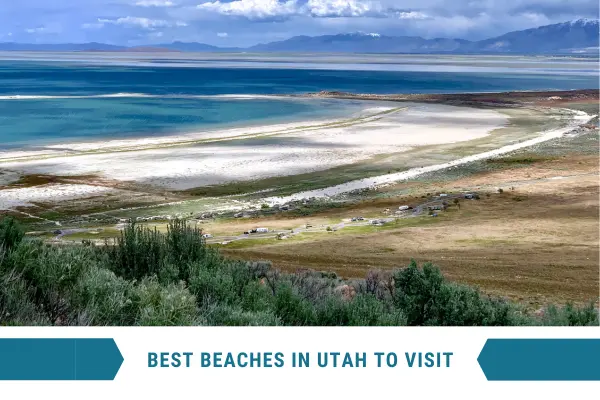
Utah is famous for red-rock canyons and national parks, but on hot summer days people head for the water. Its lakes and reservoirs offer sandy shores, swimming, boating and fishing, often with mountains or red cliffs behind them. Below are 18 of the best, grouped by region.
An earlier version of this article listed 20 beaches. Two have been removed: Zephyr Cove is on Lake Tahoe in Nevada, not in Utah, and Liberty Park in Salt Lake City is a city park with a pond and pool rather than a beach.
Before you go: water levels and algae
- Harmful algal blooms: in warm weather, toxic cyanobacteria can bloom in some Utah lakes and reservoirs. Utah Lake has been closed because of toxic algae in several past summers. The Utah Department of Environmental Quality (DEQ) posts current advisories, and Utah State Parks shows them on each park’s page. Do not swim, and keep dogs out of the water, where a warning is posted.
- Low water: drought has left several reservoirs low. In October 2026, for example, Yuba’s boat ramps were closed because of low water, and Antelope Island’s main boat ramp was closed for the same reason.
- Cold water and life jackets: mountain reservoirs stay cold well into summer. Utah State Parks reminds visitors that everyone on a boat, kayak or paddleboard needs a properly fitted life jacket, and children under 13 must wear one while a vessel is underway.
- Fees: state parks charge day-use fees. Check current prices on the Utah State Parks website (stateparks.utah.gov) before you travel.
Northern Utah
1. Antelope Island State Park
Antelope Island is the largest island in the Great Salt Lake and one of Utah’s most popular parks. Bridger Bay Beach is the best place to swim, with restrooms and showers to rinse off the salt, and you can float easily in the very salty water. Free-roaming bison, pronghorn, mule deer and bighorn sheep live on the island, and millions of birds gather on the shore. Trails are open for hiking, biking and horse riding. Keep well away from bison and other wildlife.
2. Great Salt Lake State Park
The Great Salt Lake is a remnant of the ancient Lake Bonneville, and its high salt content means you float with almost no effort. Great Salt Lake State Park, on the south shore, has a marina, a beach area and the nearby Saltair venue, built on the site of a historic lakeside resort. Boat tours from the marina include saltwater floats and sunset cruises, and paddleboards and kayaks can be rented. Park hours run from sunrise to sunset.
3. Bear Lake State Park
Bear Lake, on the Utah–Idaho border, is about 18 miles (29 km) long and 7 miles (11 km) wide, split roughly equally between the two states. Fine particles of limestone in the water give it a striking turquoise colour, which has earned it the nickname “Caribbean of the Rockies”.
The Utah side has several beach areas: a small beach at the marina, Rendezvous Beach near the south-west corner (open from 1 May to about the third weekend of October), and quieter beaches on the east side, such as Cisco Beach and Rainbow Cove. The water stays cool even in summer.
4. Pineview Reservoir
Pineview Reservoir sits in the mountains about 7 miles east of Ogden, next to the town of Huntsville. It is popular for swimming, waterskiing, wakeboarding and personal watercraft, and its beaches get busy on summer weekends. Anglers come for bass, crappie, perch and tiger muskie; Pineview is one of only three Utah lakes with tiger muskie.
5. Rockport State Park
Rockport State Park, near Peoa in northern Utah, surrounds Rockport Reservoir. Summer visitors swim, tube, waterski and wakeboard, and the reservoir is a good fishing spot for trout and bass. A launch ramp with floating docks is on the east side, and the Cedar Point day-use area has access to the sandy shore.
6. Jordanelle State Park
Jordanelle State Park, above Heber Valley and a few miles from Park City, surrounds Jordanelle Reservoir. Its three recreation areas, Hailstone, Rock Cliff and Ross Creek, offer beaches, boating, fishing, camping and trails. Swimming is not allowed on the docks or in the marina, and the park’s campgrounds are open from 1 May to 31 October. (An earlier version of this article called one of the areas “Rock Bluff”; it is Rock Cliff.)
7. Deer Creek State Park
Deer Creek State Park, near Wallsburg between Heber and Provo, sits on Deer Creek Reservoir with views of Mount Timpanogos. It is known for windsurfing and also offers boating, swimming, fishing, kayaking, waterskiing, ziplining, a summer aqua park and beach access. The park has posted algae warning advisories, so check conditions before swimming.
8. Flaming Gorge Reservoir
Flaming Gorge Reservoir straddles the Utah–Wyoming border, mostly in Wyoming. It is the largest reservoir in Wyoming and lies within the Flaming Gorge National Recreation Area, run by Ashley National Forest. The dam was completed in 1964. The reservoir is popular for boating, waterskiing, fishing and camping, with marinas along the shore.
Utah County
9. Utah Lake State Park
Utah Lake, west of Provo, covers about 95,000 acres (roughly 148 square miles), making it Utah’s largest natural freshwater lake. Utah Lake State Park, on the east shore, has the lake’s main marina. The lake is shallow and is used for boating, kayaking and paddleboarding, and anglers fish for walleye, white bass and channel catfish. Harmful algal blooms are common in summer, and the lake was closed because of toxic algae in 2016, 2018 and 2019, so always check the DEQ advisory before swimming.
10. Wayne Bartholomew Family Park, Springville
This city park in Springville has a pond of about 3 acres with a sandy beach and grass areas, which makes it a good place for children to paddle and play. Springville City requires parking permits from 1 May to Labor Day, and non-residents pay a daily fee per vehicle; check the city’s parks page for the current charge.
11. Manila Creek Pond, Pleasant Grove
Manila Creek Pond is a small community fishing pond in Pleasant Grove with a beach area and shallow water. The pond has no natural shade, so bring a sunshade and towels. The Utah DEQ monitors it in summer for harmful algae and E. coli, and health advisories against swimming have been issued in the past, so check the DEQ page before you get in the water.
12. Highland Glen Park, Highland
Highland Glen Park in Highland, in northern Utah County, has a small pond that is open for swimming and paddling, with picnic areas and restrooms. It is also a stocked community fishery. There is no lifeguard, so supervise children closely. (An earlier version of this article placed it in Salt Lake City; Highland is in Utah County.)
Central Utah
13. Yuba State Park
Yuba State Park, near Levan in central Utah, is known for sandy beaches and warm water, and it is quieter than the parks along the Wasatch Front. Low water has been a serious problem: in October 2026 the reservoir was at about 18% of capacity and both boat ramps were closed. Check the park’s alerts before you plan a trip.
14. Huntington State Park
Huntington State Park, near the town of Huntington in Emery County, surrounds Huntington Reservoir, a warm-water lake completed in 1966. It has a beach area and is popular for swimming, waterskiing, kayaking and fishing for largemouth bass and bluegill; crayfish catching is popular with children. The park’s campground was being rebuilt and was expected to reopen on 1 October 2026.
15. Fish Lake
Fish Lake, in Sevier County, sits at about 8,850 feet in the Fishlake National Forest and is considered Utah’s largest natural mountain lake. It is about five to six miles long, surrounded by forested mountains, and known for trophy lake trout. Boating, kayaking, fishing and ATV riding are popular, and the water stays cold. About a mile away is Pando, a huge stand of genetically identical quaking aspens often described as one of the largest living organisms on Earth.
Southern Utah
16. Sand Hollow State Park
Sand Hollow State Park, near Hurricane in south-western Utah, is one of the state’s most popular water parks. Its warm, blue reservoir is surrounded by red sandstone and red sand, which make it good for swimming, paddling, boating and fishing. The park has several campgrounds, including Sandpit, Lakeview and Westview, and the Sand Mountain dunes next door are popular for off-highway vehicles. Algae advisories are sometimes posted. (An earlier version of this article listed its location as “Tropical storm”, a mistranslation of Hurricane.)
17. Quail Creek State Park
Quail Creek State Park, near Hurricane and St. George, surrounds a reservoir of about 600 acres that was completed in 1985. It has some of the warmest water in Utah and a mild winter climate, with a beach area, boat ramps and rentals. Anglers fish for rainbow trout, largemouth bass, catfish, crappie and bluegill. Check for harmful algae mats before swimming.
18. Lake Powell
Lake Powell, mostly in southern Utah with a small part in northern Arizona, is the reservoir behind Glen Canyon Dam and the centre of Glen Canyon National Recreation Area, run by the National Park Service. It has about 1,900 miles of shoreline when full, with sandy coves, red-rock canyons, houseboat rentals and almost unlimited camping spots.
Water levels have fallen sharply in recent years. In 2026 the lake held only about a quarter of its full capacity, and some boat channels and ramps have been unusable at times. Check the National Park Service’s current conditions for Glen Canyon before you plan a houseboat or boating trip.
Utah’s lake beaches at a glance
| Beach | Region | Best for |
|---|---|---|
| Antelope Island | North (Great Salt Lake) | Floating, wildlife |
| Great Salt Lake State Park | North | Floating, sunset cruises |
| Bear Lake | North (Utah–Idaho border) | Turquoise water, family beaches |
| Pineview Reservoir | North (near Ogden) | Waterskiing, fishing |
| Rockport | North | Tubing, trout and bass |
| Jordanelle | North (near Park City) | Boating, camping |
| Deer Creek | North (near Heber) | Windsurfing |
| Flaming Gorge | North-east (Utah–Wyoming) | Boating, fishing |
| Utah Lake | Utah County | Boating, fishing (check algae) |
| Bartholomew Park | Utah County | Small children |
| Manila Creek Pond | Utah County | Fishing, paddling (check advisories) |
| Highland Glen | Utah County | Quiet pond swim |
| Yuba | Central | Warm water, sandy beaches (low water) |
| Huntington | Central | Warm water, families |
| Fish Lake | Central | Mountain scenery, trout |
| Sand Hollow | South | Red sand, warm water |
| Quail Creek | South | Warmest water, winter visits |
| Lake Powell | South (Utah–Arizona) | Houseboats, canyons |
Exploring more of the American West? See our guides to the best beaches in Arizona, Oregon’s best beaches and the best beaches in the USA.
Frequently asked questions
Does Utah have real beaches?
Utah has no ocean coast, but many of its lakes and reservoirs have sandy beaches for swimming and sunbathing, especially Bear Lake, Sand Hollow, Quail Creek, Yuba and Lake Powell.
Can you swim in the Great Salt Lake?
Yes. Swimming and floating are allowed, and the salty water makes floating easy. Bridger Bay Beach on Antelope Island has showers to rinse off, and Great Salt Lake State Park runs saltwater float tours.
Which Utah lake has the warmest water?
The reservoirs in southern Utah, such as Quail Creek and Sand Hollow, are among the warmest. Yuba and Huntington in central Utah are also warm-water lakes.
Is it safe to swim in Utah Lake?
Often, but not always. Utah Lake is prone to harmful algal blooms in summer and has been closed because of toxic algae in the past. Check the Utah DEQ’s current advisories before swimming.
Why is Bear Lake so blue?
Tiny particles of limestone (calcium carbonate) suspended in the water reflect light and give the lake its turquoise colour.
Details checked in October 2026 against Utah State Parks alerts and park pages, Utah DEQ advisories, National Forest and National Park Service information, and lake and reservoir records. Water levels, algae advisories and fees change, so check before you go.