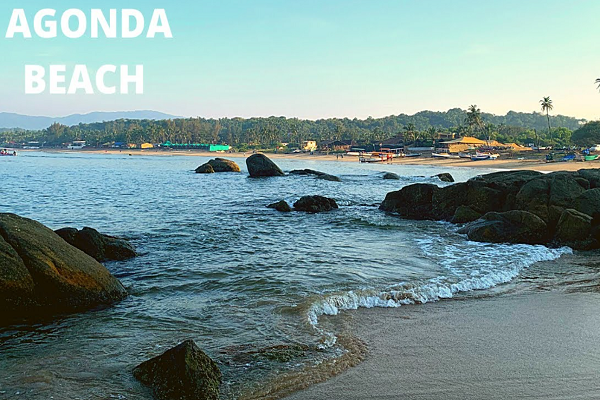
Quick answer: Agonda Beach is a quiet, roughly 3 km stretch of sand in Canacona, in Goa’s far south, between Cola Beach to the north and Palolem to the south. It is known for its calm, uncrowded feel, simple beach huts and as a protected nesting site for olive ridley sea turtles. It is a free public beach, open from 7 am to sunset according to Goa Tourism; swim only where lifeguards have marked a safe zone, and never in the monsoon.
Agonda Beach at a glance
| Detail | What to know (October 2026) |
|---|---|
| Location | Agonda village, Canacona taluka (now in Goa’s new Kushavati district); about 9 km north of Palolem |
| Length | About 3 km |
| Timings | Goa Tourism guidance: beaches open 7 am to sunset; do not enter the water after sunset |
| Entry fee | None; it is a public beach |
| Swimming | Only where lifeguards mark a safe zone; never in the monsoon |
| Best time to visit | November to March |
| Time needed | A full day, or a few days if you want to slow down |
Note on the district: Agonda has always been described as a South Goa beach. At the start of 2026 the Goa government notified a third district, Kushavati, carved out of South Goa, with its headquarters at Quepem; Canacona taluka, which includes Agonda and Palolem, is part of it.
What is Agonda Beach like?
Agonda is a long, gently curving beach backed by coconut palms and casuarina trees, with a headland at its northern end. Beyond that cliff lies Cola Beach. Agonda has no big resorts on the sand and no party scene; instead you find seasonal beach huts, small guesthouses and shacks serving Goan, Indian and international food. It is one of the best choices in Goa if you want a peaceful beach to read, walk and watch the sunset.
The beach is also important for wildlife. Agonda is one of the beaches in India designated as turtle nesting sites under the 2011 Coastal Regulation Zone notification, and endangered olive ridley sea turtles come ashore to lay eggs here. Goa’s Department of Tourism asks visitors to keep away from turtle nesting areas. Never disturb a nest or a turtle, and follow any signs or instructions from forest staff on the beach.
Things to do at Agonda
- Relax on a quiet beach. Hammocks, loungers and long, empty stretches of sand are the main attraction.
- Take a boat trip. Boats from Agonda and Palolem take visitors to see dolphins and to reach Butterfly Beach, a cove with no road access. The dolphins usually seen off Goa are Indian Ocean humpback dolphins, a protected species; pick an operator that does not chase them.
- Kayak. Kayaks can be hired in season for calm-weather paddling.
- Watch the sunset. The beach faces west over the Arabian Sea.
- Explore nearby. Visit Cabo de Rama fort to the north or busier Palolem to the south.
A note on water sports
An earlier version of this article said Agonda offered a full range of motorised water sports, including jet skis, parasailing, banana rides and speedboats. Agonda is mainly a quiet beach, and Goa’s water sports policy (Official Gazette, November 2020) says powered craft such as jet skis and speedboats should not be allowed in the sea close to the shore because they drive away turtles that gather before nesting. For motorised water sports, North Goa beaches and the busier Salcete beaches are better bets. Wherever you go, use operators registered with the Department of Tourism; water sports run only from 8 am to 6.30 pm or until sunset, and not in the monsoon.
Is it safe to swim at Agonda?
Waves at Agonda can be strong, and an earlier version of this article itself warned that the surf can make swimming unsuitable. Ask the lifeguard on duty before going in, swim only in zones marked by red-and-yellow flags, and stay out wherever red flags fly. Goa’s Department of Tourism says nobody should enter the water after sunset or after drinking alcohol, and that you should not swim in the monsoon. In June 2026 Drishti Marine, the state’s lifesaving agency, said swimming in the sea and coastal water sports are prohibited during the monsoon season.
Food and evenings at Agonda
Evenings at Agonda are calm: candle-lit dinners at beach shacks, seafood, and the occasional film night or live music in season. An earlier version named a silent-disco club, pubs, cafés and shacks; we have removed them because we could not confirm that each one still operates. Remember that drinking and smoking on the open beach are prohibited, according to the Department of Tourism.
The earlier version also suggested shopping at the Anjuna flea market, the Arpora night market and the Tibetan market on Baga road. Those markets are in North Goa, a long drive from Agonda; see our Anjuna Beach guide if you plan to visit them.
Best time to visit
- November to March: the best weather and calmer seas; December and January are the busiest months.
- April and May: hot and humid, with fewer visitors.
- Monsoon (roughly June to September): heavy rain and rough seas; many huts close, and swimming and water sports stop.
An earlier version said temperatures reach the 40s °C in summer. We could not verify that, so it has been removed.
How to reach Agonda Beach
- By rail: Canacona station on the Konkan Railway is the nearest; Madgaon (Margao) has more trains. Agonda is about an hour’s drive from Margao.
- By air: Goa International Airport at Dabolim is the nearer airport. Manohar International Airport at Mopa, opened in January 2023, is in the far north of the state.
- By road: From Panaji, take National Highway 66 south via Margao, or travel by bus to Canacona and take a taxi or auto-rickshaw.
Places to visit near Agonda
- Palolem Beach, a livelier crescent-shaped beach about 9 km to the south.
- Butterfly Beach, a secluded cove reached by boat or forest trail.
- Cabo de Rama fort: a clifftop fort in Canacona, taken over by the Portuguese in the 1760s; its chapel of St Anthony is still in use.
- Cola Beach: on the other side of the cliff to the north, with an adjoining lagoon.
Compare Agonda with other beaches in our guide to the best beaches in Goa.
Frequently asked questions
Is Agonda Beach good for families?
Yes, for a quiet holiday. It has few crowds and no party scene. Watch children closely, as the waves can be strong.
Why is Agonda important for turtles?
Olive ridley sea turtles nest on the beach, and Agonda is one of India’s designated turtle nesting sites. Keep away from nesting areas and follow posted instructions.
Is Agonda in North or South Goa?
It is in the far south, in Canacona taluka. Canacona has been part of Goa’s new Kushavati district since it was notified at the start of 2026; before that it was in South Goa district.
How do I get from Agonda to Palolem?
By road, the two beaches are about 9 km apart; take a taxi, auto-rickshaw or hired scooter.
Can I swim at Agonda?
Only in calm conditions, where lifeguards mark a safe zone, and never in the monsoon or after sunset.
Details checked in October 2026 against Goa Department of Tourism beach guidance, the Goa water sports policy (Official Gazette, November 2020), Drishti Marine’s June 2026 monsoon advisory, published records of Agonda and reporting on the creation of Kushavati district. Follow lifeguards’ instructions on the day.