Quick answer: Santiniketan (often spelt Shantiniketan) is Rabindranath Tagore’s university town in Bolpur, Birbhum district, about 152 km north of Kolkata, not a part of Kolkata itself. It was added to the UNESCO World Heritage List on 17 September 2023. Its main sight is Rabindra Bhavana, the Tagore museum, with the Uttarayan complex of houses where Tagore lived. Since 2 July 2025, Visva-Bharati has opened Rabindra Bhavana and Uttarayan six days a week, closing only on Thursdays; it does not publish ticket prices online, so check at the counter.

Santiniketan at a glance
| Detail | What we verified (October 2026) |
|---|---|
| Location | Bolpur, Birbhum district, West Bengal; about 152 km north of Kolkata |
| Heritage status | UNESCO World Heritage Site, inscribed 17 September 2023 |
| Founded | 1863, as an ashram, by Debendranath Tagore |
| Main museum | Rabindra Bhavana, with the Uttarayan complex |
| Museum closed on | Thursdays (Visva-Bharati notice, from 2 July 2025) |
| Entry fee | Not published by Visva-Bharati online; check at the counter |
| Nearest railway station | Bolpur Shantiniketan |
Important change: older guides, including the earlier version of this article, say Rabindra Bhavana is closed on Wednesdays and Thursdays. Visva-Bharati’s notice of 24 June 2025 says that from 2 July 2025 the Uttarayan complex and Rabindra Bhavana are open every week from Friday to Wednesday and closed only on Thursdays. The earlier version also gave hours of 10 am to 5 pm and fees of ₹40 for Indians, ₹300 for foreigners and ₹10 for students. Visva-Bharati does not publish timings or fees online, so these old figures have been removed; confirm them at the counter or with Visva-Bharati’s Public Relations Office.
Correction: this article’s old title called the place “Shantiniketan Kolkata”. Santiniketan is in Birbhum district, about 152 km from Kolkata, so plan it as a day trip or an overnight stay. An earlier version also said it is 63 km from Bardhaman; we could not confirm that figure, so it has been removed.
History of Santiniketan
In 1863, Debendranath Tagore, Rabindranath’s father, took a lease on land near Bolpur and set up an ashram he named Santiniketan, “the abode of peace”. In 1901, Rabindranath Tagore started a school there based on the ancient Indian gurukul tradition, and in 1921 he founded Visva-Bharati, which became a central university in 1951.
When UNESCO inscribed Santiniketan as a World Heritage Site in September 2023, it was recognised for a vision of art, education and architecture that drew on ancient, medieval and folk traditions from across Asia, distinct from both British colonial architecture and European modernism, according to India’s Press Information Bureau.
Rabindra Bhavana and the Uttarayan complex
Rabindra Bhavana was founded in July 1942, about a year after Tagore’s death in 1941, as a museum and research centre. According to Visva-Bharati, it includes:
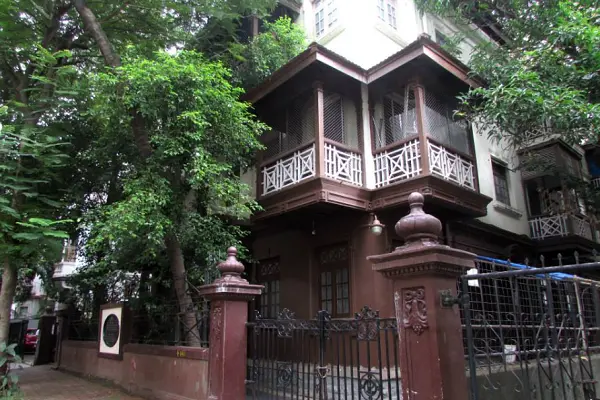
- The Uttarayan complex: five houses where Tagore lived, Udayan, Shyamali, Konark, Udichi and Punascha, set in gardens.
- The museum collection: 1,580 original paintings by Tagore, 554 by other artists, 11,380 photographs, 3,855 curios and 52 statues, along with manuscripts, letters, certificates and gifts he received from around the world.
- The library: more than 40,000 volumes and over 12,000 bound journals, including Tagore’s personal library.
Allow a few hours for the museum and the houses. The earlier version said bags must be left outside and photography is not allowed inside; rules on bags and photography are set by Visva-Bharati, so follow the instructions at the entrance.
Other places to visit in and around Santiniketan
Upasana Griha (the glass prayer hall)
Debendranath Tagore built the Upasana Griha, a Brahmo prayer hall with glass walls, on the Visva-Bharati campus in the 19th century. It is often called the Kanch Mandir (glass temple). Visiting arrangements can change, so check locally.
Chhatimtala
Chhatimtala is the spot under chhatim (saptaparni) trees where Debendranath Tagore used to meditate. It remains one of the most respected places in the ashram.
Sonajhuri haat (the Khoai market)
A craft market is held in the Sonajhuri woods near Santiniketan, beside the khoai, the eroded red-soil landscape of the area. Stalls sell handmade textiles, jewellery, bamboo and wooden items, and local food. The Saturday market is the best known; current accounts say it now runs on most days of the week, so check locally. An earlier version of this article called it the “Khoai Mela” and said it was held only on Saturdays.
Poush Mela and Basanta Utsav
Poush Mela, the area’s biggest fair, is traditionally held for three days from the 7th day of the Bengali month of Poush, in late December. It draws crafts sellers, folk musicians and visitors from across India and abroad. Basanta Utsav is Santiniketan’s own celebration of Holi, in spring. The organisers and venues of these events have changed in recent years, so check the current year’s announcements before you plan a trip around them.
Kankalitala
Kankalitala is a revered temple a short drive from Santiniketan. Many visitors cycle or take a local auto-rickshaw through the countryside to reach it.
Indira Gandhi’s link
Former Prime Minister Indira Gandhi studied at Visva-Bharati in Santiniketan in the 1930s, before she went to Oxford.
How to reach Santiniketan from Kolkata
- By train: Bolpur Shantiniketan station has trains from Howrah, Sealdah and Kolkata stations. This is the most popular way to go.
- By road: buses and taxis run from Kolkata; allow several hours for the drive.
- By air: the nearest major airport is Netaji Subhas Chandra Bose International Airport in Kolkata; continue by train or road.
Tips for visiting
- Avoid Thursdays if you want to see Rabindra Bhavana and Uttarayan.
- Santiniketan is a working university campus, so follow campus rules and keep noise down near classes.
- The cooler months (about November to February) are the most comfortable for walking around; Poush Mela time is very crowded.
- Book trains and rooms early around Poush Mela and Basanta Utsav.
More on Tagore
To learn more about Tagore’s life and ideas, read our profile of Rabindranath Tagore. In Kolkata, places named in his honour include the cultural centre Rabindra Sadan and the lake Rabindra Sarobar.
Frequently asked questions
Is Santiniketan in Kolkata?
No. Santiniketan is in Bolpur, Birbhum district, about 152 km north of Kolkata. Trains from Howrah and Sealdah go to Bolpur Shantiniketan station.
Which day is Rabindra Bhavana closed?
Thursday. Visva-Bharati’s notice says that from 2 July 2025, the Uttarayan complex and Rabindra Bhavana are open from Friday to Wednesday and closed only on Thursdays.
Is Santiniketan a UNESCO World Heritage Site?
Yes. It was inscribed on 17 September 2023, at the 45th session of the World Heritage Committee in Riyadh.
Who founded Santiniketan?
Debendranath Tagore set up the ashram in 1863. His son Rabindranath Tagore started a school there in 1901 and founded Visva-Bharati in 1921.
Details checked in October 2026 against Visva-Bharati’s website and its 24 June 2025 notice on Rabindra Bhavana’s opening days, the Press Information Bureau’s 2023 release on the UNESCO inscription, and published histories of Santiniketan. Confirm timings and fees with Visva-Bharati before visiting.