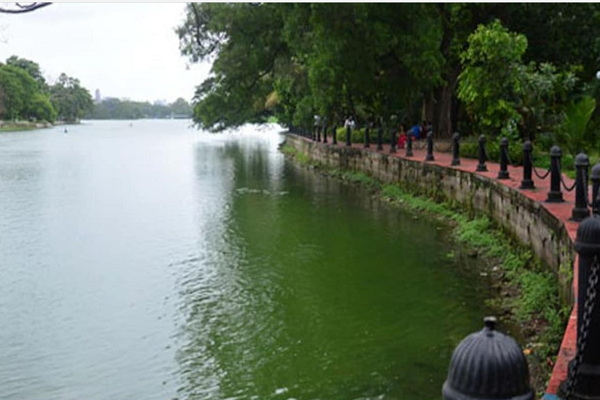
Quick answer: Rabindra Sarobar, still widely called Dhakuria Lake, is a man-made lake in south Kolkata, dug by the Calcutta Improvement Trust in the 1920s and renamed in May 1958 in honour of Rabindranath Tagore. The lake and its green surroundings cover about 192 acres, with about 11,000 trees, rowing clubs, walking paths and a Japanese Buddhist temple. Rabindra Sarobar metro station is nearby. There is no official listing of opening hours or fees online, so check locally before an early-morning or late visit.
Rabindra Sarobar at a glance
| Detail | What we verified (October 2026) |
|---|---|
| Location | Dhakuria, south Kolkata |
| Total area | About 192 acres: about 73 acres of water and 119 acres of green cover |
| Created | Excavated by the Calcutta Improvement Trust from the early 1920s |
| Named Rabindra Sarobar | May 1958 |
| Trees | About 11,000, of which about 7,500 are over 75 years old |
| Timings and entry | No official listing; the earlier version said entry is free, from sunrise to sunset |
| Nearest metro | Rabindra Sarobar station (Blue Line) |
History of Rabindra Sarobar
In the early 1920s, the Calcutta Improvement Trust (CIT), the body then responsible for developing and improving the city, acquired about 192 acres of marshy land in south Calcutta. It excavated a large lake there, with the aim of developing the area with housing, lakes and parks. The lake was first called Bompass Lake and then Dhakuria Lake, and in May 1958 it was renamed Rabindra Sarobar to honour Rabindranath Tagore.
Of the total area, about 73 acres is water. The rest is green cover: gardens, lawns, trees, walking and jogging paths, and buildings such as clubs and auditoriums.
The central government’s Ministry of Environment has included the lake in its National Lake Conservation Plan to help protect it. An earlier version of this article said it was declared a “National Lake” in 1997; we could not confirm that date, so it has been left out.
Correction: an earlier version said about 7,500 of the trees are “70 to 100 years old”. Published records put it as about 7,500 trees over 75 years old. It also called the lake the “second-largest water body in Kolkata”, which we could not confirm.
Things to do at Rabindra Sarobar
Morning walks and jogging
The shaded paths around the lake are among south Kolkata’s favourite places for a morning walk, a jog or exercise. Early morning is the coolest and quietest time of day. Yoga groups and laughter clubs also meet here.
Birdwatching
The lake and its old trees attract both resident and migratory birds. Bird counts have recorded more than 100 species in recent years: 107 in 2019, 118 in 2021, 116 in 2022 and 110 by October 2023. Winter is a good time to look for visiting species. Bring binoculars and keep a respectful distance from nesting birds.
Rowing
Rabindra Sarobar is one of the centres of rowing in India. Several clubs are based on the lake, including the Calcutta Rowing Club (founded in 1858 and among the oldest in the country), the Bengal Rowing Club, the Lake Club and the Calcutta University Rowing Club. They hold regattas and training through the year. If you want to row, approach one of the clubs rather than looking for casual boat hire.
Swimming
The Indian Life Saving Society, formerly the Anderson Club, has its office in the lake complex. If you want to learn to swim or train, contact one of the clubs based at the lake; do not enter the water on your own.
An earlier version of this article invited readers to “relax with a swim” in the lake. That advice has been removed for safety: swim only under a club’s supervision.
Photography
Reflections on the water, old trees and the morning light make the lake a favourite with photographers.
Snacks
Vendors near the lake sell local snacks such as jhalmuri and cups of tea, which make a good end to a morning walk.
Cultural events
The lake’s auditoriums and open spaces host cultural programmes and performances. Check local listings for what is on during your visit.
Places to see near Rabindra Sarobar
Nipponzan Myohoji Buddhist Temple
Kolkata’s Japanese Buddhist temple stands on Lake Road, by the lake. It was established in 1935 by Nichidatsu Fujii, founder of the Nipponzan Myohoji order, and is the only Japanese Buddhist temple in Kolkata. Monks chant at dawn and dusk, and the temple is open to the public for about three hours each morning and evening. Visitors of all faiths are welcome.
Lake Gardens area
The earlier version of this article mentioned a graffiti-covered warehouse in the lanes near the lake, popular with skateboarders and street artists. We could not confirm that it is still there, so ask locally if you are interested.
How to reach Rabindra Sarobar
- By metro: Rabindra Sarobar station on the Blue Line is the nearest metro stop.
- By suburban rail: Lake Gardens and Tollygunge stations are also close to the lake.
- From Howrah or Sealdah: take the metro (via Esplanade) or a taxi to south Kolkata.
- By air: from Netaji Subhas Chandra Bose International Airport, take a taxi or app cab.
Tips for visiting
- Go early in the morning for the coolest weather, the most birdlife and the quietest paths.
- Do not feed the fish or birds, and do not leave litter; the lake is one of the city’s most important green and ecological spaces.
- The earlier version noted that fishing is not allowed; follow any rules posted at the gates.
- The paths can be busy with walkers and joggers at peak morning hours, so keep to one side.
Places to visit nearby
For more places named after Tagore, see Rabindra Sadan, the theatre and cultural centre on AJC Bose Road, or plan a trip to Santiniketan. If you are looking for a calm spot for two, see our list of romantic places to visit in Kolkata. Families can also head to Science City on the Eastern Metropolitan Bypass.
Frequently asked questions
Why is it called Rabindra Sarobar?
It was renamed in May 1958 in honour of Rabindranath Tagore. It was earlier known as Dhakuria Lake, a name many people still use.
How big is Rabindra Sarobar?
The whole area is about 192 acres, of which about 73 acres is water.
Which metro station is nearest to Rabindra Sarobar?
Rabindra Sarobar station on the Blue Line of the Kolkata Metro.
Can you go boating at Rabindra Sarobar?
The lake is used mainly by rowing clubs for training and regattas. There is no officially listed public boat hire, so ask one of the clubs.
Who built the Japanese temple at Rabindra Sarobar?
Nichidatsu Fujii of the Nipponzan Myohoji order established it in 1935.
Details checked in October 2026 against published records of the lake, its rowing clubs, bird surveys and the Nipponzan Myohoji temple. Opening hours and rules are not published officially, so check locally.