Quick answer: Classrooms are becoming dynamic because technology has changed how students learn, not why. Digital textbooks, live video classes, online file sharing and discussion forums let students learn from anywhere and at their own pace, and online courses now count towards real degrees. The gains are real, but they depend on good internet access, digital skills and teachers who keep students engaged.
From a fixed path to many possibilities
Not long ago, the path was fixed: finish school, get into college, spend three or four years earning a degree in the hope of getting a job, and then settle down. That single track has opened up into many possibilities. Students can now take courses online alongside a job, earn credits from different institutions, and keep learning throughout their careers.
The whole look of the classroom has changed, even though its purpose, educating students, is still the same. Here are the main ways technology has made classrooms more dynamic.
What makes today’s classrooms dynamic
Digital textbooks
Students no longer have to carry bags full of books. Many textbooks are now available as e-books that can be read on a tablet, laptop or phone. In India, NCERT’s textbooks can be read free online and through its ePathshala platform, and the national DIKSHA platform offers digital lessons and textbook-linked content for school students.
Remote video conferencing
With fast internet in more places, a teacher no longer always has to be physically present. Teachers can teach live over video from anywhere, guest experts can join a class from another city or country, and lessons can be recorded for students who missed them.
Online file sharing
Students who need a resource no longer have to go to a library or borrow it from a friend. Notes, assignments and openly licensed books can be downloaded or shared by email or cloud storage in seconds. Share only material that is free to share; copying paid textbooks without permission breaks copyright law.
Discussion forums
Group study used to mean meeting in person. Today students also use discussion forums, such as subject communities like a chemistry forum, to discuss topics and clear doubts with learners and experts around the world. Course platforms often have their own forums for each class.
Online courses that count
Online learning is no longer a side option. India’s SWAYAM platform (swayam.gov.in), run by the Ministry of Education, offers free online courses prepared by teachers from across the country; only the optional proctored certificate exam carries a fee. The University Grants Commission’s (UGC) credit framework for SWAYAM courses lets universities give academic credit for approved courses, though each institution decides which courses it accepts. In the United States, according to the National Center for Education Statistics (NCES), about 9.4 million undergraduates (61%) took at least one distance education course in fall 2021, and about 4.4 million (28%) studied exclusively online.
An earlier version of this article said “over 2.6 million students” were pursuing degrees online, without a source or date. The NCES figures above are the latest on its fast-facts page when we checked in October 2026.
The challenges that come with it
- The digital divide: not every student has a device, data or a quiet place to study, so online-only teaching can leave some students behind.
- Distraction and screen time: learning on the same device used for games and social media takes discipline.
- Less personal contact: students can feel isolated without regular live interaction with teachers and classmates.
- Quality varies: free online content is not always accurate, so students should prefer official and well-reviewed sources.
The best results usually come from blended learning, which combines the structure and personal contact of a classroom with the flexibility of online tools. Our article on lessons online teachers can learn from offline teachers covers how to keep students engaged.
New-age learning resources
These are some of the many gains technology has brought to classrooms. The idea that learning only happens inside a room with a textbook has changed for good. For help learning topics like the Periodic Table with new-age content, online explainers and interactive tables can make a dry topic easier to remember. Teachers can also explore our guides to technological tools for science classrooms and EdTech tools for homeschooling families.
Frequently asked questions
What is a dynamic classroom?
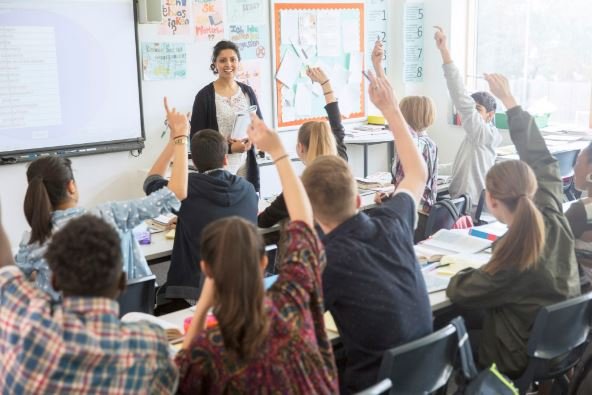
It is a classroom where teaching adapts to students, using technology such as digital textbooks, video, online collaboration and forums, instead of relying only on a teacher lecturing from a textbook.
Can online courses count towards a degree in India?
Yes, if your university accepts them. UGC’s credit framework for SWAYAM lets universities give credit for approved SWAYAM courses, but each institution decides which courses and how many credits it accepts.
Is online learning better than classroom learning?
Neither is better for everyone. Online learning offers flexibility and access; classrooms offer structure and personal contact. Many institutions now combine the two.
Where can school students in India find free digital textbooks?
NCERT textbooks are free to read online and through ePathshala, and the DIKSHA platform has textbook-linked digital content.
This article was updated in October 2026. Enrolment figures are from the US National Center for Education Statistics (fall 2021 data); details of SWAYAM, DIKSHA and ePathshala are from the Government of India’s education platforms.