Quick answer: Aadhaar is a 12-digit identity number issued by the Unique Identification Authority of India (UIDAI) that can be checked online in seconds. That instant check is what makes Aadhaar the base layer for much of Digital India: it lets governments pay benefits straight into bank accounts, lets banks and other regulated businesses complete e-KYC without paper, and lets people withdraw cash or sign documents with a fingerprint, face scan or OTP.

What Aadhaar is
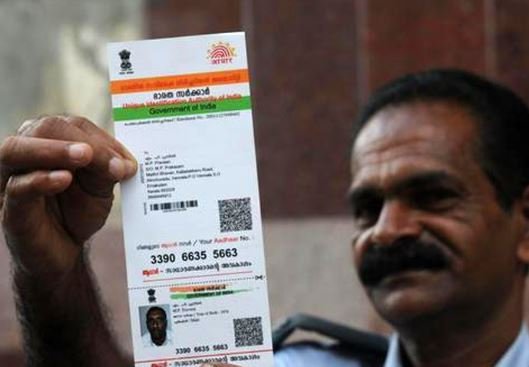
Aadhaar is a random 12-digit number linked to a person’s demographic details (name, date of birth, gender and address) and biometrics (photograph, ten fingerprints and both irises). UIDAI issues it under the Aadhaar (Targeted Delivery of Financial and Other Subsidies, Benefits and Services) Act, 2016. Three points are often misunderstood:
- Aadhaar is proof of identity, not of citizenship. The Aadhaar Act says so directly.
- Enrolment is free. UIDAI charges only for some updates and prints.
- Using Aadhaar is mostly voluntary. After the Supreme Court’s 2018 judgment and the 2019 amendment, Aadhaar can be made compulsory only where a law allows it, such as government subsidies and benefits and linking with PAN. Our guide to the Aadhaar Act and the Supreme Court judgment explains this history.
Aadhaar in numbers
The figures below were checked on UIDAI’s website and in government releases in October 2026. Counts rise every day, so treat them as a snapshot.
| Measure | Figure | Source and date |
|---|---|---|
| Aadhaar enrolments | More than 145.32 crore | UIDAI homepage, October 2026 |
| e-KYC transactions (running total) | More than 2,632 crore | UIDAI homepage and e-KYC dashboard, October 2026 |
| Authentication transactions in 2024-25 | More than 2,707 crore | UIDAI release via PIB, April 2025 |
| Face authentication transactions in November 2025 | 28.29 crore (up from 12.04 crore a year earlier) | UIDAI release via PIB, December 2025 |
| Daily authentications | Around 10 crore a day | UIDAI Chairman at the Global Fintech Festival, September 2026, as reported by UNI |
How Aadhaar supports Digital India
When this article was first written, the focus was on the boom in biometric devices and mobile apps around Aadhaar. That growth was real, but the bigger story is what those devices made possible. These are the main ways Aadhaar is used today.
1. Direct Benefit Transfer (DBT)
Under DBT, subsidies and benefits are paid straight into the beneficiary’s bank account instead of passing through middlemen. Aadhaar helps in two ways: authentication confirms that the right person is claiming the benefit, and an Aadhaar-seeded bank account lets the payment be routed by Aadhaar number.
A Ministry of Finance release from April 2025, summarising an assessment by the BlueKraft Digital Foundation, credited DBT with cumulative savings of about ₹3.48 lakh crore from 2009 to 2024 by reducing leakages. That estimate covers DBT as a whole, not Aadhaar alone. Recent examples of Aadhaar in welfare delivery include:
- Ration cards: the Department of Food and Public Distribution’s 2025 year-end review reported that more than 99.9% of ration cards had at least one member’s Aadhaar seeded.
- LPG subsidy: from 1 October 2026, domestic LPG consumers need to complete biometric Aadhaar authentication to book subsidised refills, according to the Ministry of Petroleum and Natural Gas. Consumers who do not want to authenticate can still buy LPG at the market price without subsidy.
2. e-KYC for banks, insurance and other services
Know Your Customer (KYC) checks used to mean photocopies and in-person visits. With Aadhaar e-KYC, the customer authenticates with an OTP or biometrics, and UIDAI sends a digitally signed copy of their name, address, date of birth, gender and photo to the bank or other regulated entity. Aadhaar e-KYC is voluntary for bank accounts and mobile connections; other documents must also be accepted. Our explainer on Aadhaar e-KYC covers where it is optional and how to share less data.
3. Banking at the doorstep: AePS and Aadhaar Pay
The Aadhaar Enabled Payment System (AePS), run by the National Payments Corporation of India (NPCI), lets a customer use a business correspondent’s micro-ATM or point-of-sale device with just their Aadhaar number, bank name and fingerprint. NPCI lists cash withdrawal, cash deposit, fund transfer, balance enquiry and mini statement among the services. India Post Payments Bank uses AePS so that postmen and Gramin Dak Sevaks can offer cash withdrawal at people’s homes. Read more in our guide to AePS for merchants and banking correspondents.
4. UPI and digital payments
Aadhaar also helps people who have no debit card start using UPI. Many banks and UPI apps let you set your UPI PIN with Aadhaar OTP verification instead of debit card details, provided the same mobile number is registered with both your bank and Aadhaar.
5. Paperless documents: e-Aadhaar, DigiLocker and eSign
- e-Aadhaar is a password-protected, digitally signed PDF you can download from the myAadhaar portal (myaadhaar.uidai.gov.in) or the Aadhaar app. Under the Aadhaar Act it is as valid as the printed letter. See our guide to e-Aadhaar.
- DigiLocker, the government’s document wallet, can fetch e-Aadhaar and other issued documents into one account.
- eSign lets you sign a document online after e-KYC. The signing keys are created on a secure hardware module and destroyed after one use, according to the Controller of Certifying Authorities.
6. Face authentication for pensioners and services
Face authentication works on an ordinary Android or iOS phone, so no fingerprint scanner is needed. UIDAI reported that nearly 60% of the digital life certificates generated by pensioners in November 2025 used face authentication. Government departments and private bodies approved under the Aadhaar Authentication for Good Governance Rules can also use it.
Checking your Aadhaar status online
The original article said you could check your Aadhaar status from an Android phone through a link. That link no longer works, and the old UIDAI resident portal it pointed to has been retired. Today you can:
- Visit the myAadhaar portal (myaadhaar.uidai.gov.in), or install the official Aadhaar app on Android or iOS.
- Choose the option to check enrolment or update status.
- Enter the Enrolment ID from your acknowledgement slip, or the Update Request Number for an update.
Enrolment itself still happens in person at an Aadhaar centre, because UIDAI has to capture your biometrics.
Privacy and security concerns
The original article noted reports of security problems with the biometric system and called for stronger safeguards. Several safeguards now exist:
- Biometric lock: you can lock your fingerprints, iris and face so they cannot be used for authentication until you unlock them, through myAadhaar or the Aadhaar app.
- Authentication history: you can see when and by which agency your Aadhaar was used. Our explainer on Aadhaar authentication shows how.
- Virtual ID and masked Aadhaar: a 16-digit Virtual ID (VID) can be used instead of your Aadhaar number, and a masked e-Aadhaar shows only the last four digits.
- Stronger penalties: since the 2019 amendment, unauthorised access to UIDAI’s central database can be punished with up to 10 years’ imprisonment and a fine of at least ₹10 lakh.
Concerns have not gone away. Authentication failures still affect some elderly and manual workers, which is why the law requires service providers to offer an alternative way to prove identity when authentication fails.
Frequently asked questions
How many people have Aadhaar?
UIDAI’s homepage showed more than 145.32 crore Aadhaar enrolments in October 2026. Check uidai.gov.in for the latest figure.
Is Aadhaar compulsory for Digital India services?
No, not across the board. Aadhaar can be required for government subsidies and benefits under Section 7 of the Aadhaar Act and for PAN and income tax returns. For bank accounts and mobile connections it is one option among several accepted documents.
What is the difference between AePS and UPI?
AePS uses your Aadhaar number and fingerprint at a business correspondent’s device and needs no phone or card. UPI runs on your own smartphone and uses a UPI PIN. Aadhaar can help you set the UPI PIN, but each UPI payment does not use Aadhaar.
Can someone misuse my Aadhaar number if they know it?
The number alone is not enough to authenticate. An OTP sent to your registered mobile, your biometrics or your face is also needed. You can lower the risk further by locking your biometrics, sharing a masked copy and checking your authentication history regularly.
Figures and rules in this guide were checked in October 2026 against UIDAI’s website and dashboards, UIDAI and ministry releases published through the Press Information Bureau, NPCI’s AePS information and the Aadhaar Act as amended in 2019. Numbers change daily, so see uidai.gov.in for current totals.