Quick answer: A Permanent Account Number (PAN) is a 10-character alphanumeric ID that the Income Tax Department issues to identify a taxpayer and link their tax payments, tax deducted at source (TDS), returns and high-value transactions. The PAN card is simply the laminated card (or digitally signed e-PAN) that shows this number. A PAN stays the same for life, and you must never hold more than one.

What PAN means
PAN stands for Permanent Account Number. The Income Tax Department, which works under the Central Board of Direct Taxes (CBDT), allots it. Applications are processed through two agencies, Protean eGov Technologies (formerly NSDL e-Governance) and UTI Infrastructure Technology and Services Limited (UTIITSL), and also directly on the Income Tax e-filing portal (incometax.gov.in) through the free Instant e-PAN service.
A Press Information Bureau (PIB) release from November 2024 says PAN was introduced in 1972 and that India’s PAN database then held about 78 crore PANs. Once allotted, your PAN connects your:
- income tax returns and tax payments;
- TDS and tax collected at source (TCS) credits, which appear in your Form 26AS and Annual Information Statement;
- bank, investment and property transactions that the law requires to be reported.
In other countries a tax identifier plays a similar role; in the United States, for example, the nine-digit Social Security Number is used for tax purposes. PAN is narrower: it is a tax ID, not a general identity or social-security number.
Why PAN was introduced
Before PAN became the common identifier, taxpayers were tracked by a General Index Register (GIR) number given by their local Assessing Officer. A GIR number was only unique within that officer’s records, so it could not reliably follow one person across the country. That made it harder to match income, payments and assessments. A single, nationwide, permanent number solved that problem.
How the 10-character PAN is structured
A PAN looks like ABCPE1234F: five letters, four digits and a final letter. According to the Income Tax Department’s PAN FAQs, each part means something:
| Position | What it shows |
|---|---|
| 1st to 3rd characters | An alphabetic series running from AAA to ZZZ |
| 4th character | The type of holder (see below) |
| 5th character | For an individual, the first letter of the surname; for others, the first letter of the entity’s name |
| 6th to 9th characters | A sequential number from 0001 to 9999 |
| 10th character | An alphabetic check character |
The 4th character tells you the holder’s status:
- P: individual (person)
- C: company
- H: Hindu Undivided Family (HUF)
- F: firm or limited liability partnership
- A: association of persons (AOP)
- B: body of individuals (BOI)
- T: trust
- L: local authority
- J: artificial juridical person
- G: government agency
What is printed on a PAN card
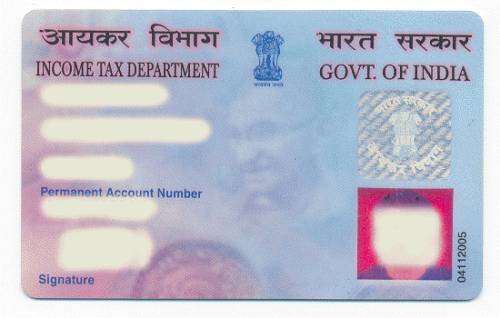
For an individual, the PAN card shows:
- the PAN;
- your name (on applications made in the new Form 93, the name as per Aadhaar is printed);
- your father’s or mother’s name, depending on which parent you choose to have printed;
- your date of birth;
- your photograph and signature;
- a QR code (part of PAN cards since 2017–18, according to PIB) that can be scanned to check the details.
For a company, firm or other entity, the card shows the PAN, the entity’s name and its date of incorporation or formation.
Your address is not printed on the card. People move often, and leaving the address off means the card does not go out of date when you do. The address stays in the Income Tax Department’s records, and you can update it there.
The details on the card come from your application form. Since 1 April 2026, new applications by Indian citizens use Form 93 (individuals) and Form 94 (other Indian applicants) under the Income-tax Rules, 2026; older articles, including an earlier version of this one, refer to Form 49A. See our step-by-step guide on how to apply for a PAN card and the documents required for a PAN application.
e-PAN and the physical card
An e-PAN is a digitally signed PDF version of your PAN card. It is free when you apply through the Instant e-PAN service on the e-filing portal, and both Protean and UTIITSL email an e-PAN when they issue a PAN. A physical card costs extra and is posted to you. Both carry the same number.
Who needs a PAN?
As summarised by PIB in November 2024, you need a PAN if, for example:
- your total income is above the amount that is not chargeable to tax;
- you run a business or profession whose sales, turnover or gross receipts are, or are likely to be, more than ₹5 lakh in a year;
- you intend to enter into a financial transaction for which quoting PAN is mandatory;
- you are a charitable trust required to file a return.
Many people get a PAN early anyway because banks, employers, brokers and mutual funds ask for it as part of know-your-customer (KYC) checks.
Where you have to quote PAN
The law lists “specified transactions” where you must give your PAN (or, in some cases, your Aadhaar). Under the rules that applied until March 2026, examples included large cash deposits, buying or selling property above a value limit, buying a motor vehicle, and opening most bank and demat accounts. The list and its limits were revised when the Income-tax Act, 2025 and the Income-tax Rules, 2026 came into force on 1 April 2026, so check the current limit with your bank, the seller or a tax professional rather than relying on old lists.
What happens if you do not have, or misuse, a PAN
- Higher TDS: when you do not give your PAN to someone deducting tax from a payment to you, tax is generally deducted at a higher rate than normal.
- Blocked transactions: banks and other parties may refuse a transaction that requires PAN until you provide it.
- Penalty: PIB’s PAN 2.0 explainer notes a penalty of ₹10,000 for not obtaining a PAN when required, quoting a wrong PAN, or similar defaults, and says no person may hold more than one PAN. If you have two, tell your Jurisdictional Assessing Officer and have the extra one cancelled.
An earlier version of this article said people without PAN pay a “flat 30% tax on all income” and cannot open any bank account. Those statements were not accurate: the consequence is higher TDS on specific payments and difficulty completing transactions where PAN is mandatory, not a flat tax on all income.
Is a PAN valid for life?
Yes. A PAN does not expire and does not change when you move house or change jobs. There is one important condition for individuals: your PAN must be linked with your Aadhaar unless you are in an exempt category. Under section 139AA of the old Income-tax Act, 1961 and section 262 of the Income-tax Act, 2025, an unlinked PAN becomes inoperative. To make it operative again you pay a ₹1,000 fee through e-Pay Tax on the e-filing portal and then link it. Our guide to linking Aadhaar with PAN and other documents explains the steps.
PAN 2.0: what is changing
The Cabinet approved the PAN 2.0 project on 25 November 2024, with an outlay of ₹1,435 crore. According to PIB:
- all PAN and TAN services, which now run on three portals (the e-filing portal, Protean and UTIITSL), will move to one Income Tax Department portal;
- allotment, updating and correction of PAN will be free, with the e-PAN sent by email;
- a physical card will cost ₹50 for delivery in India;
- existing PAN holders do not need to apply again, and current PAN cards stay valid.
The rollout is phased. As of October 2026, Protean and UTIITSL still process applications, so use them or the e-filing portal until the Income Tax Department announces otherwise.
Frequently asked questions
Is PAN the same as a PAN card?
No. The PAN is the 10-character number. The card, whether plastic or e-PAN, is just a document showing that number with your details.
Can I have two PAN cards?
You can have a reprinted card for the same PAN, but you cannot hold two different PANs. If you lose your card, request a reprint or download your e-PAN. Our duplicate PAN card guide explains how.
Do I need to renew my PAN card?
No. A PAN is permanent. You only apply for a change if your details, such as your name, change.
Do I need a new card because of PAN 2.0?
No. According to PIB, existing PAN cards remain valid, and a new card is issued only if you ask for an update or correction.
Can a minor have a PAN?
Yes. A parent or guardian applies on the child’s behalf as the representative. The free Instant e-PAN service is not available to minors, so the application goes through Protean or UTIITSL.
Facts in this guide were checked in October 2026 against PIB’s PAN 2.0 releases (November 2024), the Income Tax Department’s e-filing portal, and the current PAN forms published by Protean and UTIITSL. Tax rules changed on 1 April 2026, so confirm current limits and fees on incometax.gov.in before you act.