Quick answer: Some of the best beaches in the UK are Bournemouth and Weymouth in Dorset, Fistral in Cornwall for surfing, Brighton’s shingle beach and pier, Bigbury-on-Sea in Devon with its tidal Burgh Island, Blackpool in Lancashire, Porthcurno in Cornwall and Pelistry Bay in the Isles of Scilly. St Brelade’s Bay in Jersey is also included, although Jersey is a Crown Dependency rather than part of the UK. British seas are cool even in summer, so swim at lifeguarded beaches and check tide times.
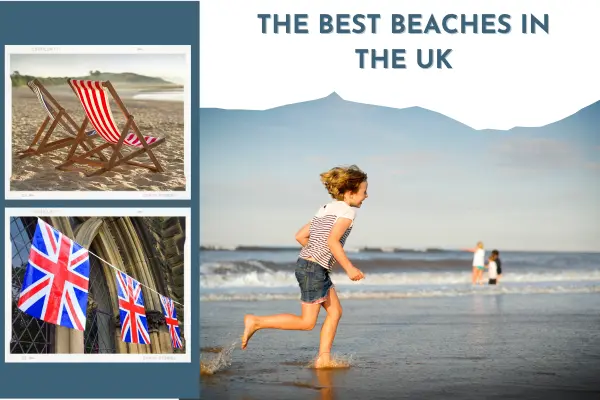
Britain’s coastline is long and varied, with cliffs, sweeping bays and sandy beaches that front cities, resort towns and islands. The beaches below range from busy seaside resorts with piers and promenades to small, quiet coves. Most of the best-known ones are in southern and south-west England, where the weather is mildest.
The best beaches in the UK at a glance
| Beach | Where | Best for |
|---|---|---|
| Bournemouth | Dorset, England | Long sandy beach, piers, resort facilities |
| Fistral | Newquay, Cornwall | Surfing |
| St Brelade’s Bay | Jersey (Crown Dependency) | Families, calm water |
| Weymouth | Dorset, England | Traditional seaside holiday |
| Brighton | East Sussex, England | City beach, pier, nightlife |
| Bigbury-on-Sea | Devon, England | Burgh Island and rock pools |
| Blackpool | Lancashire, England | Classic resort, Tower, Illuminations |
| Pelistry Bay | St Mary’s, Isles of Scilly | Quiet escape |
| Porthcurno | Cornwall, England | Scenery, clear water |
Bournemouth Beach, Dorset
Bournemouth Beach is one long sweep of golden sand on England’s south coast, running from Hengistbury Head in the east through Southbourne, Boscombe and Bournemouth itself towards Poole and Sandbanks in the west. Bournemouth’s own beaches are usually described as about seven miles long, and Bournemouth, Christchurch and Poole (BCP) Council says the three resorts together have more than 15 miles of sand. Several stretches hold Blue Flag awards for water quality and facilities.
Bournemouth has been a popular resort since the Victorian era. Today its seafront has two piers, beach huts, cafés and water-sports rental, and the town behind it has theatres, restaurants, shops and plenty of hotels. Lifeguards patrol the main beaches in summer.
Fistral Beach, Newquay, Cornwall
Fistral Beach, just west of Newquay on Cornwall’s north coast, is one of the UK’s best-known surfing beaches. It faces the Atlantic, which gives it some of the most consistent waves in Britain, and it has hosted major surfing competitions as well as the Boardmasters surf and music festival. The beach is about 750 metres long, backed by dunes, and overlooked by the Headland Hotel.
Fistral is busy all year with surfers, and liveliest in summer, when surf schools, board rental, shops and cafés along the beachfront are in full swing. Swimmers should stay between the lifeguards’ red and yellow flags, away from the surfing areas. (An earlier version of this article named a celebrity chef’s restaurant here; we could not confirm it is still open, so the reference has been removed.)
St Brelade’s Bay, Jersey
St Brelade’s Bay, on the south coast of Jersey, is a favourite with families. Its soft, pale sand, gently shelving water and sunny, south-facing position make it good for sandcastles and paddling, and a promenade with cafés, restaurants and shops runs behind the beach. At low tide there is plenty of room to walk the full length of the bay.
Note that Jersey is a self-governing British Crown Dependency in the Channel Islands, not part of the United Kingdom. Travellers from India should check Jersey’s entry requirements before they go. (An earlier version of this article called the beach “St Brélade’s Narrows” and listed it as a UK beach.)
Weymouth Beach, Dorset
Weymouth is one of England’s classic seaside resorts. King George III made it his summer holiday resort on 14 occasions between 1789 and 1805, and even bathed in the sea from a bathing machine, which helped make the town fashionable. Its long, gently sloping sandy beach curves around Weymouth Bay, and its shallow water is good for families.
In summer, the beach and esplanade host traditional seaside attractions, which can include donkey rides, Punch and Judy shows and sand sculptures. The Weymouth Pavilion theatre stands between the harbour and the esplanade. Weymouth is also a gateway to the Jurassic Coast, a UNESCO World Heritage Site, and the sailing events of the London 2012 Olympics were held nearby at Portland.
Brighton Beach, East Sussex
Brighton is one of Britain’s liveliest seaside cities and an easy day trip from London. Its long beach is shingle (pebbles) rather than sand, so bring sturdy footwear and a thick towel or beach chair.
Brighton Palace Pier is the centrepiece, with funfair rides, arcades and food stalls. Along the seafront you can try kayaking and stand-up paddleboarding, play beach volleyball, or walk or cycle the promenade, which is lined with cafés, bars and small shops.
Bigbury-on-Sea, Devon
Bigbury-on-Sea is a small resort on the South Devon coast, inside the South Devon National Landscape (formerly an Area of Outstanding Natural Beauty). Its sandy beach faces Burgh Island, a small tidal island about 250 metres offshore.
At low tide you can walk across the sand to the island, and the rock pools along the way are popular with children. At high tide, the hotel’s unusual “sea tractor” carries passengers across the shallow water. Burgh Island is best known for its restored 1930s Art Deco hotel and for its link with Agatha Christie, who drew on it for And Then There Were None and Evil Under the Sun. Check tide times before walking out, so you are not cut off.
Blackpool Beach, Lancashire
Blackpool grew rapidly in the 19th century after a railway branch line reached the town in 1846, and it became one of Britain’s most famous seaside resorts. It still attracts large numbers of visitors to its long sandy beach and promenade.
The town’s landmark is Blackpool Tower, 158 metres (518 feet) high, which was inspired by the Eiffel Tower in Paris and opened in 1894. Blackpool has three piers, North, Central and South, and the Golden Mile between them is packed with amusements. Each autumn the Blackpool Illuminations light up the seafront. Electric street lighting first came to the promenade in 1879, and the Illuminations themselves began in 1912. (An earlier version of this article gave the tower’s height as 513 feet, said the Illuminations started in 1879, and said the beach had recently won Blue Flag status; the first two have been corrected, and we could not confirm a current Blue Flag.)
Pelistry Bay, St Mary’s, Isles of Scilly
Pelistry Bay is a small, sheltered sandy beach on St Mary’s, the largest and most populated of the Isles of Scilly, off the tip of Cornwall. Its remote position means it is rarely crowded, which is exactly its appeal for couples and anyone looking for peace and quiet.
The Isles of Scilly (pronounced “silly”) are reached by sea or air from Cornwall. Each island has its own character, and St Mary’s has the widest choice of places to stay. There are no lifeguards on many Scilly beaches, so take care in the water.
Porthcurno Beach, Cornwall
Porthcurno is a small cove of fine, pale sand framed by granite cliffs near Land’s End, in the Cornwall National Landscape. Its turquoise water on sunny days makes it a favourite with painters and photographers. The open-air Minack Theatre is cut into the cliffs above the beach.
A car park sits above the beach, with a café nearby in season. The sea here can have strong currents, so it is not always safe for swimming; check the lifeguards’ flags and stay out of the water when conditions are rough.
Tips for a UK beach trip
- Expect cold water. Even in August, the sea around Britain is much cooler than tropical waters.
- Swim at lifeguarded beaches and stay between the red and yellow flags. In an emergency, call 999 or 112 and ask for the Coastguard.
- Check tide times, especially for tidal islands, rock pools and coves that can be cut off.
- Visa: Indian passport holders need a UK visa for tourism. Check the current rules on the UK government’s official website before you book.
Comparing destinations? See our guides to the best beaches in Spain, the best beaches in Australia and the best beaches in the USA.
Frequently asked questions
Which is the best beach in the UK for families?
Wide, sandy, lifeguarded beaches such as Bournemouth and Weymouth are good choices, with shallow water and plenty of facilities nearby.
Where is the best surfing in the UK?
Fistral Beach in Newquay, Cornwall, is the best-known surfing beach in Britain, with consistent Atlantic waves and major competitions.
Is Brighton beach sandy?
No. Brighton’s beach is shingle, made of pebbles, so bring comfortable footwear and something soft to sit on.
Is Jersey part of the UK?
No. Jersey is a British Crown Dependency with its own government. St Brelade’s Bay is included in this list because it is a popular beach for British holidaymakers.
When is the best time to visit UK beaches?
July and August are the warmest months and the busiest. June and September are often quieter, with milder crowds and reasonable weather.
Details checked in October 2026 against Bournemouth, Christchurch and Poole Council information, Blue Flag listings, and published records for Fistral Beach, Weymouth, Burgh Island and Blackpool. Beach facilities, lifeguard cover and awards change each year, so check before you travel.