Quick answer: North Carolina’s best beaches are on its barrier islands: the Outer Banks (Duck, Kill Devil Hills, Nags Head, Corolla, Carova, Hatteras Island and Ocracoke), the Crystal Coast (Atlantic Beach, Pine Knoll Shores, Emerald Isle and Shackleford Banks) and the southern coast near Wilmington (Wrightsville, Carolina Beach, Kure Beach, Topsail, Bald Head Island, Oak Island and Holden Beach). Lake Lure, in the mountains, adds a lake beach. Summer is peak season; hurricane season runs from June to November, and rip currents are a serious risk on ocean beaches, so always check the local surf forecast and lifeguard flags.
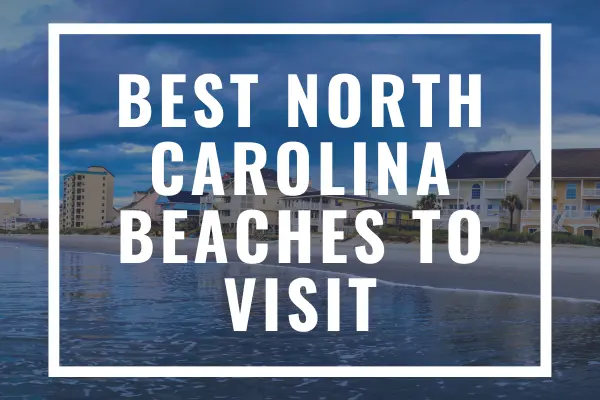
North Carolina stretches from the Atlantic coast in the east to the Appalachian Mountains in the west, with cities such as Raleigh and Charlotte in between. Its long coastline is lined with barrier islands, where wild horses roam, sea turtles nest in summer and small beach towns each have their own character. Here are 20 of the best North Carolina beaches, grouped by region.
Before you go: beach safety
- Rip currents: they are the biggest danger on North Carolina’s ocean beaches. Swim near a lifeguard where possible, and if caught, swim parallel to the shore.
- Lifeguards: coverage varies by town and season, and many beaches are unguarded outside summer. Check the town or park website.
- Wild horses and turtles: keep at least 50 feet from wild horses, as required on the northern Outer Banks and advised by the National Park Service at Shackleford Banks. Sea turtle nests are protected by federal law, so do not disturb marked nests.
- Storms: the Atlantic hurricane season runs from 1 June to 30 November. Check forecasts and any evacuation orders before you travel.
Outer Banks
1. Carova Beach
Carova Beach, in the far north-eastern corner of North Carolina just south of the Virginia line, is one of the wildest places on the coast. There are no paved roads: you reach it by four-wheel-drive vehicle along the beach from Corolla, or by boat. Banker horses, wild horses believed to descend from Spanish mustangs, roam the beaches and dunes, and a beach law bars people from coming within 50 feet of them. Carova has about 740 beach homes, many rented by the week, but no restaurants, shops or attractions, so bring everything you need.
An earlier version of this article said Carova has plenty of dining, shopping and water sports and named the Currituck Beach Lighthouse as an attraction there. Carova has no such facilities, and the lighthouse is in Corolla (see number 2).
2. Corolla and the Currituck Banks
Corolla, in Currituck County, is the gateway to the wild-horse country of the northern Outer Banks. Its best-known landmark is the Currituck Beach Lighthouse, and the historic Whalehead Club is nearby. The Corolla wild horses live on a protected sanctuary of about 12,000 acres north of the town, and many tour companies run wild-horse tours. The Currituck Banks National Estuarine Research Reserve, less than a mile north of town, has natural trails. The beach is calm and family-friendly in good weather.
3. Duck
Duck, the northernmost town in Dare County, sits between the Atlantic and Currituck Sound. Alongside its ocean beach, it has a boardwalk of about 0.78 miles along the sound, an 11-acre town park with trails and a kayak launch, and summer events such as concerts and films by the water. Its beach has been named among the top family-friendly beaches in America. From Duck, it is a short drive to Corolla for a wild-horse tour.
4. Kill Devil Hills
Kill Devil Hills has a special place in history: on 17 December 1903, Orville and Wilbur Wright made the first powered aeroplane flights on land that is now part of the town. Because the nearest settlement then was Kitty Hawk, about 4 miles north, the flights are popularly linked with Kitty Hawk. The Wright Brothers National Memorial, dedicated in 1932, marks the site. The town’s long Atlantic beach is lined with beach cottages.
5. Nags Head
Nags Head, in Dare County, is one of the busiest family resorts on the Outer Banks. Jockey’s Ridge State Park has the tallest active sand dune on the East Coast and is popular for hang-gliding, kite flying and swimming at its sound-side beach. Jennette’s Pier, rebuilt by the North Carolina Aquariums and reopened in 2011, is one of three fishing piers in town. You will also find mini golf, go-karts and ice-cream shops, and the 1,092-acre Nags Head Woods Ecological Preserve for quiet walks.
6. Haulover Day Use Area (Canadian Hole), Hatteras Island
Canadian Hole, now known as the Haulover Day Use Area, is on the sound side of Hatteras Island near Buxton, within Cape Hatteras National Seashore. It is one of the world’s best-known spots for windsurfing and kiteboarding, especially in spring and autumn when the wind is strong. The National Park Service says the water near the shore is shallow and gentle, averaging one to two feet deep, which also suits families. Stay for the sunset over the sound.
An earlier version of this article described Canadian Hole as a surfing beach. It is a sound-side flat-water spot for windsurfing and kiteboarding, not an ocean surf beach.
7. Frisco Beach, Hatteras Island
Frisco is a small village between Buxton and Hatteras village near the southern end of Hatteras Island. Its beaches are part of Cape Hatteras National Seashore and are quiet compared with the northern Outer Banks. There are a few restaurants and bars in the village. The Frisco fishing pier was destroyed by Hurricane Earl in 2010.
An earlier version of this article called Frisco an ideal swimming beach. Ocean conditions on Hatteras Island can be rough, so check lifeguard availability and the surf forecast before swimming.
8. Ocracoke Island
Ocracoke is one of the most remote islands on the Outer Banks. It can be reached only by ferry, private boat or small plane, and almost the whole island outside the village is part of Cape Hatteras National Seashore, so its beaches are long and undeveloped. Visitors come for surfing, sunbathing, kite flying and sandcastle building, birdwatching and the island’s history: the Ocracoke Light has operated since 1823, and the pirate Blackbeard was killed off the island in 1718. The island also has a pony pen.
Crystal Coast
9. Shackleford Banks
Shackleford Banks, part of Cape Lookout National Seashore in Carteret County, is an uninhabited barrier island reached by ferry from Beaufort, Morehead City or Harkers Island. It is best known for its herd of wild Banker horses, which the National Park Service monitors; keep at least 50 feet away from them. Shell collectors and beach campers love its windswept shore, and loggerhead turtles nest here in summer.
An earlier version of this article placed Shackleford Banks “at the tip” of the national seashore and mentioned hills of clam shells and pearl hunting; those details could not be verified and have been removed.
10. Atlantic Beach
Atlantic Beach, on the eastern end of Bogue Banks, is a classic Crystal Coast resort with public beaches, restaurants and shops. It is linked to Morehead City by a causeway across Bogue Sound. Next door, Fort Macon State Park, with its historic fort overlooking Beaufort Inlet, makes a good change from the beach.
11. Pine Knoll Shores
Pine Knoll Shores, between Atlantic Beach and Indian Beach on Bogue Banks, is a quieter town with a less crowded beach. It is home to the North Carolina Aquarium at Pine Knoll Shores, which makes a good outing for families on a rainy day.
An earlier version of this article called the town “Pine Knoll Strolls”; the correct name is Pine Knoll Shores.
12. Emerald Isle
Emerald Isle covers the western end of Bogue Banks, ending at Bogue Inlet. Its beaches are a favoured nesting site for sea turtles, which are protected by federal law. The town is relaxed and family-oriented; for a quieter spot, head towards the inlet at the western end.
An earlier version of this article said Emerald Isle is popular with spring-break crowds. We could not verify this, so it has been removed.
Southern coast
13. Topsail Island
Topsail Island is a barrier island about 26 miles long, shared by the towns of North Topsail Beach, Surf City and Topsail Beach. Beaches face the ocean on one side and the sound on the other, and the sound side is calmer for kayaking. The Karen Beasley Sea Turtle Rescue and Rehabilitation Center on the island cares for injured turtles and watches over the nests. The island also has an unusual history: after the Second World War, the US Navy tested ramjet missiles here under Operation Bumblebee, and some of the observation towers still stand. Two high-rise bridges, at Surf City and North Topsail Beach, connect it to the mainland.
14. Wrightsville Beach
Wrightsville Beach, just east of Wilmington, is a 4.6-mile beach island and one of the easiest North Carolina beaches to reach: Interstate 40 runs from Raleigh to Wilmington. Easy access means it gets crowded, especially at weekends. Johnnie Mercer’s Pier, first built in 1937 and rebuilt in concrete in 2002, is a local landmark.
An earlier version of this article described Wrightsville Beach as being “right off I-40” and close to Raleigh. Interstate 40 ends in Wilmington, and Wrightsville is a short drive beyond it, a long way from Raleigh.
15. Carolina Beach
Carolina Beach, at the northern end of Pleasure Island in New Hanover County, is a lively family beach town. Its boardwalk near the town centre hosts live beach music on summer Friday nights, and there is a fishing pier. At the north end, Freeman Park allows four-wheel-drive vehicles on the beach and overnight camping. Carolina Beach State Park, on the Cape Fear River side of the island, has hiking trails and is known for rare carnivorous plants such as the Venus flytrap.
An earlier version of this article called it “Carolina Beach National Park”. The park is a state park, and it is on the river, not the ocean beach.
16. Kure Beach
Kure Beach is a small town on Pleasure Island, about 15 miles south of Wilmington, just north of Fort Fisher. The Kure Beach Fishing Pier, first built in 1923, is one of the oldest on the Atlantic coast. Visitors come for fishing, swimming and quiet beach days, and the North Carolina Aquarium at Fort Fisher and the Fort Fisher historic site are close by.
An earlier version of this article placed Kure Beach “on the banks of the Bogue river”. Kure Beach is on the Atlantic coast of Pleasure Island; Bogue Sound and Bogue Banks are further north on the Crystal Coast.
17. South Beach, Bald Head Island
Bald Head Island, in Brunswick County at the mouth of the Cape Fear River, feels a world away: it is reached by ferry from Southport, and there are few cars, with residents and visitors getting around in electric golf carts. The island has three beaches, and South Beach is popular for its quiet sand. Old Baldy, built in 1817, is the oldest lighthouse still standing in North Carolina and is open to visitors.
18. Oak Island
Oak Island, in Brunswick County, is shared by the towns of Oak Island and Caswell Beach. It has a relaxed atmosphere, two public fishing piers (Ocean Crest Pier and Oak Island Pier), and options for bike rentals, mini golf and boating.
19. Holden Beach
Holden Beach is a quiet family town on an 8-mile-long barrier island in Brunswick County. The island’s only road, NC Highway 130, crosses the Intracoastal Waterway on a high-rise bridge that opened in 1986. The town had 921 residents at the 2020 census, and it is a good choice for a relaxing family holiday.
An earlier version of this article said the island is connected to the mainland by ferry only and gave a population of 575. A public ferry did operate from 1934, but the island has been linked by a high-rise bridge since 1986, and the 2020 census counted 921 residents.
Mountains
20. Lake Lure Beach
Lake Lure, in the Blue Ridge foothills near Chimney Rock, is a reservoir created by a dam on the Rocky Broad River in the 1920s, with a man-made sand beach run by the town. The town was a filming location for the film Dirty Dancing. Hurricane Helene caused catastrophic damage in September 2024, and the lake was closed for about 20 months; it reopened in stages in 2026, with Lake Lure Beach opening around Memorial Day. Check the Town of Lake Lure website for the current season, hours and admission.
An earlier version of this article said the lake is on the “stream Wide”; the river is the Rocky Broad River.
Comparing US beach states? See our guides to the best beaches in Virginia, the best beaches in Florida and the best beaches in the USA.
Frequently asked questions
Where can you see wild horses on North Carolina beaches?
On the northern Outer Banks around Corolla and Carova, on Shackleford Banks in Cape Lookout National Seashore, and at the pony pen on Ocracoke. Keep at least 50 feet away from wild horses.
Which North Carolina beach is best for families?
Duck, Nags Head, Carolina Beach, Kure Beach, Holden Beach and Oak Island are popular with families. Choose a beach with lifeguards in season and follow the flag warnings.
When is the best time to visit North Carolina beaches?
Summer is the main beach season. Late spring and early autumn are quieter, but the Atlantic hurricane season runs from June to November, so watch the forecasts.
Is there a lake beach in North Carolina’s mountains?
Yes. Lake Lure has a town-run sand beach. It reopened in 2026 after damage from Hurricane Helene; check the town’s website for the current season.
Details checked in October 2026 against National Park Service information for Cape Hatteras and Cape Lookout national seashores, Town of Lake Lure updates and published records for each town and park. Lifeguard schedules and storm closures change, so check before you go.