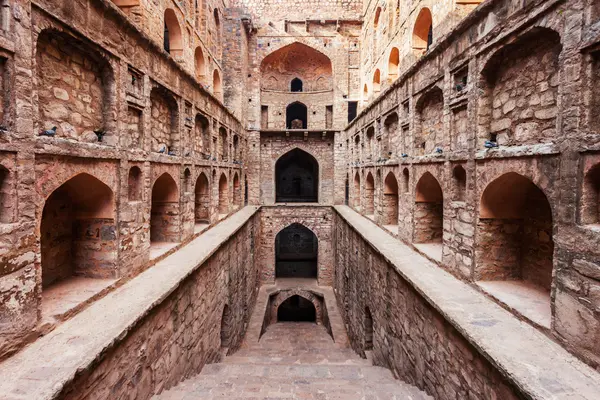
Quick answer: Agrasen ki Baoli is a historic stepwell on Hailey Road, near Connaught Place in central Delhi, about 60 metres long and 15 metres wide, with more than 100 steps leading down to the water level. It is protected by the Archaeological Survey of India (ASI) and became widely known after appearing in films such as PK. As of October 2026, Delhi Tourism lists it as open daily from 9 am to 5:30 pm; it does not list an entry fee.
Agrasen ki Baoli at a glance
| Detail | Information |
|---|---|
| Location | Hailey Lane, off Hailey Road, near Connaught Place, New Delhi |
| Type | Stepwell (baoli), about 60 m long and 15 m wide |
| Status | Monument of National Importance, protected by the ASI |
| Timings | 9 am to 5:30 pm, open all days (Delhi Tourism, October 2026) |
| Entry fee | None listed by Delhi Tourism; check at the gate |
| Nearest metro | Mandi House (Blue Line) or Janpath (Yellow Line), per Delhi Tourism |
| Best time to visit | October to March; early morning for photography |
| Time needed | About an hour |
An earlier version of this article gave the timings as 7 am to 6 pm. Delhi Tourism’s current listing is 9 am to 5:30 pm.
What is a baoli?
A baoli (also written baodi or bawdi) is a stepwell: a well or reservoir that people reach by walking down a long flight of steps. Stepwells were built across north and west India, especially in Gujarat and Rajasthan, to store water through the dry months. The shaded, cooler chambers along their sides also gave people somewhere to rest in the summer heat.
History of Agrasen ki Baoli
No historical record shows who built Agrasen ki Baoli or exactly when. Tradition links it to Maharaja Agrasen, the legendary king revered by the Agrawal community, and it is believed that the community built or rebuilt it in his name. Delhi Tourism notes the belief that it dates back to the Mahabharata era, but that is a legend, not something archaeology has confirmed.
The architecture of the present structure suggests that it was rebuilt during the Delhi Sultanate, in the Tughlaq or Lodi period (14th to early 16th centuries). The stepwell is protected by the ASI under the Ancient Monuments and Archaeological Sites and Remains Act, 1958, and is listed as a Monument of National Importance.
An earlier version of this article said the baoli “was built during the Maharashtra time by Maharaja Agrasen” and that it is “the oldest monument of central Delhi”. Neither claim is supported, so both have been removed. It also called the Anang Tal in Mehrauli “the oldest baoli in Delhi”; Anang Tal is a reservoir, not a stepwell, so that comparison has been dropped.
Architecture
- Size: About 60 metres long and 15 metres wide.
- Steps: A long flight of more than 100 stone steps descends to the bottom. Sources differ on the exact count: Delhi Tourism gives 103, while some other sources give 108.
- Three levels: Three storeys are visible, each lined on both sides with arched niches. These niches and the chambers behind them offered shade and cooler air in summer.
- Rooms and passages: Small rooms and passages open off the walls; some are kept closed for safety.
- Mosque: A small three-sided mosque stands at the western side of the stepwell.
Films and stories
Agrasen ki Baoli has appeared in several Hindi films, including PK (2014), in which Aamir Khan’s character shelters here, as well as Sultan, Kabhi Alvida Naa Kehna, Shubh Mangal Saavdhan and Mom. Its appearance in PK in particular brought a surge of visitors.
The baoli is also the subject of urban legends that it is haunted. These are popular stories with no basis in fact. An earlier version of this article repeated a claim that many people had taken their lives here; we could not verify it, and it has been removed.
Visiting tips
- Take care on the steps, which are steep, uneven and without railings in places. Keep a close eye on children.
- Visit early in the morning for softer light and fewer people, especially if you want to photograph the full length of the steps.
- Carry water and a cap in summer; the upper part of the stepwell is exposed to the sun.
- Do not litter or write on the walls. The baoli is a protected monument.
- The site is compact and easy to explore on your own in about an hour.
How to reach
- Metro: Delhi Tourism names Mandi House (Blue Line) and Janpath (Yellow Line) as the nearest stations. Barakhamba Road (Blue Line) is also nearby. From any of them, it is a short walk or auto-rickshaw ride to Hailey Road.
- Road: The baoli is in Hailey Lane, a narrow lane off Hailey Road. Auto-rickshaws and taxis can drop you at the end of the lane.
- Rail and air: New Delhi railway station is a short taxi ride away; from the airport, the Airport Express Line runs to New Delhi and Shivaji Stadium, close to Connaught Place.
Nearby places
Agrasen ki Baoli fits easily into a walk around central Delhi. Connaught Place and its Janpath market are a few minutes away, and the 18th-century observatory of Jantar Mantar is close by. The Sacred Heart Cathedral and Gurudwara Bangla Sahib are a short ride west, and India Gate is a short drive south.
Frequently asked questions
What are the timings of Agrasen ki Baoli?
As of October 2026, Delhi Tourism lists the stepwell as open every day from 9 am to 5:30 pm.
Is there an entry fee for Agrasen ki Baoli?
Delhi Tourism does not list an entry fee. Check at the gate in case the ASI changes its rules.
Who built Agrasen ki Baoli?
No record names the builder. Tradition links it to Maharaja Agrasen and the Agrawal community, and its present form appears to date from a rebuilding in the Tughlaq or Lodi period.
How many steps does Agrasen ki Baoli have?
More than 100. Delhi Tourism gives 103 steps; some other sources say 108.
Is Agrasen ki Baoli haunted?
Stories about the baoli being haunted are urban legends. Many people visit every day; just take care on the steep steps.
Details checked in October 2026 against Delhi Tourism’s page for Agrasen ki Baoli and published records of the monument’s history and ASI protection. Timings can change, so check before you visit.