Quick answer: Chandni Chowk is Old Delhi’s historic main street and one of India’s largest wholesale markets, running from the Red Fort to Fatehpuri Masjid. It was laid out in 1650 under Mughal emperor Shah Jahan, with its design credited to his daughter Jahanara, and its side lanes specialise in everything from jewellery and spices to wedding trimmings, books and lights. There is no entry fee; the main road was pedestrianised in a redevelopment completed in 2021, and many of its markets close on Sundays.
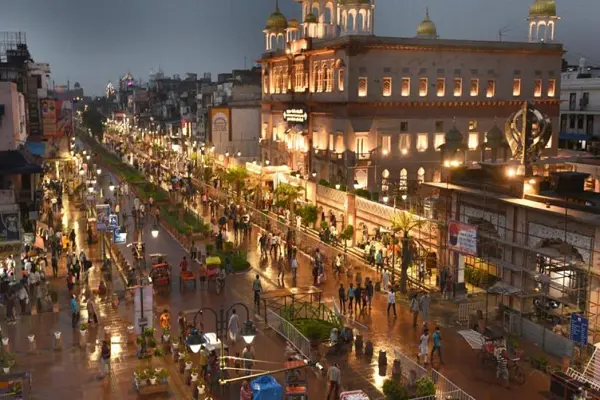
Chandni Chowk at a glance
| Detail | What to know |
|---|---|
| Location | Old Delhi (Shahjahanabad), between the Red Fort and Fatehpuri Masjid |
| Built | 1650, under Shah Jahan |
| Entry fee | None; it is a public market street |
| Timings | Vary by market and shop; many wholesale markets close on Sundays (Delhi Tourism notes Nai Sarak is closed on Sundays) |
| Nearest metro | Chandni Chowk (Yellow Line); Lal Quila and Jama Masjid (Violet Line) |
| Time needed | Half a day or more (general guidance) |
| Best time to visit | Weekday mornings, October to March (general guidance) |
History of Chandni Chowk
Chandni Chowk was built as the grand main street of Shahjahanabad, the walled capital that Shah Jahan founded when he moved the Mughal court from Agra to Delhi and built the Red Fort on the banks of the Yamuna. The market and its bazaars were laid out in 1650, and their design is credited to Princess Jahanara Begum, Shah Jahan’s favourite daughter.
The name means “Moonlight Square”. The original Chowk was a half-moon-shaped square with a pool in the middle, and the moonlight shimmering on the water is said to have given the place its name. A shallow water channel fed by the Yamuna ran down the centre of the street, with roads and shops on either side. When it was built, the bazaar had about 1,560 shops. Another explanation links the name to chandi (silver), because the street was famous for its silversmiths.
The pool was replaced by a clock tower, the Ghantaghar, in the 1870s, and the British built the Delhi Town Hall nearby in 1863. The centre of the market is still called Ghantaghar. An earlier version of this article said the pool survived until the 1950s; in fact it was replaced in the 1870s.
Originally the street was divided into three bazaars: Urdu Bazaar, from the Lahori Gate of the Red Fort to Chowk Kotwali near Gurudwara Sis Ganj; Johri (jewellers’) Bazaar; and Fatehpuri Bazaar, ending at Fatehpuri Masjid. Today the whole 1.3 km stretch is known as Chandni Chowk, with dozens of lanes (kuchas and katras) branching off it, many named after the trades once practised there.
The redevelopment
The Delhi government’s Shahjahanabad Redevelopment Corporation redeveloped the main street as a pedestrian heritage stretch. The first phase was completed in 2021: overhead wires were removed, the road was repaved in red sandstone and granite, and motorised traffic is not allowed between the Red Fort and Fatehpuri Masjid during the day. A multilevel parking-cum-commercial complex at Gandhi Maidan opened in early 2024. Congestion is still heavy, so expect crowds and e-rickshaws.
An earlier version of this article included real-estate investment claims about rental growth and future footfall. They were unsourced and not relevant to visitors, so they have been removed.
Markets of Chandni Chowk and what to buy
Most outlets here are wholesale shops, which is why prices can be low, and many lanes specialise in a single trade. Delhi Tourism highlights:
- Dariba Kalan: pearl, gold and silver jewellery and attar (natural perfumes). Gulab Singh Johri Mal, an attar maker established in 1819, is based here.
- Kinari Bazaar: zari and zardozi trimmings, tinsel, borders and wedding decorations, the place to go if there is a wedding in the family.
- Khari Baoli: Old Delhi’s famous wholesale spice market, a must for anyone who cooks; dry fruits and herbs are sold here too.
- Katra Neel: fabrics such as silk, satin, crepe, cotton and muslin.
- Bhagirath Palace: described by Delhi Tourism as Asia’s largest market for electrical goods and lights, also selling medical equipment and medicines. The name comes from the palace of Begum Samru, built in 1806, which stands at its heart.
- Nai Sarak: the book street connecting Chandni Chowk with Chawri Bazar, packed with wholesale and retail shops for school and college textbooks and stationery. Closed on Sundays.
- Chhatta Chowk: a 17th-century covered bazaar leading into the Red Fort, now selling souvenirs, bags and jewellery.
- Daryaganj Sunday book market: a weekly second-hand book market nearby, held on Sundays.
Food in Chandni Chowk
Chandni Chowk is as famous for its food as for its shopping. Paranthe Wali Gali, a lane of paratha shops that grew up in the late 19th century, is the best-known stop, and the area is full of old sweet shops, chaat stalls and kebab houses, especially around Jama Masjid. Food stalls change hands over time, so check recent recommendations, and choose busy stalls where food is cooked fresh.
Places to visit in and around Chandni Chowk
- Red Fort (Lal Qila): the Mughal palace-fortress at the eastern end of Chandni Chowk, and a UNESCO World Heritage Site. See our guide to the Red Fort.
- Jama Masjid: one of India’s largest mosques, built by Shah Jahan on high ground just south of Chandni Chowk. Read our Jama Masjid guide for current visiting hours for tourists.
- Gurudwara Sis Ganj Sahib: marks the place where the ninth Sikh Guru, Guru Tegh Bahadur, was executed on Aurangzeb’s orders in November 1675. A memorial was first built here in 1783 by the Sikh general Baghel Singh; the present building dates from 1930.
- Sri Digambar Jain Lal Mandir: a red sandstone Jain temple opposite the Red Fort, established in 1656 and often described as the oldest Jain temple in Delhi. It runs a bird hospital, founded in 1929.
- Fatehpuri Masjid: the mosque at the western end of the street, built in 1650 by Fatehpuri Begum, one of Shah Jahan’s queens. See our guide to Fatehpuri Masjid.
- Sunehri Masjid and Gauri Shankar Temple: two more historic places of worship along the street, showing how many faiths have shared this road for centuries.
Opening hours for temples, gurudwaras and mosques are set by their managements and can change on festival days, so check locally before you go.
How to reach Chandni Chowk
- By metro: Chandni Chowk station on the Yellow Line is closest to the western and central parts of the street. Lal Quila and Jama Masjid stations, on the Violet Line’s “Heritage Line” section, are closer to the Red Fort end. Chawri Bazar (Yellow Line) is handy for Nai Sarak.
- By rail: Old Delhi Railway Station is next to Chandni Chowk.
- Getting around: the main street is pedestrian during the day. Walk, or use cycle rickshaws and e-rickshaws for the lanes. Autos and app cabs can drop you at the edges of the pedestrian zone.
Tips for visiting
- Go on a weekday morning; afternoons and the weeks before Diwali and the wedding season are extremely crowded.
- Wear comfortable shoes and keep your phone and wallet secure in the crowds.
- Bargain at small shops and stalls, and compare a few shops before buying jewellery or attar.
- Dress modestly and cover your head where required when visiting the gurudwara, temples and mosques.
- Many markets close on Sundays, so plan a weekday visit for shopping.
Frequently asked questions
Who built Chandni Chowk?
Chandni Chowk was built in 1650 during the reign of Mughal emperor Shah Jahan, and its design is credited to his daughter, Princess Jahanara Begum.
Why is it called Chandni Chowk?
“Chandni Chowk” means “Moonlight Square”. The original square had a pool that reflected the moonlight. Another explanation links the name to the street’s silver (chandi) traders.
Is Chandni Chowk open on Sunday?
Many shops and wholesale markets close on Sundays; Delhi Tourism notes that Nai Sarak is closed on Sundays. Food stalls and some shops do open, but weekdays are better for shopping.
Which metro station is best for Chandni Chowk?
Chandni Chowk (Yellow Line) for the main market, or Lal Quila and Jama Masjid (Violet Line) for the Red Fort end.
What is Chandni Chowk famous for?
Its Mughal history, wholesale markets for jewellery, spices, fabric, books and lights, wedding shopping and street food such as parathas and chaat.
Details checked in October 2026 against Delhi Tourism’s Old Delhi shopping page, the Delhi Sikh Gurdwara Management Committee’s page on Gurudwara Sis Ganj Sahib, and published histories of Shahjahanabad. Market days and timings vary, so check before a special trip.