Quick answer: Fatehpuri Masjid is a 17th-century Mughal mosque at the western end of Chandni Chowk in Old Delhi, built in 1650 by Fatehpuri Begum, one of the wives of Emperor Shah Jahan. Built of red sandstone, it is still a working mosque and stands beside Khari Baoli, the city’s famous spice market. There is no entry fee; we could not find officially published visiting hours, so the times in an earlier version of this article have been removed, and you should avoid prayer times, especially Friday midday prayers.
Fatehpuri Masjid at a glance
| Detail | Information |
|---|---|
| Location | Western end of Chandni Chowk, beside Khari Baoli, Old Delhi |
| Built | 1650, by Fatehpuri Begum, a wife of Emperor Shah Jahan |
| Style | Mughal, in red sandstone |
| Entry fee | None |
| Timings | Not officially published; avoid the five daily prayers and Friday midday prayers |
| Nearest metro | Chandni Chowk (Yellow Line) |
| Time needed | 30 to 60 minutes |
History of Fatehpuri Masjid
Fatehpuri Masjid was built in 1650 by Fatehpuri Begum, one of Shah Jahan’s wives, who is said to have come from Fatehpur Sikri. It was completed in the early years of Shahjahanabad, the walled city Shah Jahan built as his new capital, and stands at the far western end of Chandni Chowk, the city’s grand market street, which runs east to the Red Fort. Later, the Khari Baoli spice market grew up around it. It is often described as Delhi’s second-largest mosque after the Jama Masjid.
After the 1857 uprising
The mosque’s later history is closely tied to the uprising of 1857. After the British retook Delhi, they expelled much of the city’s Muslim population and auctioned the mosque. It was bought by a wealthy merchant, Rai Lala Chunnamal, for Rs 19,000. Chunnamal is credited with preserving the building, and his family’s haveli still stands in Chandni Chowk.
In 1877 the government took the mosque back in exchange for four villages and returned it to the city’s Muslims, around the time of the Delhi Durbar of that year, when Muslims were allowed to return to Old Delhi. Prayers resumed and have continued since.
An earlier version of this article said Lala Chunnamal paid Rs 29,000 for the mosque. Published histories give Rs 19,000, and the figure has been corrected.
Architecture
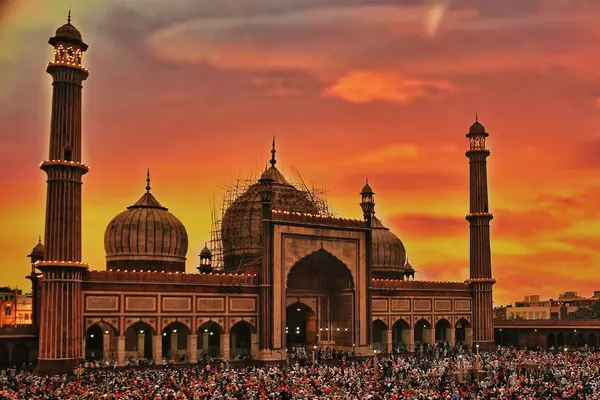
Fatehpuri Masjid is a classic Mughal congregational mosque in red sandstone:
- Prayer hall: Raised on a platform and opening onto the courtyard through seven arches. The central arch (iwan) is the tallest and is flanked by three arches on each side.
- Dome and minarets: A single fluted dome crowns the prayer hall, finished with lotus and pot-shaped (kalash) finials, and two minarets flank it.
- Courtyard: A large open courtyard with single- and double-storeyed rooms along its sides, rare open space in the crowded lanes of Old Delhi.
Correction: An earlier version of this article described a “Buland Darwaza” (Victory Gate) entrance 54 metres high, the white marble tomb of the Sufi saint Shaikh Salim Chishti, and a sealed tunnel to Agra Fort. Those features belong to the Jama Masjid at Fatehpur Sikri near Agra, not to Fatehpuri Masjid in Delhi, and have been removed.
What to do at Fatehpuri Masjid
- Spend time in the courtyard: It is one of the few large open spaces in Old Delhi and a calm contrast to the market outside.
- Look at the details: The fluted dome, the arches of the prayer hall and the sandstone work reward a slow look.
- Walk through Khari Baoli: The spice market around the mosque is one of the largest in Asia and is best seen on foot.
- Photograph respectfully: Ask before photographing worshippers, and do not take photos during prayers.
Visiting etiquette
- Fatehpuri Masjid is a working mosque. Avoid visiting during prayers, and expect the courtyard to fill up for Friday midday prayers.
- Dress modestly, covering shoulders and legs; women may be asked to cover their heads.
- Remove your shoes before entering the prayer area.
- The courtyard is open to the sky and gets very hot in the afternoons from April to June, so go early in the morning or late in the day.
An earlier version of this article said the mosque is open from 5 am to 9:30 pm every day. We could not confirm those hours from an official source in October 2026, so check locally before you go.
How to reach
- Metro: Chandni Chowk station on the Yellow Line is the nearest. From there, walk or take a cycle-rickshaw through the market to the western end of Chandni Chowk.
- From the Red Fort side: Lal Qila station on the Violet Line is at the other end of Chandni Chowk; a cycle-rickshaw ride along the street brings you to the mosque.
- Road: Old Delhi’s lanes are congested and cars cannot reach the mosque gate easily. Taxis can drop you nearby, but expect to walk or take a rickshaw for the last stretch.
Nearby places
Fatehpuri Masjid is a natural starting or ending point for exploring Chandni Chowk market. At the other end of the street is the Red Fort, and the grander Jama Masjid, also built under Shah Jahan, is a short rickshaw ride away. Paranthe Wali Gali, the lane famous for fried stuffed parathas, opens off Chandni Chowk on the way.
Frequently asked questions
Who built Fatehpuri Masjid?
Fatehpuri Begum, one of the wives of the Mughal emperor Shah Jahan, built the mosque in 1650.
Is there an entry fee for Fatehpuri Masjid?
No. It is a working mosque and there is no entry fee. Visit outside prayer times and dress modestly.
What happened to Fatehpuri Masjid after 1857?
The British auctioned it to the merchant Lala Chunnamal for Rs 19,000. In 1877 the government took it back in exchange for four villages and returned it to the Muslims of Delhi.
Which metro station is closest to Fatehpuri Masjid?
Chandni Chowk on the Yellow Line. The mosque is at the western end of Chandni Chowk, a short walk or rickshaw ride from the station.
Is Fatehpuri Masjid the same as the Jama Masjid at Fatehpur Sikri?
No. Fatehpuri Masjid is in Old Delhi and was built in 1650. The Jama Masjid at Fatehpur Sikri, with its Buland Darwaza and the tomb of Shaikh Salim Chishti, is near Agra and dates from Akbar’s reign.
Details checked in October 2026 against published histories of Fatehpuri Masjid and Shahjahanabad. Visiting hours are not officially published, so check locally and avoid prayer times.