
Quick answer: Chennai’s most famous temples include the Kapaleeswarar Temple in Mylapore, the Parthasarathy Temple in Triplicane, the Marundeeswarar Temple in Thiruvanmiyur, the Vadapalani Murugan Temple and the Ashtalakshmi Temple at Besant Nagar. The old George Town area adds the Kalikambal, Ekambareswarar and Kandha Kottam temples, and the city also has well-known Jain temples. Timings vary from temple to temple and most close for a few hours in the afternoon, so check before you go.

Chennai is best known for its beaches, markets and colonial landmarks, but its temples are among its oldest and most important sights. Some date back more than a thousand years, while others were built in the 20th century. Below are 13 of the city’s best-known temples: who they are dedicated to, what makes each one special and what to know before visiting.
Chennai’s famous temples at a glance
| Temple | Area | Dedicated to |
|---|---|---|
| Kapaleeswarar Temple | Mylapore | Shiva and Parvati (Karpagambal) |
| Marundeeswarar Temple | Thiruvanmiyur | Shiva |
| Ekambareswarar Temple | George Town (Mint Street) | Shiva |
| Parthasarathy Temple | Triplicane | Vishnu (Krishna as Parthasarathy) |
| Vadapalani Murugan Temple | Vadapalani | Murugan |
| Kandha Kottam | George Town | Murugan |
| Kalikambal Temple | George Town (Thambu Chetty Street) | Kalikambal (Kamakshi) and Shiva |
| TTD Venkateswara Temple | T. Nagar | Venkateswara |
| Ashtalakshmi Temple | Besant Nagar | Lakshmi in her eight forms |
| Chandraprabhu Jain Naya Mandir | Sowcarpet (Mint Street) | Chandraprabhu, the 8th Tirthankara |
| Mangadu Kamakshi Amman Temple | Mangadu | Kamakshi |
| Adeeswar (Kesarwadi) Jain Temple | Puzhal, near Red Hills | Adinath (Rishabhanatha), the 1st Tirthankara |
| Mahalingapuram Ayyappan Temple | Mahalingapuram | Ayyappan and Guruvayurappan |
1. Kapaleeswarar Temple, Mylapore
The Kapaleeswarar Temple in Mylapore is dedicated to Shiva, worshipped here as Kapaleeswarar, and to Parvati as Karpagambal. It is one of Chennai’s best-known landmarks, with a richly sculpted east gopuram about 40 m tall that is covered in painted stucco figures.
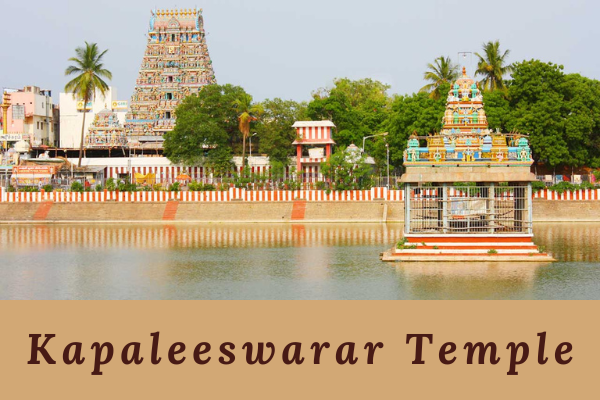
An earlier version of this article said the Pallavas built the temple in the 7th century. The original shrine is thought to have stood on the seashore in Pallava times, but the present temple was built in its current location much later, around the 16th to 17th century, and the tall gopuram dates from 1906. The temple’s architecture is in the Dravidian style.
Six daily pujas are held, from Ushathkalam early in the morning to Ardha Jamam at night. The biggest crowds come during the Panguni Brahmotsavam (mid-March to mid-April), especially for the Arupathimoovar procession, which honours the 63 Nayanar saints.
2. Marundeeswarar Temple, Thiruvanmiyur
The Marundeeswarar Temple in Thiruvanmiyur, near the coast in south Chennai, is dedicated to Shiva as Marundeeswarar, “the lord of medicines”, worshipped as a healer. The present stone temple dates from the Chola period and was expanded by later Chola kings and the Vijayanagara rulers. The temple covers about one acre.
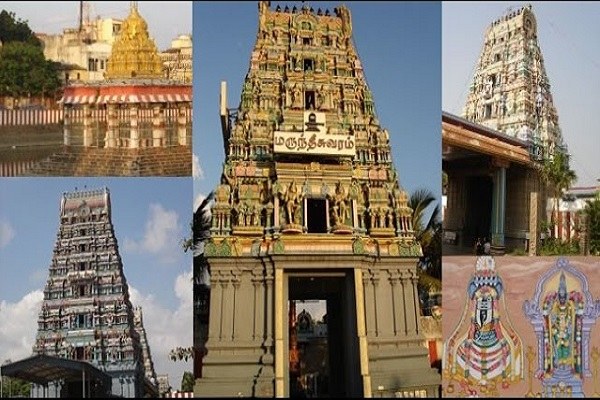
According to legend, the sage Valmiki worshipped Shiva here, and the area’s old name, Thiruvalmikiyur, became Thiruvanmiyur. (An earlier version of this article said Valmiki worshipped Rama at the temple; the legend is about Shiva.) The temple is one of the 275 Paadal Petra Sthalams praised in the hymns of the 7th-century saint-poets Appar and Sambandar. With the Kapaleeswarar Temple and the Thyagarajaswamy Temple at Thiruvottiyur, it is counted among the three “seashore temples” of the region.
3. Ekambareswarar Temple, George Town
This Ekambareswarar Temple on Mint Street in George Town is dedicated to Shiva. It should not be confused with the much larger Ekambareswarar Temple in Kanchipuram.
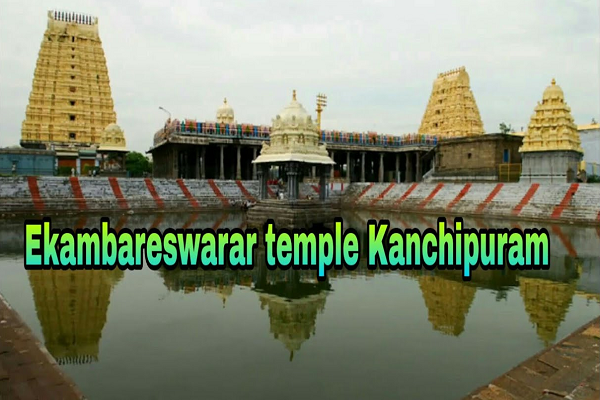
The Chennai temple was built in the 1680s by Alanganatha Pillai, a chief merchant who worked for the British East India Company in Madras. A 1710 map of Madras marks it as “Allingall’s Pagoda”, a name taken from its builder.
4. Parthasarathy Temple, Triplicane
The Parthasarathy Temple in Triplicane is one of Chennai’s oldest temples. It was built in the Pallava period, between the 6th and 8th centuries, and later expanded by the Cholas and the Vijayanagara kings. It is one of the 108 Divya Desams, the Vishnu temples praised by the Alvar saints.
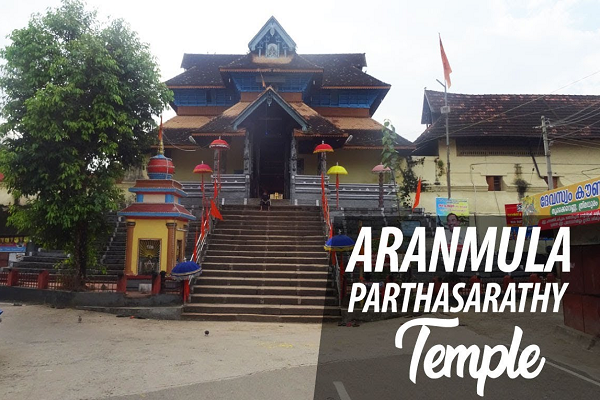
The main deity is Krishna as Parthasarathy, the charioteer of Arjuna in the Mahabharata. The image is unusual: Krishna has a moustache, and marks on the face are said to be from Bhishma’s arrows in the Kurukshetra war. The temple also has shrines to other forms of Vishnu, including Rama, Yoga Narasimha, Gajendra Varadaraja and Ranganatha. The Parthasarathy and Yoga Narasimha shrines have separate entrances and flagstaffs. (An earlier version of this article said the separate entrances were for Rama and Narasimha, and listed Varaha among the deities; neither is correct.)
5. Vadapalani Murugan Temple
The Vadapalani Andavar Temple, better known as the Vadapalani Murugan Temple, is dedicated to Murugan. It began as a small shrine set up by Annaswami Nayakar, a devotee of Murugan, in the late 19th century. The temple was renovated in the 1920s, when its rajagopuram (main gateway tower) was built.
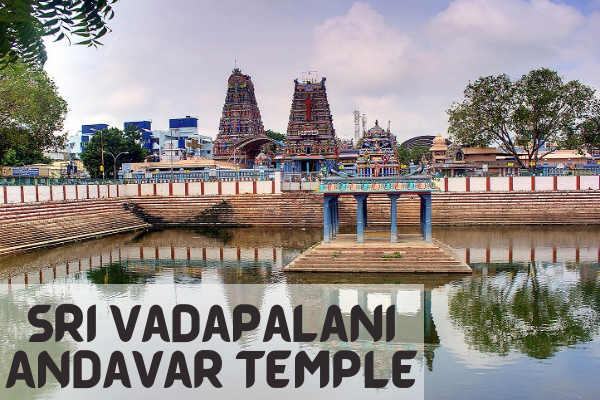
Vadapalani is one of the most popular places in Chennai to get married, and the temple hosts thousands of weddings each year. Devotees also visit to pray for a happy married life.
6. Kandha Kottam, George Town
Kandha Kottam, also called the Kandaswami or Muthukumaraswamy Temple, is a Murugan temple in George Town. According to the temple’s history, merchants who worshipped Murugan at Thiruporur brought an image of the deity to Madras in the 1670s. The present stone temple was built in the early 1800s.
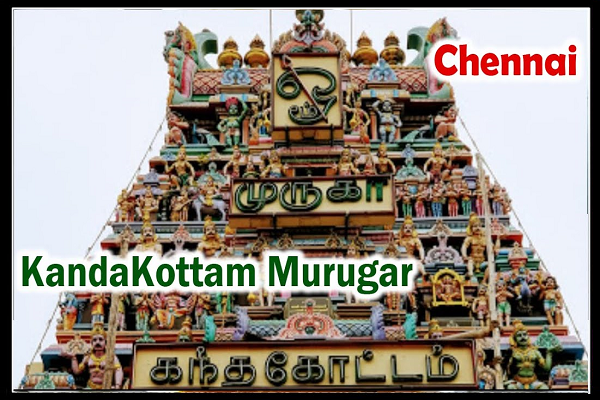
The temple tank is called the Saravana Poigai. The temple is linked with the 19th-century saint-poet Ramalinga Swamigal (Vallalar), who sang hymns about its Murugan, and his hymn Arutperunjothi Agaval is part of its Thursday worship. The temple is managed by the Tamil Nadu Hindu Religious and Charitable Endowments (HR&CE) Department, which also runs schools and a college linked to it.
7. Kalikambal Temple, Thambu Chetty Street
The Kalikambal Temple is dedicated to the goddess Kalikambal, a form of Kamakshi, and to Shiva as Kamadeswarar. It originally stood near the seashore, on the site later used for Fort St. George, and moved to its present location on Thambu Chetty Street in George Town in 1640.
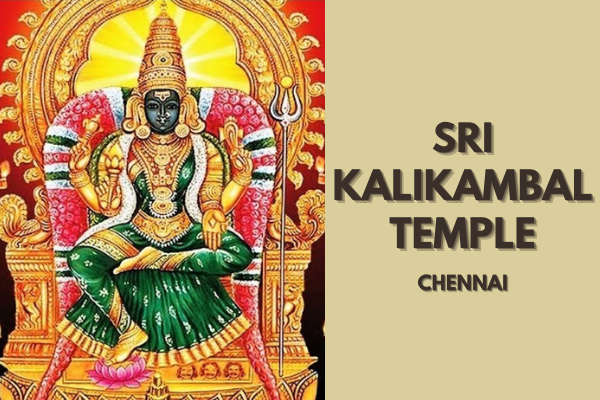
Tradition holds that a fierce form of the goddess was worshipped at first and that Adi Shankara later replaced it with a calm form of Kamakshi. The Maratha ruler Chhatrapati Shivaji visited the temple on 3 October 1677. (An earlier version of this article gave the year as 1667.) The Tamil poet Subramania Bharati was a regular visitor in the early 20th century.
8. TTD Venkateswara Temple, T. Nagar
The Sri Venkateswara Temple run by the Tirumala Tirupati Devasthanams (TTD) stands inside the TTD Information Centre on Venkatanarayana Road in T. Nagar. Venkateswara and his consort Alamelu Manga are worshipped here, and many people in Chennai visit it as a local substitute for a trip to Tirumala.
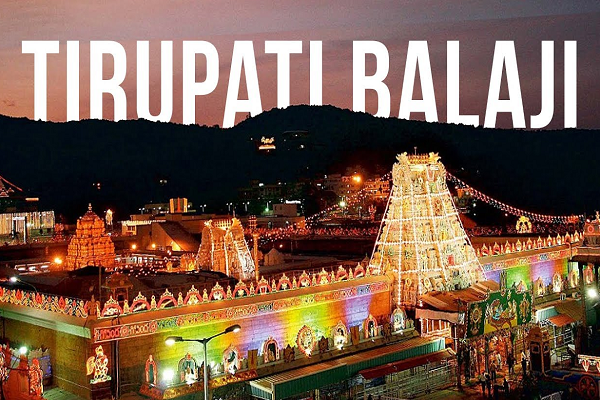
The temple is busiest on Saturdays, especially in the Tamil month of Purattasi (mid-September to mid-October). On those days expect long queues, police traffic arrangements and restricted parking on the surrounding roads.
An earlier version of this article said the temple stands on the banks of the “Sri Swami Pushkarini”. The Swami Pushkarini is the temple tank at Tirumala, not in Chennai, so that claim has been removed.
9. Ashtalakshmi Temple, Besant Nagar
The Ashtalakshmi Temple stands beside the sea near Elliot’s Beach in Besant Nagar. It is dedicated to Lakshmi in her eight forms, which represent kinds of wealth and well-being. Its foundation was laid in January 1974 and it was consecrated on 5 April 1976. Its design was inspired by the Sundara Varadaraja Perumal Temple at Uthiramerur.

The temple is built in several levels, and devotees climb up through the shrines:
- First level: Aadilakshmi, Dhaanyalakshmi and Dhairyalakshmi.
- Second level: the main shrine of Mahalakshmi and Vishnu, where worship begins.
- Third level: Santhanalakshmi, Vijayalakshmi, Vidyalakshmi and Gajalakshmi.
- Fourth level: Dhanalakshmi.
(An earlier version of this article left Vidyalakshmi out of the third-floor list.)
10. Chandraprabhu Jain Naya Mandir, Sowcarpet
The Chandraprabhu Jain Temple, also called the Naya Mandir, is on Mint Street in Sowcarpet, the busy trading district where many of Chennai’s Gujarati and Marwari Jain families live. It is dedicated to Chandraprabhu, the eighth Tirthankara, whose marble image sits in the main shrine with Parshvanatha and Adinath on either side.
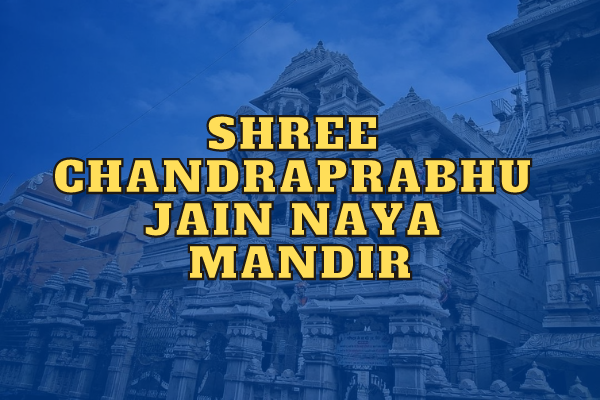
The temple was rebuilt on the site of an older Jain temple. Its white marble design and carving take inspiration from the Dilwara temples near Mount Abu in Rajasthan.
11. Mangadu Kamakshi Amman Temple
The Kamakshi Amman Temple at Mangadu, a western suburb about 18 km from Chennai Central, is one of the city’s most visited goddess temples. The name Mangadu means “mango forest”.
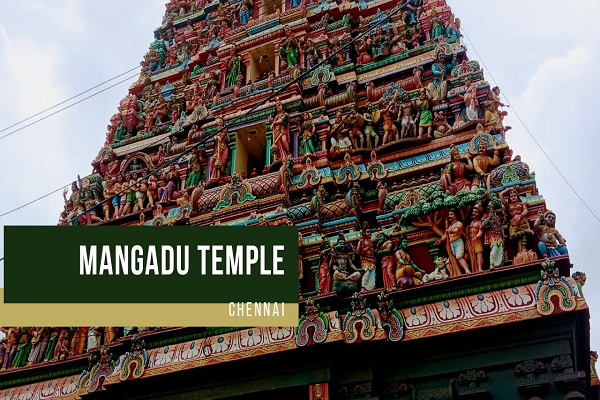
According to legend, Parvati playfully covered Shiva’s eyes and plunged the universe into darkness. Shiva then asked her to do penance, and she meditated at Mangadu standing amid five fires before going to Kanchipuram to marry him. Adi Shankara is said to have installed the Sri Ardha Meru Chakra here to calm the heat of her penance, and it is still worshipped in the sanctum. Because the goddess did penance to win her marriage, devotees, especially those hoping to marry, come here to pray. The temple is administered by the HR&CE Department.
12. Adeeswar (Kesarwadi) Jain Temple, Puzhal
The Adeeswar Jain Temple at Puzhal, near Red Hills on Chennai’s northern edge, is also known as the Kesarwadi Jain Temple. It is dedicated to Adinath (Rishabhanatha, also called Adeeswar), the first Tirthankara, and is an important Jain pilgrimage site in Tamil Nadu.
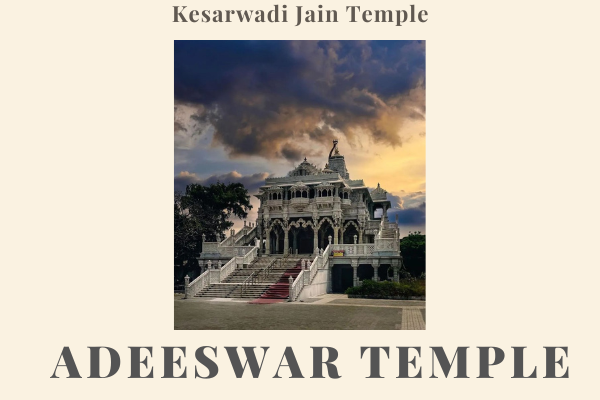
The temple is believed to be very old, and some accounts date it to the 1st century BCE, but scholars note there is no direct documentary or archaeological proof of the original temple’s age. It was founded as a Digambara site and is now run by a Svetambara trust. A large dharmashala in the complex can house hundreds of pilgrims.
13. Mahalingapuram Ayyappan Temple
The Mahalingapuram Ayyappan Temple was consecrated on 29 March 1974 and is described by its management, the Sree Ayyappa Bhaktha Sabha, as the first temple to Ayyappan in Chennai. It is built in the Kerala temple style, and a Guruvayurappan shrine was added in 1990.
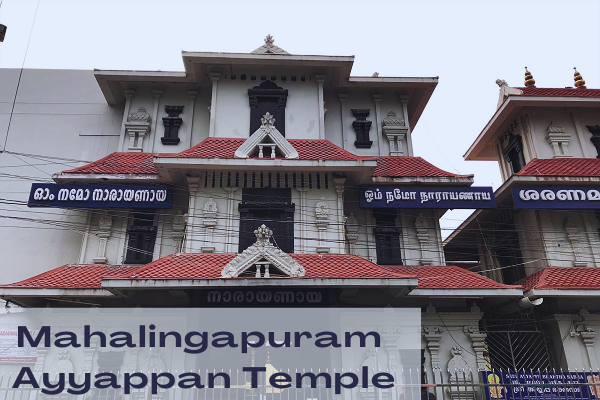
The temple is especially busy during the Mandalam–Makaravilakku season, when devotees preparing for the pilgrimage to Sabarimala in Kerala come here for the kettu nira ritual (packing the offerings carried to Sabarimala).
Tips for visiting Chennai’s temples
- Timings: most temples open early in the morning, close for a few hours around midday or early afternoon, and reopen in the evening until about 8 or 9 pm. Hours differ by temple and change on festival days, so check the temple’s page on the HR&CE Department website (hrce.tn.gov.in) or call before visiting.
- Dress: wear modest, traditional clothing that covers shoulders and knees. You will need to leave your footwear outside.
- Photography: photography is often not allowed inside the sanctum. Follow the signs and ask temple staff before taking pictures.
- Crowds: visit on a weekday morning to avoid queues. Expect very large crowds at festivals and, at the TTD temple, on Saturdays.
- Non-Hindu visitors: some temples restrict entry to inner shrines. Follow the rules posted at each temple.
Exploring more of South India? See our guides to the most famous temples in Kerala and Dhanushkodi Beach near Rameswaram.
Frequently asked questions
Which is the most famous temple in Chennai?
The Kapaleeswarar Temple in Mylapore and the Parthasarathy Temple in Triplicane are the best known. Both are among the city’s oldest temples and are central to its religious life.
Which is the oldest temple in Chennai?
The Parthasarathy Temple dates from the Pallava period (6th to 8th centuries), and the Marundeeswarar and Kapaleeswarar temples were praised by 7th-century saint-poets, although their present buildings are later.
Which Chennai temple is famous for weddings?
The Vadapalani Murugan Temple hosts thousands of weddings a year. Devotees hoping to marry also pray at the Mangadu Kamakshi Amman Temple.
Are there Jain temples in Chennai?
Yes. The Chandraprabhu Jain Naya Mandir in Sowcarpet and the Adeeswar (Kesarwadi) Jain Temple at Puzhal are two of the best known.
What should I wear to a temple in Chennai?
Modest, traditional clothing that covers your shoulders and knees. Footwear is left outside, and some temples have stricter dress rules for the inner shrines.
Details checked in October 2026 against temple histories, published records of the Tamil Nadu HR&CE Department and temple managements, and reference works on Chennai’s temples. Timings and rules change, so check with the temple before you visit.


