Quick answer: Nine of India’s best national parks for a wildlife trip are Jim Corbett (Uttarakhand), Kaziranga (Assam), Ranthambore (Rajasthan), Periyar (Kerala), Gir (Gujarat), Kanha (Madhya Pradesh), Sundarbans (West Bengal), Mudumalai (Tamil Nadu) and Bandipur (Karnataka). Together they cover tigers, one-horned rhinos, Asiatic lions, elephants and mangrove wildlife. Most close for part of the monsoon, and safaris must be booked through official forest department portals, so check opening dates before you plan.

India has more than 100 national parks: the Ministry of Environment, Forest and Climate Change’s protected-area database listed 106 as of February 2025, and states continue to notify new ones. Alongside them are hundreds of wildlife sanctuaries, conservation reserves and community reserves. An earlier version of this article said the count was 106 and promised a list of 20 parks; the list below covers nine of the best-known parks for wildlife viewing.
Bengal tigers, Asiatic lions, one-horned rhinoceros, leopards and Asian elephants are the big draws. India also has cheetahs again: they were reintroduced at Kuno National Park in Madhya Pradesh from 2022, decades after the species died out in the country.
India’s best national parks at a glance
| Park | State | Best known for | Protected since |
|---|---|---|---|
| Jim Corbett | Uttarakhand | Tigers; India’s first national park | 1936 |
| Kaziranga | Assam | One-horned rhinoceros, wild water buffalo | National park 1974 |
| Ranthambore | Rajasthan | Tigers, Ranthambore Fort | Sanctuary 1955, national park 1980 |
| Periyar | Kerala | Elephants, boat trips on Periyar Lake | Sanctuary 1950 |
| Gir | Gujarat | Asiatic lions | 1965 |
| Kanha | Madhya Pradesh | Tigers, barasingha (swamp deer) | National park 1955 |
| Sundarbans | West Bengal | Mangroves, tigers, saltwater crocodiles | National park 1984 |
| Mudumalai | Tamil Nadu | Elephants, tigers, Nilgiri forests | Sanctuary 1940 |
| Bandipur | Karnataka | Elephants, tigers, gaur | Sanctuary 1931; tiger reserve 1973 |
1. Jim Corbett National Park, Uttarakhand
Jim Corbett National Park was set up in 1936 as Hailey National Park, making it India’s first national park. It was renamed Ramganga National Park in the 1950s and then Corbett National Park in honour of Jim Corbett, the hunter-turned-naturalist and author who helped establish it. It was the first park brought under Project Tiger, India’s tiger conservation programme launched in the 1970s, and it is now run as part of the Corbett Tiger Reserve.
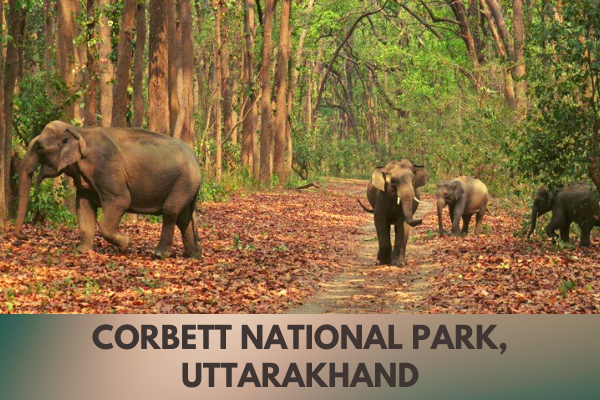
Corbett’s mix of sal forest, grassland and river valleys makes it a popular wildlife destination and a frequent subject of Indian wildlife documentaries. The reserve is divided into tourism zones with their own entry gates, including Dhikala, Bijrani, Jhirna, Dhela, Durga Devi, Garjia and Pakhro; Sonanadi, in the adjoining Sonanadi Wildlife Sanctuary, is reached from Kotdwar. According to the reserve’s official portal, Jhirna and Dhela stay open year-round, while Dhikala, Bijrani and Durga Devi reopen in October or November after the monsoon. Book safaris and forest rest houses only through the official Corbett Tiger Reserve website.
2. Kaziranga National Park, Assam
Kaziranga National Park, on the floodplains of the Brahmaputra in Assam, has been a UNESCO World Heritage Site since 1985. It was declared a national park in 1974 and is also a tiger reserve. Kaziranga holds the world’s largest population of the greater one-horned rhinoceros, along with wild water buffalo, eastern swamp deer, Asian elephants, tigers and a rich variety of birds.
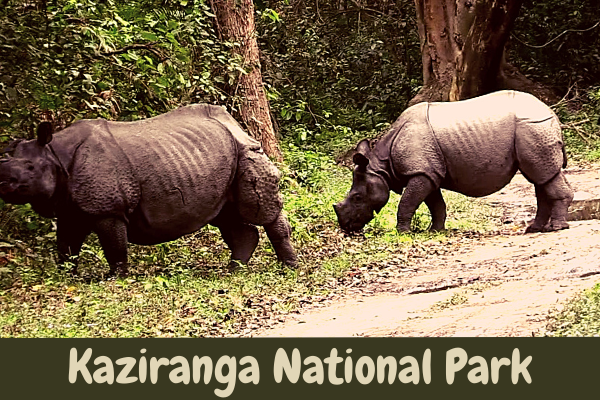
Visitors explore the park on jeep safaris and, in some ranges, on elephant-back rides. Not every range offers every kind of safari. Large parts of the park flood each monsoon, and the park closes to tourists for the rainy months. Safari charges and timings change by season, so check them with the Assam Forest Department’s official Kaziranga booking site rather than relying on older price lists. (An earlier version of this article quoted boat-safari prices of INR 2,000 to INR 3,000; we could not confirm a current official rate, so the figure has been removed.)
3. Ranthambore National Park, Rajasthan
Ranthambore National Park lies in Sawai Madhopur district of Rajasthan, between the Banas and Chambal rivers. It began in 1955 as the Sawai Madhopur Game Sanctuary, became a Project Tiger reserve in the 1970s and was declared a national park in 1980. Its tigers are the main attraction, and the dry deciduous forest and open ground make sightings more likely than in many denser forests. Leopards, sloth bears, several deer species and more than 270 bird species also live here.
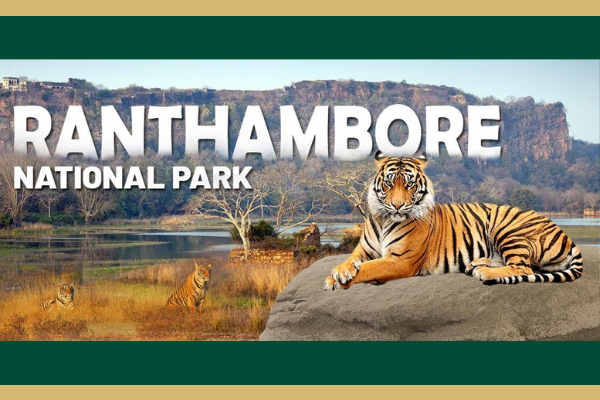
The park is full of history. Ranthambore Fort, built in the 10th century on a hill inside the park, is part of the “Hill Forts of Rajasthan” UNESCO World Heritage Site. Padam Talao is the largest of the park’s lakes, and the old Jogi Mahal rest house stands on its edge.
- Getting there: Sawai Madhopur railway station is a short drive from the park gates. Jaipur International Airport is the nearest major airport.
- Safaris: Visitors explore by jeep (gypsy) or canter (open bus) in numbered zones. Book through the Rajasthan Forest Department’s official portal.
- When to go: The core zones close during the monsoon. The original article recommended October to June, which matches the main season, but check the current opening dates before booking.
4. Periyar National Park and Tiger Reserve, Kerala
Periyar, near Thekkady and Kumily in Kerala’s Idukki and Pathanamthitta districts, sits in the Cardamom Hills of the Western Ghats. It started as a private reserve of the Maharaja of Travancore in 1934, became a wildlife sanctuary in 1950 and a tiger reserve in 1978. Its centrepiece is Periyar Lake, a reservoir of about 31 sq km formed when the Mullaperiyar Dam was built in 1895. A boat trip on the lake is the classic way to see elephants, gaur and sambar at the water’s edge.
The Kerala Forest Department runs boating, trekking programmes, jungle safaris and nature camps from Thekkady, bookable through the official Periyar Tiger Reserve website. The forest is also home to tigers, lion-tailed macaques and about 266 bird species. (An earlier version of this article called Periyar the “main” wildlife sanctuary of India and suggested elephant safaris and specific resort lists; those claims have been removed.)
5. Gir National Park and Wildlife Sanctuary, Gujarat
Gir, often called Sasan Gir, in Gujarat’s Saurashtra region, is the only place in the world where Asiatic lions live in the wild. The protected area was established in 1965 on the former hunting grounds of the Nawab of Junagadh and covers about 1,410 sq km; the core national park is about 259 sq km and the rest is wildlife sanctuary.
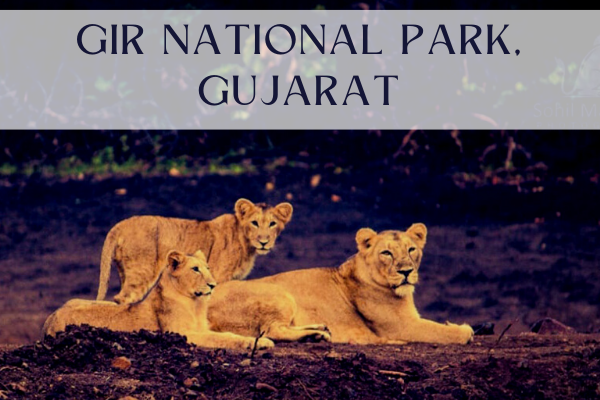
The lion population has grown steadily. According to the Gujarat Forest Department’s 16th lion population estimation, carried out in May 2025, there are about 891 Asiatic lions in Gujarat, up from 674 in 2020, and many now live outside Gir in other parts of Saurashtra. Gir also has leopards, striped hyenas, sambar, chital, nilgai, chinkara, mugger crocodiles and around 300 bird species. (An earlier version of this article said about 210 “panthers” lived in the forest; we could not verify a current leopard figure, and it has been removed.)
The park closes for the monsoon from 16 June to 15 October each year. Safari permits are booked on the Gujarat Forest Department’s official Gir booking portal. For more on Gujarat’s other parks, see our guide to national parks and wildlife sanctuaries in Gujarat.
6. Kanha National Park, Madhya Pradesh
Kanha, in the Mandla and Balaghat districts of Madhya Pradesh, was a wildlife sanctuary from 1933, became a national park in 1955 and a tiger reserve in 1973. It is the largest national park in Madhya Pradesh and is famous for bringing the barasingha, a swamp deer, back from the edge of extinction. Kanha was also the first tiger reserve in India to adopt an official mascot, Bhoorsingh the Barasingha.
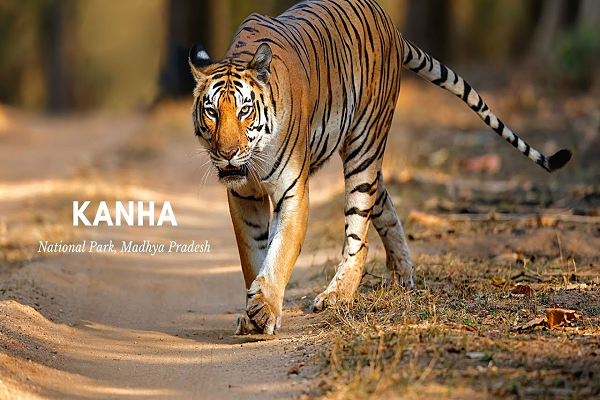
The park’s lowland forests mix sal with other trees and open meadows, while the higher ground has bamboo. Tigers, leopards, sloth bears, dholes (wild dogs), gaur, chital and sambar live here, along with about 300 bird species. Like other central Indian tiger reserves, Kanha’s core zones close during the monsoon; book safaris through the Madhya Pradesh Forest Department’s official portal.
7. Sundarbans National Park, West Bengal
Sundarbans National Park, in West Bengal’s South 24 Parganas district, protects part of the largest mangrove forest on the Indian subcontinent, in the delta of the Ganges, Brahmaputra and Meghna. It became part of the Sundarban Tiger Reserve in 1973, a national park in 1984, a UNESCO World Heritage Site in 1987 and a Ramsar wetland in 2019.
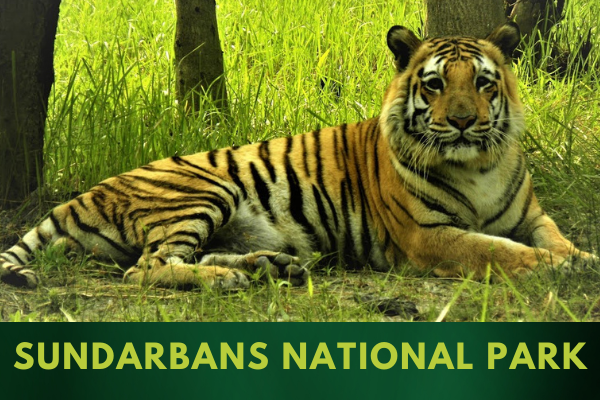
This is a world of tidal rivers, creeks and mud banks. The tigers here are adapted to swimming and moving through the mangroves, and a 2022 National Tiger Conservation Authority survey photographed 100 individual tigers. Saltwater crocodiles, river terrapins, Ganges river dolphins and many birds also live in the delta. The park can be explored only by boat, usually from gateways such as Godkhali near Canning. (An earlier version of this article described the Sundarbans as freshwater swamp forest; it is a tidal, salt-tolerant mangrove forest.)
8. Mudumalai National Park, Tamil Nadu
Mudumalai National Park is in the Nilgiris district of Tamil Nadu, at the meeting point of three states. An earlier version of this article placed it in Karnataka and called it India’s first sanctuary; neither is correct. Mudumalai was first protected as a wildlife sanctuary in 1940, covers about 321 sq km and was declared a tiger reserve in 2007.
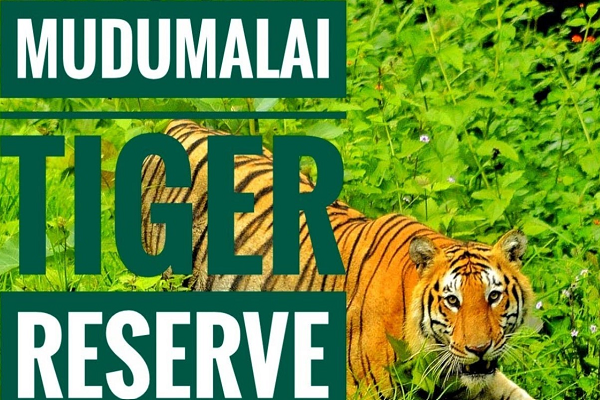
The park borders Bandipur National Park in Karnataka to the north and Wayanad Wildlife Sanctuary in Kerala to the west, and all three are part of the Nilgiri Biosphere Reserve. Teak, axlewood, flame-of-the-forest and thorny bamboo grow in its moist and dry deciduous forests. Wildlife includes Asian elephants, tigers, leopards, gaur, sambar, chital, sloth bears and more than 260 bird species. The Theppakadu elephant camp is one of the best-known spots in the park.
9. Bandipur National Park, Karnataka
Bandipur National Park is in Chamarajanagar district of Karnataka, about 80 km from Mysuru. It began as the Maharaja of Mysore’s Venugopala Wildlife Park in 1931 and became one of India’s first tiger reserves under Project Tiger in 1973. Bandipur is part of the Nilgiri Biosphere Reserve and adjoins Mudumalai in Tamil Nadu and Wayanad in Kerala.
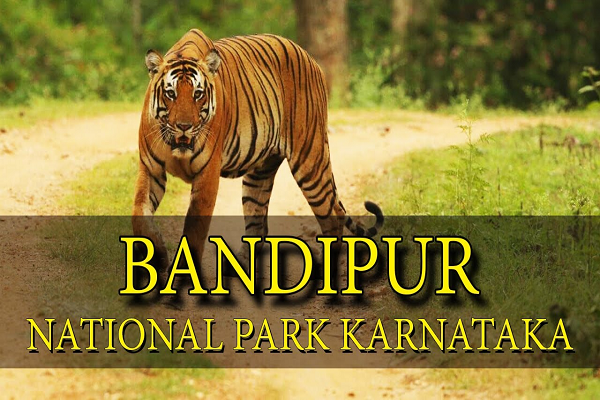
The park is known for its elephants and tigers, and also has leopards, dholes, sloth bears, gaur, chital, sambar and four-horned antelope, with more than 200 bird species. The Karnataka Forest Department runs open-jeep safaris in the early morning and late afternoon. Two national highways cross the park, and night traffic through the forest has been banned to reduce collisions with animals. (An earlier version of this article gave Bandipur’s area as about 865 sq km and said it held about 70 tigers and 300 elephants; we could not confirm current official figures, so they have been removed.)
Tips for planning a national park visit
- Book through official portals only. Most parks sell safari permits online through the state forest department, and seats in popular zones sell out weeks ahead. Be wary of sites that charge large “booking fees”.
- Check the season. Many parks, or their core zones, close during the monsoon, roughly from June to October, and reopening dates differ by park and zone.
- Carry ID. The same identity document used for booking is usually checked at the gate.
- Follow park rules. Stay in your vehicle, keep quiet, don’t feed animals and don’t litter.
Planning more trips? See our guides to the best national parks in Maharashtra and national parks in Punjab, or, if you are in Mumbai, Sanjay Gandhi National Park inside the city.
Frequently asked questions
How many national parks are there in India?
The Ministry of Environment, Forest and Climate Change’s protected-area database listed 106 national parks as of February 2025. The number changes as states notify new parks, so check the latest official figures.
Which is the oldest national park in India?
Jim Corbett National Park in Uttarakhand, set up in 1936 as Hailey National Park.
Where can you see Asiatic lions in India?
Only in Gujarat, mainly in and around Gir National Park and Wildlife Sanctuary. The May 2025 census counted about 891 lions in the state.
Which national park is best for seeing tigers?
Ranthambore, Corbett and Kanha are among the most popular, but sightings are never guaranteed anywhere. Book more than one safari to improve your chances.
Are national parks open during the monsoon?
Many close fully or partly during the monsoon, and Gir, for example, closes from 16 June to 15 October. Some zones, such as Jhirna and Dhela in Corbett, stay open year-round. Always check the park’s official website for current dates.
Details checked in October 2026 against the Ministry of Environment, Forest and Climate Change protected-area data, the official Corbett and Periyar tiger reserve websites, Gujarat Forest Department lion census figures (May 2025), UNESCO listings and park records. Safari rules, fees and opening dates change, so check the official booking site before you travel.