Quick answer: Maharashtra has six national parks: Tadoba Andhari (Chandrapur), Pench (Nagpur), Gugamal (Amravati, in the Melghat Tiger Reserve), Navegaon (Gondia), Chandoli (Sangli, in the Sahyadri Tiger Reserve) and Sanjay Gandhi National Park in Mumbai. Tadoba is the best-known for tiger safaris, while Sanjay Gandhi is the easiest to visit from a city. Safari timings, fees and closures change and are set by the Maharashtra Forest Department, so book only through its official portals and check rules before you go.

Maharashtra’s national parks at a glance
| National park | District | Part of | Best known for |
|---|---|---|---|
| Tadoba Andhari | Chandrapur | Tadoba Andhari Tiger Reserve | Tiger safaris, Tadoba Lake |
| Gugamal | Amravati | Melghat Tiger Reserve | Remote Satpura forests |
| Chandoli | Sangli | Sahyadri Tiger Reserve; Western Ghats World Heritage Site | Western Ghats forest, forts |
| Sanjay Gandhi | Mumbai (with part in Thane) | Mumbai’s urban forest | Kanheri Caves, leopards, lakes |
| Pench | Nagpur | Pench Tiger Reserve (Maharashtra) | Tigers, Totladoh reservoir |
| Navegaon | Gondia | Navegaon-Nagzira Tiger Reserve | Birds, Navegaon lake |
An earlier version of this article listed the Pench park’s location as Seoni and Chhindwara in Madhya Pradesh. Those districts hold the Madhya Pradesh side of Pench. Maharashtra’s Pench National Park is in Nagpur district, across the state border.
How safaris and bookings work in Maharashtra
Most of these parks are protected tiger habitat, so visits are managed by the Maharashtra Forest Department:
- Book officially. Safaris for Tadoba are booked on the reserve’s own website (mytadoba.mahaforest.gov.in), and safaris for Pench, Navegaon-Nagzira, Gugamal (Melghat) and several sanctuaries on the department’s portal (safaribooking.mahaforest.gov.in). Tadoba’s site warns visitors to book only through the official website.
- Check timings, closed days and fees on the portal. They vary by park and season and are revised from time to time. Core zones can also close during the monsoon.
- Phones: the safari portal states that using or carrying mobile phones is prohibited during safaris in protected areas, so check the current rule before you go.
- Carry the ID you used when booking.
An earlier version of this article gave entry fees and timings for each park (for example, “INR 600-2,000” and “6 am to 6:30 pm” for Tadoba). Those figures were out of date and could not be confirmed, so we have removed them.
1. Tadoba Andhari Tiger Reserve (Chandrapur)
Tadoba is Maharashtra’s best-known national park and the main reason many wildlife travellers come to the state. The Tadoba area was declared a national park in 1955. The Andhari Wildlife Sanctuary was created in 1986, and the two were merged in 1995 to form the Tadoba Andhari Tiger Reserve, which covers about 1,728 sq km, with a core of about 626 sq km and a buffer of about 1,102 sq km.
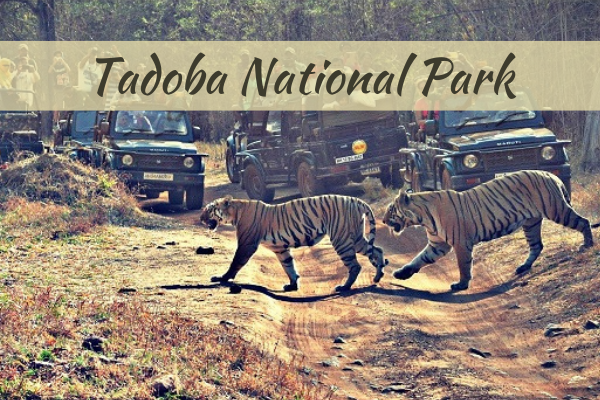
Besides Bengal tigers, the reserve has leopards, sloth bears, gaur (Indian bison), nilgai, dhole (wild dogs), sambar, chital and honey badgers. Around 195 bird species have been recorded. Tadoba Lake, a 120-hectare lake in the south-west of the park, holds water all year and is home to mugger crocodiles.
An earlier version of this article included “cheetah” in Tadoba’s wildlife. Tadoba has no cheetahs; the large spotted cat you may see is the leopard.
- Zones and gates: the reserve’s official site lists 6 core gates and 16 buffer gates, including Moharli, Kolara, Navegaon and Zari. Gypsy safaris run in the morning and evening, with full-day options in the core zone.
- Best time: the cooler months after the monsoon (roughly October to March) are comfortable. Hot months often bring more sightings at waterholes, but temperatures are very high.
2. Gugamal National Park (Amravati)
Gugamal National Park, founded on 22 February 1974, lies in the Chikhaldara and Dharni tehsils of Amravati district in the Satpura hills. It covers about 361 sq km and is one of the protected areas that make up the Melghat Tiger Reserve.
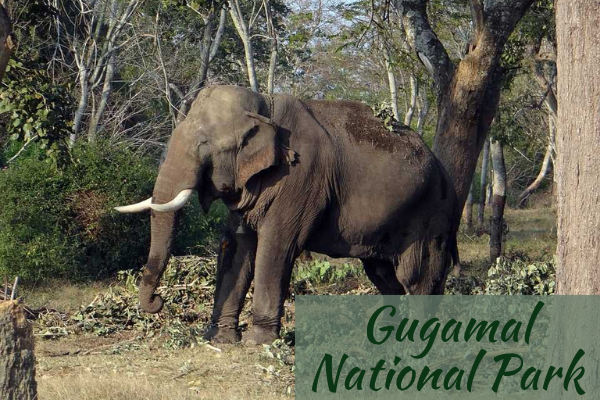
Its wildlife includes tigers, leopards, sloth bears, gaur, sambar and several species of monkeys. The park is also known for its fish and butterfly diversity, and crocodiles were reintroduced there in 1990 and 1991. It is quieter and less developed for tourism than Tadoba, which suits travellers looking for forest walks, birdwatching and a slower pace. Safaris are listed on the state’s safari booking portal under the Melghat Tiger Reserve. Chikhaldara, a small hill station, is the usual base.
An earlier version of this article listed buffaloes, nilgai and “wild deer” as Gugamal’s main animals, and Omkareshwar as a nearby attraction. Omkareshwar is in Madhya Pradesh and is not a practical side trip, so we have removed it.
3. Chandoli National Park (Sangli)
Chandoli, in Sangli district, was a wildlife sanctuary from 1985 and became a national park in May 2004. It covers about 318 sq km of the Western Ghats. Together with the Koyna Wildlife Sanctuary, it forms the Sahyadri Tiger Reserve, which was declared in 2007. Chandoli is also part of the Western Ghats UNESCO World Heritage Site, inscribed in 2012.
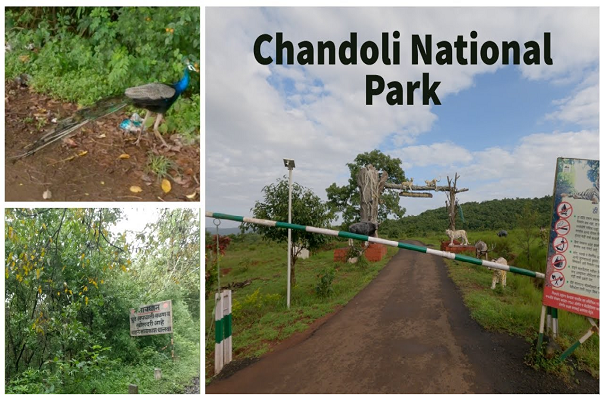
The Warna river and the Vasant Sagar reservoir feed the park. Its animals include tigers, leopards, gaur, leopard cats, sloth bears and Indian giant squirrels, with barking deer, sambar and mouse deer among the prey species. The park has recorded around 23 mammal species, 122 bird species and 20 amphibian and reptile species. Two 17th-century Maratha forts, Prachitgad and Bhairavgad, lie in the area.
An earlier version of this article said Chandoli spreads across Satara, Kolhapur and Sangli districts. The national park is listed in Sangli district, though the wider tiger reserve also extends into neighbouring districts.
4. Sanjay Gandhi National Park (Mumbai)
Sanjay Gandhi National Park (SGNP), headquartered at Borivali in Mumbai’s northern suburbs, covers about 104 sq km, part of it in Thane district. It is one of the few national parks inside a major city. Before Independence the area was called Krishnagiri National Park; it was expanded in 1969 as Borivali National Park and renamed Sanjay Gandhi National Park in 1981.
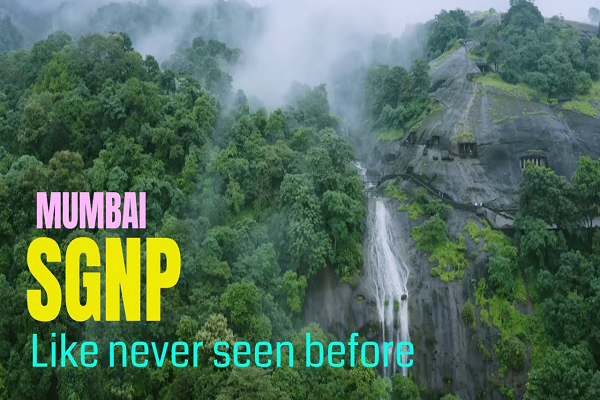
The park protects the catchments of Vihar and Tulsi lakes, which supply Mumbai with water. It has a notable leopard population living alongside one of the world’s largest cities. Inside the park are the Kanheri Caves, a group of Buddhist caves carved into basalt, and the tiger safari, which reopened in 2024 with a redesigned enclosure. The Van Rani toy train, suspended after Cyclone Tauktae in 2021, resumed in 2026 as a battery-powered train.
- Closed days: according to the park’s official website, activities other than Gandhi Tekdi and Kanheri Caves do not run on Mondays, and they pause from 1:30 to 2:30 pm daily.
- Fees and safari timings: check the official SGNP website (sgnp.maharashtra.gov.in) before you go.
An earlier version of this article listed “lions” among SGNP’s animals. There are no wild lions in the park; lions have been kept only in a fenced safari enclosure. Read our full guide to Sanjay Gandhi National Park and to the Kanheri Caves inside it.
5. Pench National Park (Nagpur)
Maharashtra’s Pench National Park lies in Nagpur district, on the Maharashtra side of the Pench river valley; the Madhya Pradesh side of the same landscape is a separate park. According to the Wildlife Institute of India, the area was notified as a national park on 22 November 1975 (about 257 sq km), and the Maharashtra side was declared a tiger reserve in 1999. The Pench Tiger Reserve in Maharashtra covers about 741 sq km, with a core of about 439 sq km.
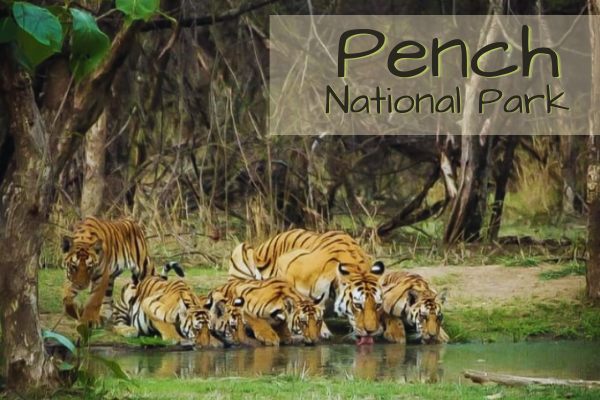
The Totladoh (Meghdoot) dam on the Pench river creates a large reservoir inside the reserve, most of it on the Madhya Pradesh side, and it is an important water source for wildlife. Tigers, leopards, sloth bears, dholes and gaur are among the animals found across the Pench landscape. Safaris on the Maharashtra side are booked on the state’s safari portal; the Madhya Pradesh side has its own bookings.
6. Navegaon National Park (Gondia)
Navegaon National Park was established on 22 November 1975 in the Arjuni Morgaon area of Gondia district. It is part of the Navegaon-Nagzira Tiger Reserve. Navegaon lake, at the edge of the park, is one of its main attractions.
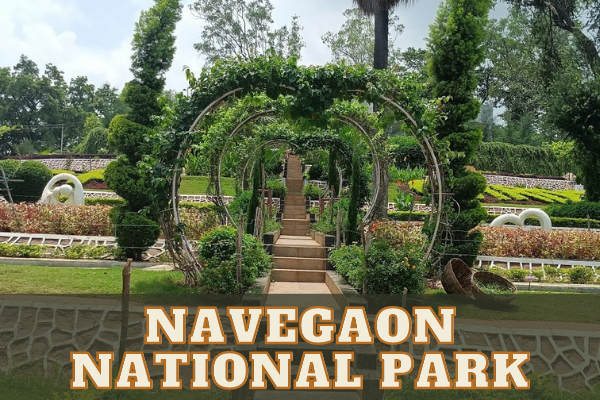
Navegaon is best known for birds: around 209 species have been recorded, and the Dr Salim Ali Bird Sanctuary at Navegaon is said to hold a large share of the bird species found in Maharashtra. Mammals include tigers, leopards, sloth bears, gaur, sambar, chital and langurs. Safaris for both the Navegaon and Nagzira blocks are listed on the state’s safari portal, and the forest department has announced spot booking at some eco-tourism gates.
An earlier version of this article listed “pumas” at Navegaon. Pumas live only in the Americas, so we have removed this.
Tips for visiting national parks in Maharashtra
- Book safaris well ahead for weekends and holidays, especially at Tadoba.
- Wear muted, earthy colours and carry a cap, sunglasses, sunscreen and insect repellent.
- Winter mornings in open safari vehicles can be cold, so carry a warm layer from roughly November to February. Summer afternoons in Vidarbha are extremely hot.
- Stay inside the vehicle, keep noise down and do not feed or approach animals.
- Expect some core zones to close in the monsoon; check the official portal for dates.
- Plastic and littering rules are strict in protected areas; carry your rubbish out.
For other parks, see our guides to the best national parks in India and the national parks of Gujarat.
Frequently asked questions
How many national parks are there in Maharashtra?
Six: Tadoba Andhari, Pench, Gugamal, Navegaon, Chandoli and Sanjay Gandhi National Park.
Which national park in Maharashtra is best for tiger sightings?
Tadoba Andhari Tiger Reserve in Chandrapur is the most popular for tiger safaris. Pench and the Navegaon-Nagzira reserve also have tigers. Sightings are never guaranteed anywhere.
Where do I book a Tadoba safari?
On the reserve’s official website, mytadoba.mahaforest.gov.in. Other Maharashtra reserves, including Pench and Navegaon-Nagzira, are on safaribooking.mahaforest.gov.in.
Which national park can I visit from Mumbai?
Sanjay Gandhi National Park in Borivali is inside the city. Most activities, except Gandhi Tekdi and the Kanheri Caves, do not run on Mondays.
Is Chandoli National Park a World Heritage Site?
Yes. Chandoli is one of the protected areas included in UNESCO’s Western Ghats World Heritage Site, inscribed in 2012.
This guide was checked in October 2026 against the Maharashtra Forest Department’s safari booking portals, the official Sanjay Gandhi National Park website, the Wildlife Institute of India and published park histories.