Quick answer: Gujarat has four national parks: Gir (Asiatic lions), the Marine National Park in the Gulf of Kutch (coral reefs), Velavadar Blackbuck National Park and Vansda National Park. The state also has many wildlife sanctuaries, including Barda, Jambughoda, Purna, Mitiyala, Gaga and Shoolpaneshwar, which are covered below. Gir and most other parks close or restrict visits during the monsoon, so check the Gujarat Forest Department’s official booking pages before you go.

Gujarat’s wildlife is unusually varied for one state. It ranges from the dry forests of Saurashtra, where the world’s only wild Asiatic lions live, to the grasslands of Bhal, the coral reefs and mangroves of the Gulf of Kutch, and the moist teak and bamboo forests of the Dangs and Navsari in the south. An earlier version of this article called all the places below “national parks”; in fact only four are national parks, and the rest are wildlife sanctuaries, which this guide now makes clear.
Gujarat’s national parks and sanctuaries at a glance
| Protected area | Type | District | Known for |
|---|---|---|---|
| Gir | National park and sanctuary | Junagadh, Gir Somnath, Amreli | Asiatic lions |
| Marine National Park | National park and sanctuary | Jamnagar, Devbhumi Dwarka | Coral reefs, intertidal life |
| Velavadar (Blackbuck) | National park | Bhavnagar | Blackbuck, wolves, harriers |
| Barda | Wildlife sanctuary | Porbandar | Hills, leopards, lions |
| Jambughoda | Wildlife sanctuary | Panchmahal | Dry deciduous forest |
| Purna | Wildlife sanctuary | Dangs | Dense, high-rainfall forest |
| Vansda | National park | Navsari | Moist forest, birds, Gira waterfall |
| Mitiyala | Wildlife sanctuary | Amreli | Part of the lion landscape |
| Gaga | Wildlife sanctuary | Devbhumi Dwarka | Small coastal grassland |
| Shoolpaneshwar | Wildlife sanctuary | Narmada | Satpura hills, sloth bears |
Gir National Park and Wildlife Sanctuary
Gir, often called Sasan Gir, is Gujarat’s best-known protected area and the only place in the world where Asiatic lions live in the wild. It was established in 1965 on the former hunting grounds of the Nawab of Junagadh. The whole protected area covers about 1,410 sq km, of which about 259 sq km is the national park and the rest is wildlife sanctuary.
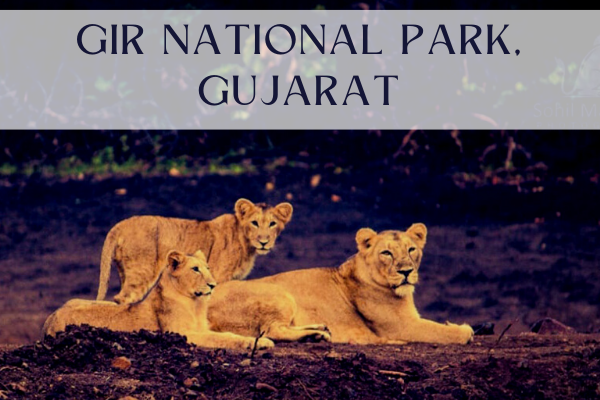
According to the Gujarat Forest Department’s lion population estimation in May 2025, Gujarat has about 891 Asiatic lions, up from 674 in 2020, and many now live outside Gir in other parts of Saurashtra. Gir also has leopards, striped hyenas, sambar, chital, nilgai, chinkara, wild boar, mugger crocodiles and around 300 bird species. The landscape is dry teak forest with rocky hills and river valleys. The park closes for the monsoon from 16 June to 15 October. Book safari permits on the Gujarat Forest Department’s official Gir portal, and avoid unofficial resellers.
An earlier version of this article said Gir was about 43 km from Somnath and 60 km from Junagadh; we could not verify these distances, so they have been removed. Sasan Gir, the main safari base, is reached by road from Junagadh or Veraval.
Marine National Park, Gulf of Kutch
The Marine National Park, on the southern shore of the Gulf of Kutch near Jamnagar, protects coral reefs, mangroves and mudflats around a chain of 42 islands. The area was declared a marine sanctuary in 1980, and its core became a national park in 1982.
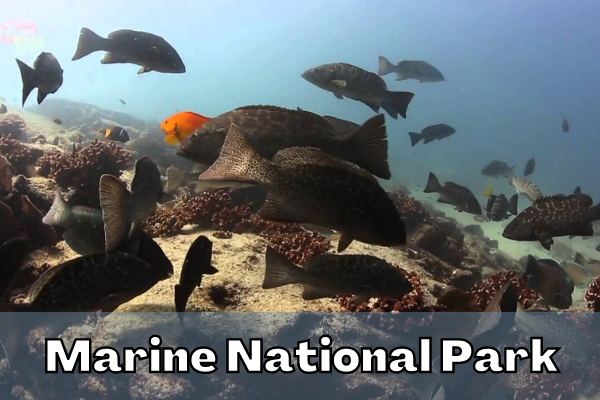
At low tide, the exposed reef flats reveal corals, sponges, sea anemones, sea cucumbers, starfish, octopuses, crabs and puffer fish. Dolphins, sea turtles and dugongs live in the wider gulf, and the coast attracts large numbers of flamingos and other waterbirds. Narara is the best-known place for visitors, where guided walks across the reef are timed to the tides; visitor guides say a forest department permit and a guide are required. Pirotan, the best-known island, has been closed to the public, according to Lonely Planet. Because visits depend on the tides, check timings and permits with the Gujarat Forest Department in Jamnagar before you go.
An earlier version of this article said the park opens to visitors “from 9 AM onwards”. Visit times at Narara depend on daily tides, so that fixed time has been removed.
Velavadar Blackbuck National Park
Blackbuck National Park at Velavadar, in Bhavnagar district, was established in 1976 to protect the blackbuck, a fast antelope with spiralled horns, in the open grasslands of the Bhal region along the Gulf of Khambhat. The park is small, at about 34 sq km, but the flat grassland makes it easy to watch herds of blackbuck.
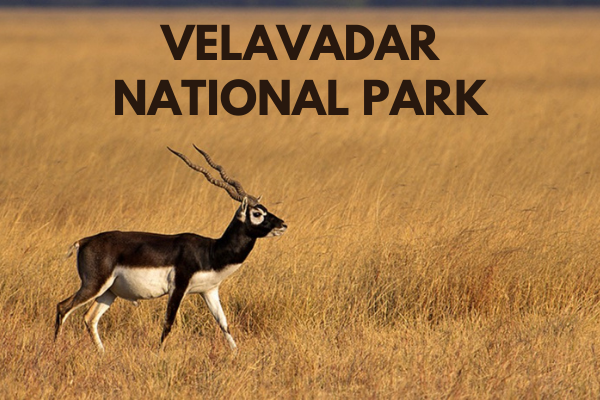
Indian wolves, striped hyenas, jungle cats, jackals and nilgai also live here. Velavadar is important for birds: the endangered lesser florican breeds in the grasslands, and harriers (marsh, pallid and Montagu’s) arrive in winter. Parts of the park flood during the monsoon.
An earlier version of this article said Velavadar had more than 3,000 blackbuck and more than 120 bird species, and that it was once a private hunting ground of the Maharaja of Bhavnagar. We could not confirm these details from an official source, so they have been removed.
Barda Wildlife Sanctuary
Barda Wildlife Sanctuary, in Porbandar district, covers about 192 sq km of hills, dry deciduous woodland and thorn scrub. It was declared a sanctuary in 1979 and was once a private reserve of the rulers of Porbandar and Jamnagar. It is also known as Rana Barda and Jam Barda. Two rivers, the Bileshvary and Joghri, and two dams lie inside it.
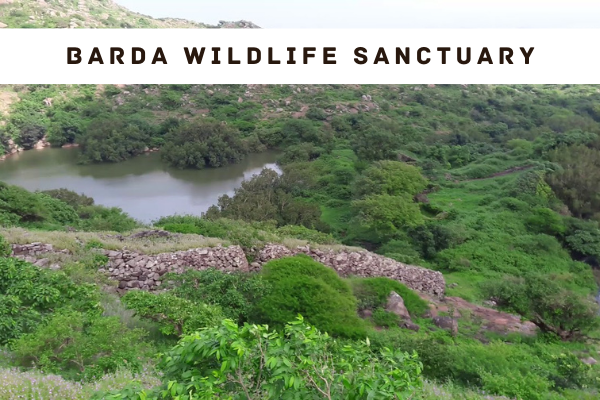
Barda is now part of the Asiatic lion’s range. Lions spreading out from Gir have settled in the Barda area, and lions were recorded there in the May 2025 census. The sanctuary also has leopards, striped hyenas, nilgai and wild boar, and a breeding centre has worked to restore chital and sambar, which had died out locally.
Jambughoda Wildlife Sanctuary
Jambughoda Wildlife Sanctuary, in Panchmahal district in eastern Gujarat, covers about 130 sq km of dry deciduous forest and hills. It was declared a sanctuary in 1990, and before Independence the area was part of the princely state of Jambughoda.
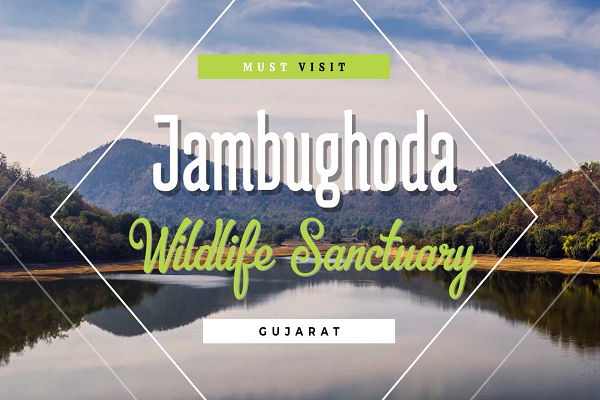
The sanctuary is a popular weekend escape for families and nature lovers from Vadodara and nearby towns. An earlier version of this article said it is 70 km from Vadodara; we could not confirm the distance, so check it on a map for your route.
Purna Wildlife Sanctuary
Purna Wildlife Sanctuary, in the Dangs district of south Gujarat, covers about 161 sq km of rolling hills, small valleys, streams and dense forest, with tribal villages around it. It was declared a sanctuary in 1990, and the area receives some of the heaviest rainfall in Gujarat.
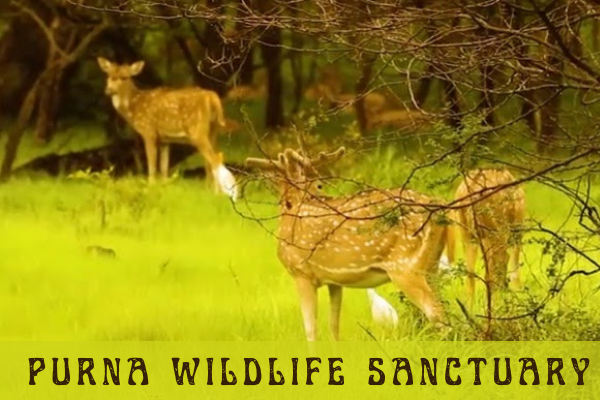
The forest is home to leopards, barking deer, chital, sambar, four-horned antelope, civets, mongooses, macaques, flying squirrels, hyenas and pythons, along with birds such as grey junglefowl and flycatchers.
Vansda National Park
Vansda National Park, in Navsari district, is one of Gujarat’s four national parks. It covers about 24 sq km on the banks of the Ambika River in the foothills of the Western Ghats (Sahyadri range) and was declared a national park in 1979. The forest was once the property of the rulers of the former Vansda state, and trees in the park have not been felled since 1952, which is why it holds tall, mature forest.
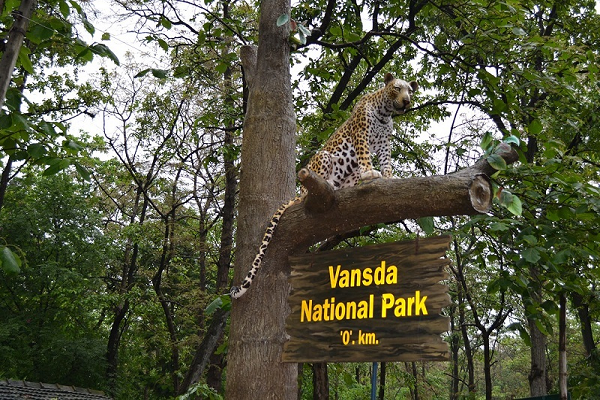
Vansda has about 443 recorded flowering plant species and about 155 bird species, including hornbills and flycatchers. Leopards live here, and in 2020 dholes (Asian wild dogs) were confirmed in the park, the first records of the species in Gujarat in about 50 years. Visitors can also see a botanical garden and the Gira waterfall, and stay at a campsite at Kilad. (An earlier version of this article gave the bird count as about 115 and the plant count as 450; the figures have been updated.)
Mitiyala Wildlife Sanctuary
Mitiyala Wildlife Sanctuary, in Amreli district, is a small sanctuary of about 18 sq km declared in 2004. It lies near Gir and forms part of the wider Asiatic lion landscape, with hill tracts, tall grass and dry deciduous trees.
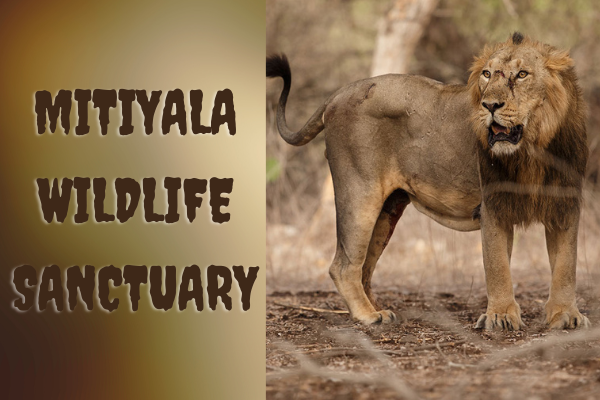
Lions use the sanctuary, and lions were recorded at Mitiyala in the May 2025 census. Leopards, chital, sambar, chinkara and nilgai also live here. An earlier version of this article said “more than 12 lions” lived here; we could not confirm a current figure for this sanctuary alone.
Gaga Wildlife Sanctuary
Gaga Wildlife Sanctuary, on the Gulf of Kutch coast in Devbhumi Dwarka district, is one of Gujarat’s smallest sanctuaries at about 3.3 sq km (about 333 hectares). It was declared a sanctuary in 1988 and protects coastal grassland in two blocks separated by farmland and wasteland.
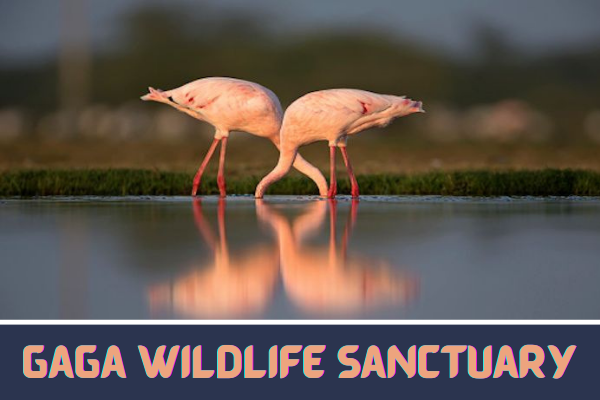
Wolves, jackals, nilgai, jungle cats and mongooses live in the sanctuary, and its coastal grassland suits many birds. The plants include Prosopis juliflora, Suaeda, Salvadora and Capparis.
Shoolpaneshwar Wildlife Sanctuary
Shoolpaneshwar Wildlife Sanctuary, in Narmada district, was established in 1982 and is one of Gujarat’s largest sanctuaries at about 608 sq km. It lies in the western Satpura range south of the Narmada River, on the borders with Maharashtra and Madhya Pradesh, with the Rajpipla hills as its main landscape.
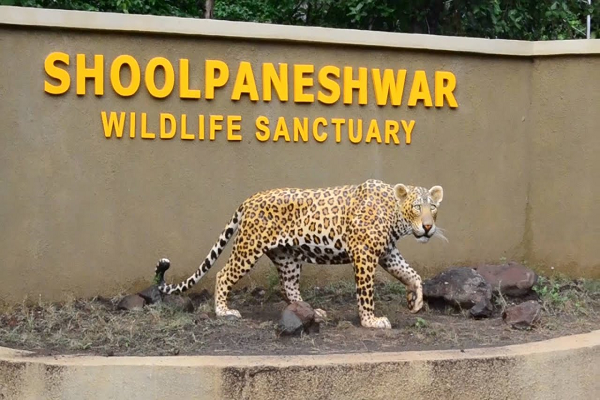
The sanctuary takes its name from the Shoolpaneshwar Mahadev temple of Lord Shiva. The original temple site was submerged by the Sardar Sarovar reservoir, and a new Shoolpaneshwar temple stands near Rajpipla. The forest was set up mainly to protect the sloth bear, and it also has leopards, pythons, mugger crocodiles and many bird species, with waterfalls and deep valleys to explore.
Tips for visiting Gujarat’s parks
- Book officially. Gir safari permits and many other park entries are sold on Gujarat Forest Department portals. Use only official sites.
- Mind the season. Gir closes from 16 June to 15 October. Winter, roughly November to February, is the most comfortable time for most parks and the best time for migratory birds.
- Follow the tides at Narara. Reef walks only happen at low tide, so plan your day around the tide table.
- Respect wildlife. Lions in Saurashtra often live close to villages and farms. Never approach or feed them, and stay in your vehicle on safaris.
More wildlife trips: see our list of the best national parks in India, the Thol Lake bird sanctuary near Ahmedabad, and our guide to places to visit near Ahmedabad.
Frequently asked questions
How many national parks are there in Gujarat?
Four: Gir, the Marine National Park in the Gulf of Kutch, Velavadar Blackbuck National Park and Vansda National Park. The other places in this guide are wildlife sanctuaries.
Where can I see Asiatic lions in Gujarat?
Mainly in Gir, where safaris are run by the Gujarat Forest Department. Lions also range into other parts of Saurashtra, including areas around Barda and Mitiyala.
When is Gir National Park closed?
Every year from 16 June to 15 October, for the monsoon.
Can you see coral in Gujarat?
Yes. At Narara in the Marine National Park, near Jamnagar, guided walks at low tide let you see corals and other reef life without diving. A permit and a guide are required.
Which is the largest wildlife sanctuary in Gujarat?
The Wild Ass Sanctuary in the Little Rann of Kutch, at about 4,954 sq km, is by far the largest. Among the places in this guide, Gir and Shoolpaneshwar are the biggest.
Details checked in October 2026 against Gujarat Forest Department lion census figures (May 2025), protected-area records for Gujarat, the Devbhumi Dwarka district administration and park descriptions. Opening seasons, permits and fees change, so check official booking pages before you travel.