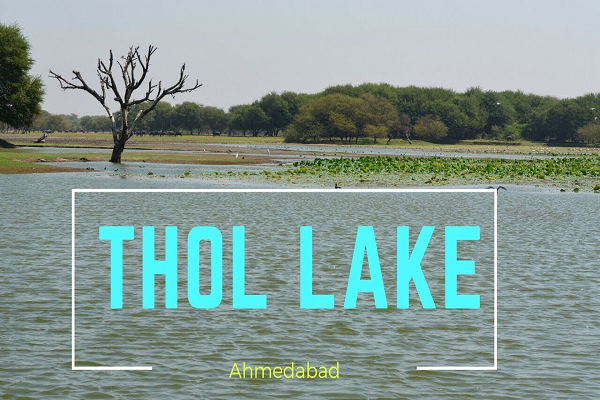
Quick answer: Thol Lake Wildlife Sanctuary is a shallow, man-made lake near Thol village in Mehsana district, Gujarat, about 25 to 40 km north-west of Ahmedabad depending on where you start. It was built in 1912 as an irrigation tank under the Gaekwad rulers of Baroda, became a wildlife sanctuary in 1988 and was named a Ramsar wetland of international importance in 2021. Go between November and February for flamingos, pelicans, sarus cranes and other winter birds. As of October 2026, Gujarat Tourism lists it as open from 6 am to 5:30 pm every day. No official entry fee is published online, so check at the gate before you go.
Thol Lake at a glance
| Detail | What to know |
|---|---|
| Location | Near Thol village, Kadi taluka, Mehsana district, Gujarat; north-west of Ahmedabad |
| Timings | 6 am to 5:30 pm, every day (Gujarat Tourism, as of October 2026) |
| Entry fee | Not published on an official site; check at the gate or with the Gujarat Forest Department |
| Best time to visit | November to February (the Forest Department says November to mid-February) |
| Time needed | A half-day or day trip from Ahmedabad or Gandhinagar |
| Status | Wildlife sanctuary (1988); Ramsar site (designated 5 April 2021) |
About Thol Lake Wildlife Sanctuary
Thol Lake is a shallow freshwater reservoir dominated by open water, with earthen bunds along its southern, western and eastern sides that hold back the monsoon run-off. Unlike many wetlands it has few reed beds, which gives it an open, wide-horizon feel. According to the Gujarat Forest Department, the sanctuary covers 6.99 sq km; the Ramsar Information Sheet gives the wetland as 699 hectares, the same area.
The sanctuary sits in Mehsana district, close to the boundary with Ahmedabad district, which is why Gujarat Tourism lists it among Ahmedabad’s attractions. The lake is still used: it supplies irrigation and drinking water to nearby farms and villages, and it also receives water through irrigation canals, which helps keep some water in the lake for birds in the dry months.
History of Thol Lake
Thol Lake was built in 1912 as an irrigation tank during the rule of the Gaekwads of Baroda, to store rainwater for farmers and to help prevent soil erosion and flooding. Gujarat Tourism notes that the lake is jointly run by the Forest and Irrigation departments of the Government of Gujarat.
Because the lake attracted large numbers of birds, the state declared it the Thol Lake Wildlife Sanctuary in November 1988. On 5 April 2021 it was designated a Ramsar site, a wetland of international importance; the Ministry of Environment, Forest and Climate Change announced the listing, together with Wadhvana in Gujarat, in August 2021.
Birds and wildlife at Thol
Thol is on the Central Asian Flyway, one of the main routes for migratory birds. The Ramsar Information Sheet says 327 bird species have been recorded at the sanctuary, citing a 2017 study, including 112 species of waterbirds. Gujarat Tourism’s figure is “over 160 species”, so counts differ by source and survey.
- Winter visitors: greater and lesser flamingos, great white pelicans, geese, ducks such as mallards, whistling teals, and many waders.
- Sarus cranes: the world’s tallest flying bird lives here year-round, and the Forest Department highlights it as a key species. The cranes also use the lake in summer when other water bodies dry up.
- Threatened species: the Ramsar sheet lists about 34 waterbird species that are critically endangered, vulnerable or near threatened, including the white-rumped vulture, sociable lapwing, Dalmatian pelican, painted stork and black-headed ibis.
- Other common birds: egrets, herons, spoonbills and ibises, along with smaller waders such as sandpipers and plovers.
The Ramsar sheet says Thol has hosted more than 20,000 waterbirds every winter since 2008, with a peak count of more than 60,000 in 2016.
Mammals live around the lake too. The Ramsar sheet names blackbuck (a small local population relies on the wetland in the dry season), nilgai (blue bull), golden jackal, jungle cat, common mongoose, common langur and pale hedgehog. An earlier version of this article said zebras can be seen here. That is wrong: zebras are African animals and do not live wild at Thol. The earlier mention of wolves and striped hyenas has also been removed, because we could not confirm them in official records for the sanctuary.
Timings and entry fee
As of October 2026, Gujarat Tourism lists Thol Lake Sanctuary as open from 6 am to 5:30 pm every day. Early morning is usually the best time for birdwatching, when the birds are active and the heat is lower.
An earlier version of this article gave an entry fee of Rs 50 per person, a camera charge of Rs 200 and a vehicle charge of Rs 500. Neither Gujarat Tourism nor the Gujarat Forest Department publishes these fees online, so we have removed the figures. Check the current entry, camera and vehicle charges at the gate or with the Forest Department before you go, and carry some cash in case digital payment is not available.
How to reach Thol Lake
Thol is best reached by road. Official sources give slightly different distances depending on the starting point: the Ramsar sheet puts the sanctuary about 25 km from Ahmedabad, while the Gujarat Forest Department gives about 40 km. Gujarat Tourism says Gandhinagar is about 23 km away.
- By air: the nearest airport is Sardar Vallabhbhai Patel International Airport, Ahmedabad, about 34 km away by road according to Gujarat Tourism.
- By train: the nearest major station is Ahmedabad Junction (Kalupur), about 31 km away by road.
- By road: hire a taxi or drive from Ahmedabad or Gandhinagar. Public transport to the village is limited, so a private vehicle is the simplest option for an early start.
An earlier version of this article listed bus stops and Maninagar railway station as being a few minutes’ walk from Thol. That was an error: Maninagar is in south-east Ahmedabad, next to Kankaria Lake, not near Thol. Coming from further away? See our guide on how to reach Ahmedabad from Delhi.
Tips for visiting
- Arrive early in the morning, when bird activity is highest.
- Bring binoculars, and a camera with a zoom lens if you have one; many birds stay well out on the water.
- Carry enough drinking water and some food, as facilities near the lake are limited.
- Wear muted colours, keep noise down and stay on the paths and bunds so you do not disturb nesting or feeding birds.
- Do not feed the birds or leave litter. Thol is a protected sanctuary and a Ramsar site.
- Check the weather. Bird numbers are highest in winter; in summer, water levels fall and mostly resident birds remain.
Places to visit near Thol Lake
Gujarat Tourism suggests combining Thol with these places nearby:
- Nal Sarovar Bird Sanctuary: a much larger wetland south-west of Ahmedabad, also a Ramsar site, and another winter birding favourite.
- Lothal: the excavated site of a Harappan (Indus Valley Civilisation) town, south-west of Ahmedabad.
- Indroda Dinosaur and Fossil Park: a nature park in Gandhinagar.
If you are spending the rest of the day in Ahmedabad or Gandhinagar, these are also worth a visit:
- Kankaria Lake and Balvatika, Ahmedabad: a 15th-century lake with a lakefront park, the city zoo and the Balvatika children’s park, which reopened in 2025 after a revamp. See our Kankaria Lake guide.
- Shri Swaminarayan Mandir, Kalupur: the first temple of the Swaminarayan sect, completed in 1822. Construction was led by Anandanand Swami on land provided by the British authorities, and its central shrine is known for carvings in Burmese teak. Check visiting hours locally.
- Akshardham, Gandhinagar: the Swaminarayan temple complex in Sector 20, Gandhinagar (not to be confused with Akshardham in Delhi). As of October 2026, its official site says it is open Tuesday to Sunday from 10 am, with last entry at 7:30 pm, and closed every Monday. Entry to the temple is free; the exhibitions and the evening Sat-Chit-Anand water show are ticketed. An earlier version of this article called it a temple in Ahmedabad with a nightly laser show; it is in Gandhinagar, and the evening show is now a water show.
An earlier version of this article also described a shopping mall “1 km from Thol Lake” and a Hanuman temple in Ahmedabad’s army camp area as nearby places. Both are in Ahmedabad city, not near the sanctuary, so they have been removed. For more day trips, see our list of the best places to visit near Ahmedabad and our guide to national parks in Gujarat.
Frequently asked questions
What is the best time to visit Thol Lake?
November to February, when migratory birds such as flamingos and pelicans are present. The Gujarat Forest Department gives November to mid-February. Early morning is the best time of day.
What are Thol Lake’s timings?
As of October 2026, Gujarat Tourism lists the sanctuary as open from 6 am to 5:30 pm every day. Timings can change, so check before you travel.
Is there an entry fee for Thol Lake?
Neither Gujarat Tourism nor the Gujarat Forest Department publishes a fee list online, so we have not given figures. Check the current entry, camera and vehicle charges at the gate or with the Gujarat Forest Department.
Which district is Thol Lake in?
Thol Lake is in Mehsana district, near the boundary with Ahmedabad district. It is often described as being near Ahmedabad because it is an easy drive from the city.
Is Thol Lake a Ramsar site?
Yes. Thol Lake Wildlife Sanctuary was designated a Ramsar site on 5 April 2021, mainly for its importance to waterbirds on the Central Asian Flyway.
Can you see sarus cranes at Thol?
Yes. The sarus crane is one of Thol’s flagship species and can be seen through the year, especially in summer when other water bodies dry up.
Details checked in October 2026 against Gujarat Tourism, the Gujarat Forest Department’s sanctuary page, the Ramsar Information Sheet for Thol Lake Wildlife Sanctuary and the official Akshardham Gandhinagar visitor page. Timings and charges can change, so confirm before you visit.