Quick answer: Punjab has no national park. Its protected wildlife areas are wildlife sanctuaries, wetlands and a large state zoo. The best known are Abohar Wildlife Sanctuary for blackbuck, Harike Wetland for winter birds, Jhajjar Bachauli in the Shivalik foothills, the Bir Moti Bagh and Bir Bhadson sanctuaries near Patiala, and the Mahendra Chaudhary Zoological Park (Chhatbir Zoo) near Zirakpur.
Does Punjab have a national park?
No. India’s official state-wise listing of protected areas shows Punjab with no national park; Chandigarh, Delhi, Lakshadweep, Puducherry, and Dadra and Nagar Haveli and Daman and Diu are the others without one. Punjab instead has 13 notified wildlife sanctuaries covering about 327 sq km, which is well under 1% of the state’s area. It also has six wetlands listed under the international Ramsar Convention: Harike, Kanjli, Ropar, Nangal, Keshopur-Miani and the Beas Conservation Reserve.
An earlier version of this article called several of these places “national parks” and said Punjab’s wildlife includes elephants and the Bengal tiger. Punjab has no wild tiger population, and the sanctuaries below are wildlife sanctuaries, not national parks. Most of Punjab is farmland, so its remaining wild areas are small: the Shivalik foothills in the north-east, river wetlands and a few former royal hunting reserves.
The blackbuck is Punjab’s state animal, and winter brings large numbers of migratory waterbirds to the state’s wetlands.
Punjab’s main wildlife areas at a glance
| Place | District | Type | Known for |
|---|---|---|---|
| Abohar Wildlife Sanctuary | Fazilka | Wildlife sanctuary (on village land) | Blackbuck, nilgai, Bishnoi conservation |
| Harike Wetland | Tarn Taran, Ferozepur, Kapurthala | Bird sanctuary and Ramsar site | Winter migratory birds |
| Jhajjar Bachauli Wildlife Sanctuary | Rupnagar | Wildlife sanctuary | Shivalik forest, sambar, visiting leopards |
| Bir Moti Bagh Wildlife Sanctuary | Patiala | Wildlife sanctuary | Former royal hunting ground, deer |
| Bir Bhadson Wildlife Sanctuary | Patiala | Wildlife sanctuary | Former royal hunting reserve |
| Mahendra Chaudhary Zoological Park (Chhatbir Zoo) | Near Zirakpur | Zoo | Lions, tigers, wildlife safari |
Abohar Wildlife Sanctuary
Abohar Wildlife Sanctuary covers about 186.5 sq km (18,650 hectares) across 13 Bishnoi villages near Abohar, in what is now Fazilka district. (An earlier version of this article placed it in Ferozepur district; Fazilka was carved out of Ferozepur in 2011.) Unlike most sanctuaries, it lies mainly on private village and farm land rather than government forest.
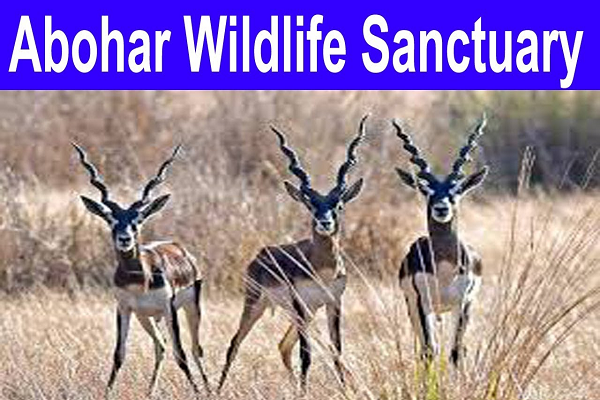
The sanctuary exists because of the Bishnoi community, whose faith forbids harming animals and trees. Bishnoi villagers have protected the blackbuck for generations, and they do not allow hunting on their land. Blackbuck and nilgai (blue bull) are the animals most visitors come to see, and hares, jackals and wild boar are also found here. The local trees include kikar (Acacia nilotica), siris (Albizia lebbeck) and neem.
The cooler months, roughly October to March, are the most comfortable time to visit, since summers in this part of Punjab are very hot. Because the sanctuary is spread across working villages and fields, respect private land and ask locally before walking into farms.
Harike Wetland and Bird Sanctuary
Harike Wetland formed behind the Harike barrage, just downstream of where the Beas and Sutlej rivers meet. It lies on the borders of Tarn Taran and Ferozepur districts and extends into Kapurthala district. It was declared a bird sanctuary in 1982 and was designated a Ramsar wetland of international importance on 23 March 1990.
Harike is Punjab’s best-known birdwatching site. Around 200 bird species visit in winter, when migratory ducks, geese and other waterbirds arrive. The wetland is also home to endangered freshwater turtles, smooth-coated otters and many fish species, and the state has planned to reintroduce gharials to the area.
An earlier version of this article said Harike is “popular” for its freshwater dolphins. Indus river dolphins have been recorded in the Beas river near the wetland, but sightings are rare, and visitors should not expect to see one. Winter, roughly November to February, is the best season for birds.
Jhajjar Bachauli Wildlife Sanctuary
Jhajjar Bachauli Wildlife Sanctuary is a small forest sanctuary of about 116 hectares in the Shivalik foothills, around 3 km from Anandpur Sahib in Rupnagar district, close to the Himachal Pradesh border. The Punjab government notified it as a wildlife sanctuary in 1998.
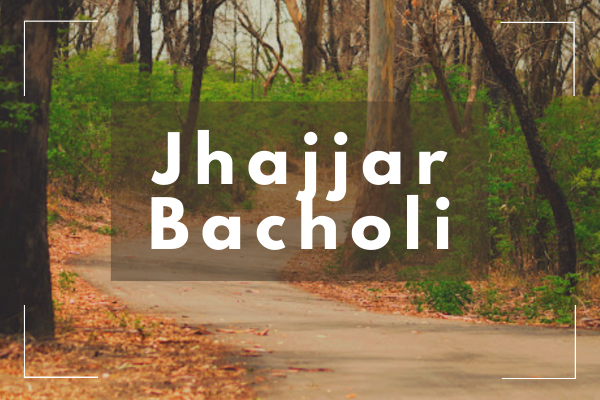
According to the Punjab forest and wildlife department, its animals include sambar, barking deer, hares, jackals, pythons, cobras and rat snakes, and leopards pass through the area from time to time. The forest is mixed scrub and broadleaf woodland typical of the Shivaliks.
Plans for the sanctuary are changing. In January 2026 the Punjab State Board for Wildlife was reported to have approved renaming it the Sri Guru Tegh Bahadur Wildlife Sanctuary, and the forest department has proposed a leopard safari and other eco-tourism facilities. These were still at the planning stage in our checks, so contact the Rupnagar forest division before you visit.
Bir Moti Bagh Wildlife Sanctuary
Bir Moti Bagh is a small forest sanctuary of about 654 hectares, roughly 5 km from Patiala city. It was once a hunting reserve of the Maharajas of Patiala and was protected under the Patiala state’s Preservation of Fauna Act of 1896.
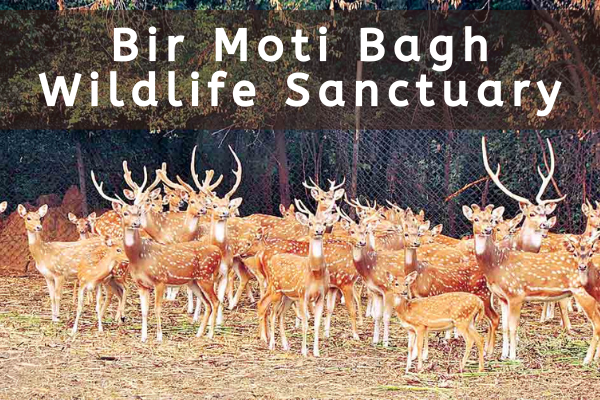
According to Incredible India, the tourism ministry’s website, its animals include spotted deer (chital), blackbuck, hog deer, wild boar, porcupines, grey mongooses and monkeys, along with grey and black partridges and black francolin. The trees include toot (mulberry), kikar, sheesham, neem, mango, teak and eucalyptus. Incredible India lists its hours as 6 am to 5 pm (as of October 2026); confirm locally before you go.
An earlier version of this article said tigers and lions live in the sanctuary. They do not; the big cats in this area are in the Chhatbir Zoo, described below.
Bir Bhadson Wildlife Sanctuary
Bir Bhadson Wildlife Sanctuary covers about 1,022 hectares in Patiala district, beside the Bhadson–Gobindgarh road near the town of Nabha. Like Bir Moti Bagh, it was once a royal hunting area and is now protected forest. It was declared a sanctuary in 1952.
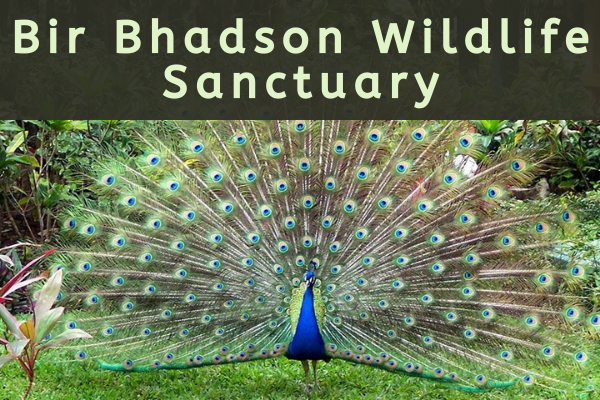
An earlier version of this article placed it in “West Punjab” and listed tigers and lions among its animals. Patiala district is in eastern Punjab, and there are no tigers or lions in the wild here. Expect smaller wildlife such as deer, jackals, hares, monkeys and many birds. Nabha is the nearest town, and it has a railway station.
Mahendra Chaudhary Zoological Park (Chhatbir Zoo)
The Mahendra Chaudhary Zoological Park, usually called Chhatbir Zoo, is at Chhat village near Zirakpur, about 20 km from Chandigarh on the road towards Patiala. It is a zoo run by Punjab’s Department of Forest and Wildlife Preservation, not a national park. The zoo was established on 13 April 1977, covers 505 acres and, according to its official website, holds about 1,241 animals of 103 species.
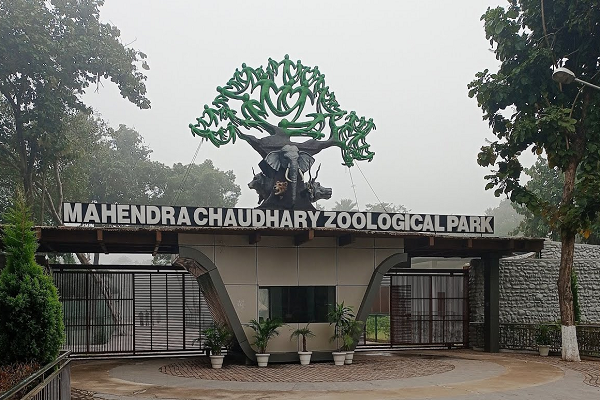
Its exhibits include Asiatic lions, Bengal tigers, leopards, elephants, bears and many birds. A long walk-in aviary is among its highlights, and battery-operated carts help visitors cover the large grounds.
As of October 2026, the zoo’s official website lists:
- Timings: 9 am to 5 pm.
- Closed: every Monday, and on 26 January, 15 August and 2 October.
- Entry fee: ₹100 for adults (above 12 years), ₹50 for children aged 3 to 12, and free for children under 3, differently abled visitors and authorised media.
- Extras: wildlife safari ₹75 per person, battery-operated cart ₹60 per person, and still or video camera ₹500 per visit.
Fees and timings change, so check the zoo’s official website (chhatbirzoo.gov.in), which also offers online tickets, before you visit.
Tips for visiting Punjab’s wildlife areas
- Go in the cooler months. October to March is the most comfortable time, and winter is the peak season for migratory birds at Harike and the other wetlands.
- Check access first. Several sanctuaries are small, have few visitor facilities and may need permission from the local forest division. The Punjab Department of Forests and Wildlife Preservation manages them.
- Respect village land. At Abohar, the animals live among working farms and Bishnoi villages.
- Bring binoculars for birdwatching, and keep noise down near wildlife.
Looking further afield? Compare our guides to the best national parks in India, the national parks in Gujarat and the national parks in Maharashtra.
Frequently asked questions
How many national parks are there in Punjab?
None. Punjab has no national park. Its protected areas are 13 wildlife sanctuaries, along with conservation and community reserves and six Ramsar wetlands.
What is the state animal of Punjab?
The blackbuck. The largest population in the state is in and around Abohar Wildlife Sanctuary, where Bishnoi villagers protect it.
Is Chhatbir Zoo a national park?
No. The Mahendra Chaudhary Zoological Park at Chhatbir is a zoo run by the Punjab forest and wildlife department. It is closed on Mondays.
When is the best time to see birds at Harike?
Winter, roughly November to February, when around 200 species, including large numbers of migratory waterbirds, visit the wetland.
Are there tigers in the wild in Punjab?
No. Punjab has no wild tiger population. You can see tigers and lions at the Chhatbir Zoo near Zirakpur.
Details checked in October 2026 against the national protected-area listings, the Ramsar site records, the Punjab forest and wildlife department, Incredible India and the official Chhatbir Zoo website. Timings, fees and visitor rules change, so check before you travel.