Quick answer: Ganapatipule (also spelled Ganpatipule) is a beach and temple town in Ratnagiri district on Maharashtra’s Konkan coast, about 375 km south of Mumbai and about 26 km from Ratnagiri. Visitors come for its long sandy beach and the Swayambhu Ganpati temple right on the shore. The sea here is dangerous for swimming, and five tourists drowned in June 2026, so stay out of deep water and follow lifeguards’ instructions. November to February is the most pleasant time to visit.
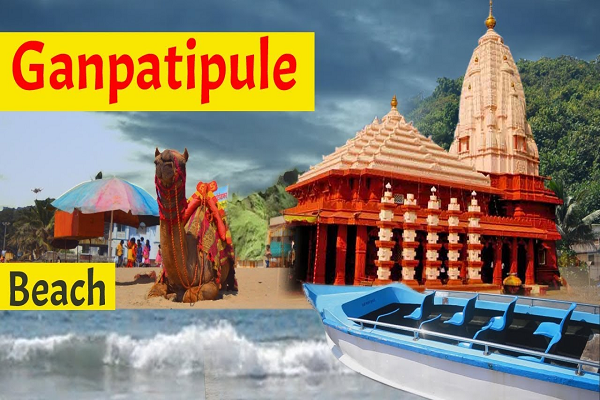
The Konkan coast of Maharashtra is lined with beaches, and Ganapatipule is one of the best known, thanks to its combination of a wide beach, a palm-fringed shore and an important Ganesha temple. It is less commercial than many beaches closer to Mumbai and Pune, which makes it a popular long-weekend getaway for people from both cities.
Ganapatipule at a glance
| Detail | Information |
|---|---|
| Location | Ganapatipule, Ratnagiri district, Maharashtra |
| Distance | About 375 km from Mumbai; about 26 km from Ratnagiri |
| Nearest railway station | Ratnagiri (Konkan Railway); Bhoke is also nearby |
| Main attractions | Beach, Swayambhu Ganpati temple, sunsets, nearby Malgund and Jaigad Fort |
| Best time to visit | November to February |
| Avoid | The monsoon, roughly June to September, when the sea is rough |
| Time needed | Two days is enough for the beach, temple and nearby places |
Swimming safety: read this first
Ganapatipule’s beach looks inviting, but the sea can be deep close to the shore, and the waves and currents are strong. On 20 June 2026, according to All India Radio (News on AIR), five tourists from Chhatrapati Sambhajinagar drowned after members of their group went into the sea to swim. There have been earlier drownings too, and signboards on the beach warn visitors.
- Don’t swim beyond knee depth, and never at high tide, in rough weather or during the monsoon.
- Stay within sight of lifeguards and follow their instructions and flags.
- Keep children close and never let them play alone at the water’s edge.
- Don’t enter the water after drinking alcohol.
How to reach Ganapatipule
- By train: Ganapatipule has no railway station. The nearest stations are Ratnagiri and Bhoke on the Konkan Railway, which has direct trains from Mumbai and other cities. From Ratnagiri, take a state transport bus, a taxi or an auto-rickshaw for the roughly 26 km drive.
- By road: Maharashtra State Road Transport Corporation (MSRTC) and private buses run from Mumbai, Pune and other cities. By car, the drive from Mumbai is long; allow most of a day.
- By air: Ratnagiri has an airport used by the Indian Coast Guard. In July 2026 the Coast Guard and the Maharashtra government signed an agreement to allow civilian flights there, but we found no confirmed start date for scheduled flights. Until then, most travellers fly to Mumbai or Kolhapur and continue by road or rail.
An earlier version of this article said Ganapatipule is 334 km from Mumbai and 300 km from Pune, and that Mumbai is the nearest airport. The figures have been updated, and the air advice now reflects the Ratnagiri airport plans.
Things to do at Ganapatipule
Relax on the beach
Ganapatipule’s long stretch of light sand is backed by coconut palms and the green Sahyadri hills, and the town gets its name from the Ganpati temple beside the beach. Facilities are basic: a few stalls sell snacks and coconut water, and changing rooms are available for a small charge. It is a place to walk, sit by the sea and watch the waves rather than for nightlife.
Visit the Swayambhu Ganpati temple
The Ganpati temple stands right on the shore at the foot of a hill. Its Ganesha idol is believed to be swayambhu, or self-manifested, and is said to be about 400 years old. Unlike most Ganesha idols, which face east, this one faces west, towards the sea. Many devotees walk around the hill behind the temple as a form of pradakshina (circumambulation). The temple is especially crowded during the Ganeshotsav festival and on holidays.
Local legend explains the town’s name: Ganpati is said to have moved from Gule to Pule after a remark by a local woman, giving “Ganpati-pule”.
Water sports and beach rides
Operators on the beach offer rides such as speedboats, jet skis and banana boats, and horse or horse-cart rides along the sand, depending on the season and conditions. Ride only with operators who provide life jackets, and avoid water sports when the sea is rough. Services are usually suspended during the monsoon.
Watch the sunset
Because the beach faces west over the Arabian Sea, sunsets are one of Ganapatipule’s highlights. The low hills around the temple and town give good viewpoints over the bay.
Places to visit near Ganapatipule
- Malgund: A village just next to Ganapatipule, and the birthplace of the Marathi poet Keshavsut. A memorial and museum honour him, and Malgund’s beach is quieter than Ganapatipule’s.
- Prachin Konkan museum: An open-air museum near the beach that recreates a traditional Konkani village with life-size figures, showing the region’s history, crafts and way of life. Check current timings and ticket prices locally.
- Jaigad Fort: A 16th-century fort, said to have been built by the Bijapur rulers and later strengthened by Kanhoji Angre, on a cliff where the Shastri river meets the Arabian Sea. It is a short drive from Ganapatipule and has wide views of the sea. Jaigad lighthouse is nearby.
- Ratnagiri: The district town, about 26 km away, known for Alphonso mangoes, Ratnadurg Fort and the house where Lokmanya Tilak was born.
- Velneshwar and Pawas: Velneshwar has a Shiva temple by the sea, and Pawas is associated with the saint Swami Swarupanand.
An earlier version of this article quoted an entry fee of Rs 40 and timings of 8:30 am to 6 pm for the museum, and said Jaigad Fort is protected by the Archaeological Survey of India. We could not verify the fee, the timings or the ASI listing, so they have been removed. Sources also differ on the distance to Jaigad, from about 14 km to about 20 km.
Where to stay
Ganapatipule has a Maharashtra Tourism Development Corporation (MTDC) resort near the beach, along with private resorts, hotels and homestays for different budgets. Book early for weekends, long holidays and the Ganeshotsav season. (Specific private hotels named in an earlier version of this article have been removed, as we could not confirm their current status.)
Best time to visit
November to February is the best time to visit, with pleasant days and cooler evenings. March and April are warm but still manageable. May is usually the hottest month, with temperatures that can approach 40°C. The monsoon, from about June to September, brings heavy rain and rough seas, and is not a good time for a beach trip.
Planning a coastal trip in western India? See our guides to Aksa Beach and the best beaches in Mumbai, or head further south to the best beaches in Goa.
Frequently asked questions
Is it safe to swim at Ganapatipule beach?
It is risky. The sea gets deep quickly and the currents are strong, and several tourists have drowned here, including five in June 2026. Stay in shallow water and follow lifeguards’ instructions.
How far is Ganapatipule from Ratnagiri?
About 26 km by road. Buses, taxis and auto-rickshaws run between the two.
Which direction does the Ganpatipule Ganesha idol face?
West, towards the sea, unlike most Ganesha idols, which face east.
Is there an airport near Ganapatipule?
Ratnagiri has an airport, but as of October 2026 scheduled civilian flights had not been confirmed. Most travellers fly to Mumbai or Kolhapur and continue by road or train.
How many days do you need in Ganapatipule?
Two days is usually enough for the beach, the temple and nearby places such as Malgund and Jaigad Fort.
Details checked in October 2026 against All India Radio news reports, Ratnagiri airport announcements, and published records on Ganapatipule, its temple and Jaigad Fort. Sea conditions, timings and fees change, so check locally before you visit.