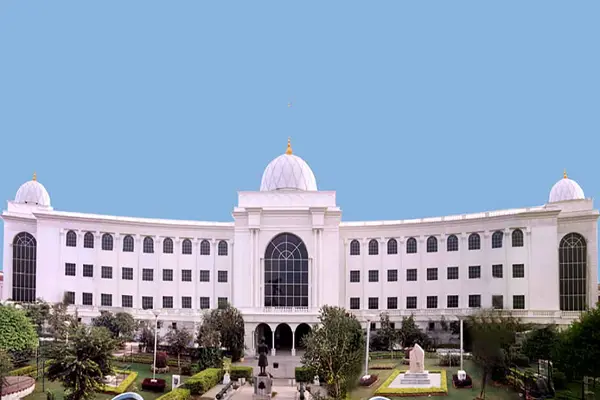
Quick answer: The Salar Jung Museum is a national museum on the southern bank of the Musi river in Dar-ul-Shifa, Hyderabad, built around the art collection of the Salar Jung family, especially Salar Jung III. As of October 2026, the museum’s website lists opening hours of 10 am to 6 pm (last entry 5:15 pm), closed on Fridays, and entry fees of ₹50 for Indian adults, ₹20 for children and ₹1,000 for foreign visitors. Plan at least two to three hours to see the main galleries.
Salar Jung Museum at a glance
| Detail | What the museum states (checked October 2026) |
|---|---|
| Location | Salar Jung Museum, Dar-ul-Shifa, Hyderabad 500002, on the southern bank of the Musi, a few minutes from Charminar |
| Timings | 10:00 am to 6:00 pm; ticket counter closes at 5:15 pm |
| Closed on | Fridays and official closed holidays |
| Entry fee: Indian adults (above 18) | ₹50 |
| Entry fee: children (above 5) for Indians | ₹20 |
| Entry fee: foreign visitors | ₹1,000 per person |
| Still camera or smartphone photography | ₹50 |
| Nearest metro | MGBS (Mahatma Gandhi Bus Station), about 2 km |
| Time needed | Two to three hours for the highlights; a full day for everything |
Government school children up to 14 years enter free with an ID card and an authorisation letter from their school, according to the museum. Visitors may be asked to show photo ID (Aadhaar or a passport) at the counter. Tickets can be bought at the museum or online through the booking platforms linked from the museum’s official website (salarjungmuseum.in). Fees and hours change from time to time, so check the website before you go.
An earlier version of this article said the museum closes at 5 pm and gave no fees. The museum’s website says it has stayed open until 6 pm since 1 December 2025.
History of the Salar Jung Museum
The Salar Jungs were a noble family who served as prime ministers (Dewans) of Hyderabad State under the Nizams. Salar Jung I, Mir Turab Ali Khan, was a reforming administrator who also collected art. But most of the collection was gathered by his grandson, Nawab Mir Yousuf Ali Khan, Salar Jung III.
According to the museum, Salar Jung III was appointed Prime Minister by the seventh Nizam, Mir Osman Ali Khan, in 1912. He gave up the post in November 1914 and spent the rest of his life collecting art, manuscripts and rare books. Dealers from around the world visited his ancestral palace, Dewan Deodi, and he also bought objects through agents abroad and on his own travels in Europe and the Middle East. By the mid-20th century he had collected more than 40,000 objects.
Salar Jung III died on 2 March 1949 without an heir. His family gifted the collection to the nation, and the museum was formally opened at Dewan Deodi on 16 December 1951 by Jawaharlal Nehru, India’s first Prime Minister. The Government of India later took the museum over formally, and in 1961 an Act of Parliament (the Salar Jung Museum Act, 1961) declared the museum and its library an Institution of National Importance. The museum moved to its present building at Dar-ul-Shifa in 1968, when it was inaugurated by President Zakir Husain. It is run by an autonomous board, which is chaired by the Governor of Telangana.
An earlier version of this article said the museum was under the direct control of the Government of India “till 1996”. That was wrong: the Act that set up the present arrangement dates from 1961.
The collection
The museum’s website describes the collection as more than 48,000 art objects, more than 8,000 manuscripts and more than 60,000 printed books, displayed in about 40 galleries spread across three blocks: the Central Block, the Western Block and the Eastern Block. Only part of the collection is on show at any time. (An earlier version of this article gave older figures of 43,000 objects, 9,000 manuscripts, 47,000 books and 38 galleries.)
The collection covers Indian, European, Middle Eastern and Far Eastern art, including:
- Indian art: stone sculpture, South Indian bronzes, textiles, miniature and modern paintings, arms and armour, metalware, Bidriware, silver, jade, and a gallery of walking sticks.
- European art: marble and bronze sculpture, paintings, glass, porcelain, French furniture and a gallery of clocks from France, England, Switzerland, Germany and the Netherlands.
- Far Eastern art: Chinese and Japanese galleries, Eastern porcelain, and statuary from Nepal, Tibet and Burma (Myanmar).
- Manuscripts and coins: the museum has separate collections of Arabic and Persian manuscripts, and a coins gallery.
Galleries and highlights not to miss
Central Block, ground floor
This floor has the Founder’s Gallery, which tells the story of the Salar Jung family, along with the Indian Sculpture, Indian Textiles, Ivory Carvings, Ivory Coach, Arms and Armour, Metalware, Modern Indian Paintings, Indian Miniature Paintings and Walking Sticks galleries. It is also home to the museum’s most famous sculpture, the Veiled Rebecca, which has its own gallery. This marble figure by the Italian sculptor Giovanni Maria Benzoni is famous for the way the stone is carved to look like a thin veil over the woman’s face.
Central Block, first floor
Here you will find the Toys and Dolls, Flora and Fauna, Indian Silver, Carpet, Jade, Bidriware, Kashmir, Utility, Manuscripts and Coins galleries, as well as a Children’s Gallery.
Western and Eastern Blocks
The Western Block holds European sculpture on the ground floor and, upstairs, European paintings, glass, French furniture, porcelain and the clock gallery. The museum’s famous English musical clock, which the Salar Jungs bought from the firm of Cooke and Kelvey, is one of its most visited exhibits. The Eastern Block has the Chinese, Japanese, Eastern porcelain and Far Eastern statuary galleries.
The ivory collection is another favourite. It includes an ivory chair that, according to most accounts, was a gift to Tipu Sultan from Louis XVI of France.
How to reach the Salar Jung Museum
- By metro: the museum gives MGBS (Mahatma Gandhi Bus Station) as its nearest metro station, about 2 km away.
- By bus: city buses run to Afzalgunj, which is within walking distance of the museum. The museum lists routes such as 1, 2, 7Z and 8A from Secunderabad Railway Station, and routes such as 8R, 9 and 65 from Nampally Railway Station.
- By rail: Kachiguda and Nampally railway stations are both within about three miles (roughly 5 km), according to the museum.
- By road: parking is available inside the museum premises for a small fee.
Tips for visiting
- Do not plan your trip for a Friday, when the museum is closed.
- Arrive early, especially on weekends and holidays, and allow time for the queue at the ticket counter if you have not booked online.
- Pay the photography fee if you want to take pictures, and follow staff instructions in each gallery.
- The museum has a café, a museum shop, toilets, Wi-Fi in designated areas, an audio guide service and a mother-and-baby feeding room. Schools can book free guided tours through the museum’s education department.
Places to visit near the Salar Jung Museum
The museum sits on the edge of the Old City, so it pairs well with its historic neighbours. Charminar, Mecca Masjid and Laad Bazaar are a short ride away, and the Nizams’ Chowmahalla Palace is next to Laad Bazaar. Note that Chowmahalla is also closed on Fridays. For a family day out, combine your trip with the Nehru Zoological Park in Bahadurpura.
Frequently asked questions
Is the Salar Jung Museum open on Fridays?
No. According to the museum’s website, it is open every day except Fridays and official closed holidays, from 10 am to 6 pm, with last entry at 5:15 pm.
What is the Salar Jung Museum entry fee?
As of October 2026, the museum lists ₹50 for Indian adults, ₹20 for children above five, ₹1,000 for foreign visitors and ₹50 for a still camera or smartphone. Check the website before you go, as fees can change.
Who collected the objects in the Salar Jung Museum?
Three generations of the Salar Jung family, who served as prime ministers to the Nizams of Hyderabad. Most of it was gathered by Salar Jung III (Mir Yousuf Ali Khan), who died in 1949.
What is the most famous exhibit?
The marble Veiled Rebecca by Giovanni Maria Benzoni is the best-known piece. The English musical clock and the ivory and jade collections are also very popular.
How much time do I need at the museum?
Two to three hours covers the highlights. If you want to see all the galleries properly, set aside most of a day.
Details checked in October 2026 against the Salar Jung Museum’s official website (visiting hours, fees, history and gallery listings). Opening hours and fees can change, so check before you visit.