Quick answer: Byculla Zoo, officially the Veermata Jijabai Bhosale Udyan and Zoo and popularly called Rani Baug, is Mumbai’s oldest public garden and its main zoo, run by the Brihanmumbai Municipal Corporation (BMC) in Byculla East. Laid out in the early 1860s as Victoria Gardens, it now covers about 50 acres and includes a Humboldt penguin exhibit and the Dr Bhau Daji Lad Museum. Wednesday has long been its weekly closing day; we could not find current official timings or ticket prices, so check with the zoo before you go.
Byculla Zoo at a glance
| Detail | What to know |
|---|---|
| Official name | Veermata Jijabai Bhosale Udyan and Zoo (Jijamata Udyan); also called Rani Baug or Rani Bagh |
| Location | Dr Babasaheb Ambedkar Road, Byculla East, Mumbai 400027 |
| Run by | Brihanmumbai Municipal Corporation (BMC) |
| Area | About 50 to 53 acres |
| Heritage status | Heritage Grade II (B) site, according to the BMC |
| Closed on | Wednesday (confirm before visiting) |
| Timings and tickets | Not confirmed from an official source in October 2026; check with the zoo or at the ticket counter |
| Best time to visit | November to February, on a weekday morning |
| Time needed | Two to three hours; three to four with the museum |
History of Byculla Zoo
The garden began as a botanical garden. Work started in 1861 on a 33-acre site at Mount Estate, Mazgaon, and Lady Frere, wife of the Governor of Bombay, Sir Bartle Frere, formally opened it to the public on 19 November 1862. It was named Victoria Gardens after Queen Victoria and was maintained by the Agri-Horticultural Society of Western India until 1873, when the municipal corporation took over. (The BMC itself gives 1862 as the year of establishment.)
The zoo grew alongside the garden, and in 1890 the zoo area was extended by 15 acres. After Independence, the garden was renamed after Jijabai, the mother of Chhatrapati Shivaji Maharaj, though many Mumbaikars still call it Rani Baug (“Queen’s Garden”), a reminder of its old name.
An earlier version of this article said the zoo was created when the businessman David Sassoon handed over his private zoo to the government. We found no reliable source for that story, so we have removed it. The clock tower at the entrance is named after David Sassoon.
What to see at Byculla Zoo
The Humboldt penguin exhibit
The zoo’s best-known attraction is its indoor Humboldt penguin exhibit, which has temperature-controlled enclosures to suit the birds, whose wild home is the coast of South America. According to the BMC, the zoo received eight Humboldt penguins from the Coex Aquarium in Seoul, South Korea, on 26 July 2016. (An earlier version of this article said seven.) The penguin exhibit has sometimes had a separate charge, so check at the counter.
Animals and birds
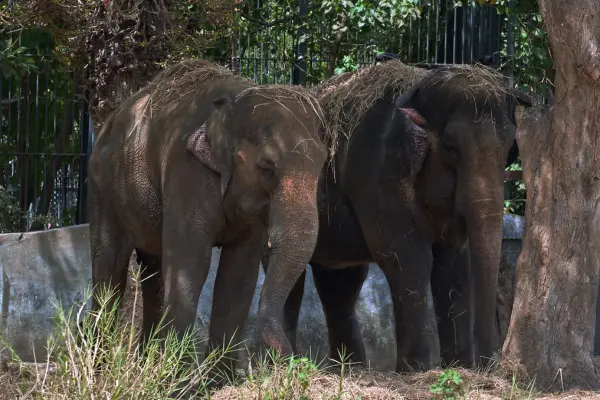
Besides the penguins, the zoo keeps a changing collection of mammals, reptiles and birds. An earlier version of this article listed specific animals, such as hyenas, swamp deer, tigers, sloth bears, crocodiles, elephants and hippos, and a walk-through aviary. Animals are moved, born and die over the years, and we could not check the current collection against an official list, so ask at the zoo what is on show.
The botanical garden
Rani Baug is still a botanical garden as much as a zoo, with many old and unusual trees, and its shaded paths are pleasant for a walk even if you are not there for the animals. An earlier version of this article gave counts of more than 3,000 trees and 800 species from an unnamed study; we could not trace that study, so we have not repeated the figures.
Dr Bhau Daji Lad Museum
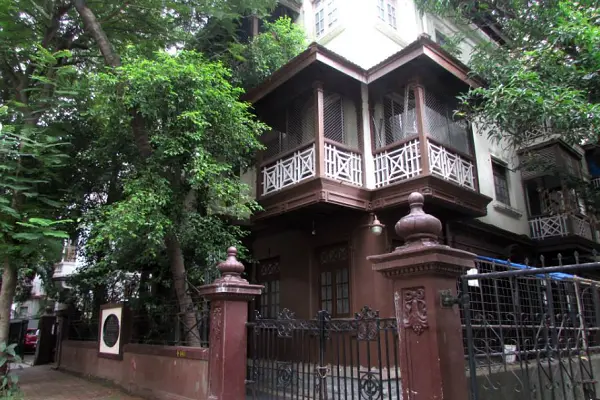
Inside the garden stands the Dr Bhau Daji Lad Museum, Mumbai’s oldest museum. It began in 1855 as a treasure house of decorative and industrial arts and opened in its present building on 2 May 1872 as the Victoria and Albert Museum, Bombay. It was renamed after the physician and scholar Dr Bhau Daji Lad on 1 November 1975.
The museum’s collections include archaeological finds, maps, historical photographs, clay models, silver and copperware, and the Kala Ghoda statue, the black equestrian statue of King Edward VII that gave the Kala Ghoda area its name. The monolithic basalt elephant that once stood on Elephanta Island, and gave the island its name, now stands outside the museum. The museum was closed for about four years during the COVID-19 period and restoration work, and reopened on 8 January 2025. It charges its own entry fee and keeps its own hours.
The David Sassoon clock tower
At the entrance to the garden stands the David Sassoon clock tower, one of the landmarks of Byculla.
Byculla Zoo timings and tickets
We could not find current timings and ticket prices on an official BMC page in October 2026, and the figures published by third-party guides disagree. Wednesday is widely listed as the weekly closing day, including in the Central Zoo Authority’s record for the zoo. Before you go, check the BMC’s announcements or call the zoo office, and expect to pay separately for the museum.
An earlier version of this article listed timings of 9 am to 6 pm and ticket prices for children, adults, the penguin exhibit and cameras. Those figures were not from an official source and may be out of date, so we have removed them.
Tips for visiting
- Go on a weekday morning. Weekends and holidays bring long ticket queues and big family crowds.
- Expect a lot of walking, and carry water, especially from March to May.
- Do not feed or tease the animals, and do not bang on enclosures.
- Check the current rules on carrying food into the zoo at the gate.
How to reach Byculla Zoo
- By train: Byculla station on the Central line is the nearest; the zoo is a short walk or taxi ride away.
- By bus or taxi: Many BEST buses run along Dr Babasaheb Ambedkar Road past the zoo.
- By air: Chhatrapati Shivaji Maharaj International Airport is in the suburbs; allow plenty of time for city traffic.
Places to visit nearby
- Chhatrapati Shivaji Maharaj Vastu Sangrahalaya: For a larger museum, visit the former Prince of Wales Museum at Kala Ghoda.
- Taraporewala Aquarium: The old public aquarium on Marine Drive has been shut since the COVID-19 period and is awaiting redevelopment; see our Taraporewala Aquarium page for its status.
- Elephanta Caves: The island whose stone elephant now stands outside the museum; see our Elephanta Caves guide.
- Sanjay Gandhi National Park: For wildlife in a forest setting, see our Sanjay Gandhi National Park guide.
Frequently asked questions
What is the official name of Byculla Zoo?
Veermata Jijabai Bhosale Udyan and Zoo, also called Jijamata Udyan. Many people still call it Rani Baug.
Which day is Byculla Zoo closed?
Wednesday is widely listed as the weekly closing day. Confirm with the zoo before you visit, as holiday arrangements can change.
When did the penguins come to Byculla Zoo?
Eight Humboldt penguins arrived from the Coex Aquarium in Seoul on 26 July 2016, according to the BMC.
Is the Bhau Daji Lad Museum open?
Yes. It reopened on 8 January 2025 after about four years of closure and restoration. It has its own ticket and hours.
How old is Byculla Zoo?
The garden was laid out from 1861 and opened to the public in 1862, which makes it Mumbai’s oldest public garden.
Details checked in October 2026 against BMC records on the zoo and its penguins, published histories of Jijamata Udyan and the Dr Bhau Daji Lad Museum, and press reports on the museum’s 2025 reopening. Timings and ticket prices were not available from an official source, so confirm them with the zoo before you go.