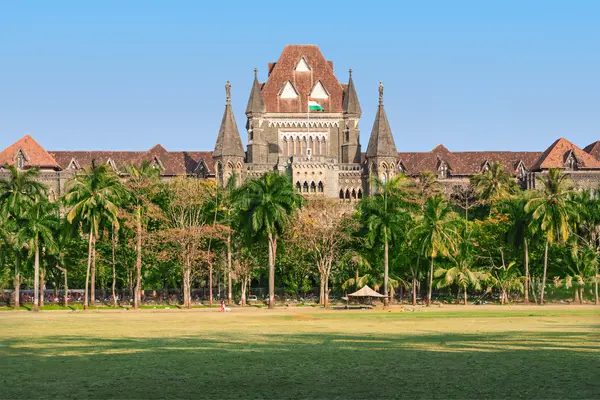
Quick answer: The Bombay High Court is one of India’s three oldest High Courts, set up in 1862, and its Gothic Revival building in Mumbai’s Fort area (1871–1878) is part of the UNESCO World Heritage Site “The Victorian Gothic and Art Deco Ensembles of Mumbai”. It is a working court, not a museum, so you can admire the exterior at any time from the road and the Oval Maidan. Entry inside is for people with court business or arranged heritage visits, and we could not confirm current public visiting hours, so check with the court before you plan to go in.
Bombay High Court at a glance
| Detail | What to know |
|---|---|
| Location | Fort, South Mumbai, beside the Oval Maidan |
| Established | 14 August 1862, under Letters Patent of 26 June 1862 |
| Present building | Built April 1871 to November 1878; first sitting on 10 January 1879 |
| Architect | Colonel James A. Fuller, Royal Engineers |
| Style | Gothic Revival (Early English style) |
| Heritage status | Part of a UNESCO World Heritage Site (inscribed 2018) |
| Entry and timings | Exterior free to view from outside; for going inside, check with the court |
| Nearest stations | Churchgate and Chhatrapati Shivaji Maharaj Terminus (CSMT) |
What the Bombay High Court does
The Bombay High Court is the High Court for the state of Maharashtra, the state of Goa and the Union Territory of Dadra and Nagar Haveli and Daman and Diu. (Dadra and Nagar Haveli and Daman and Diu were separate Union Territories until they were merged in 2020; an earlier version of this article listed them separately.) The principal seat is in Mumbai, and the court also sits at benches in Nagpur, Aurangabad (Chhatrapati Sambhajinagar) and Goa. A fourth bench, at Kolhapur, was set up in August 2025.
History of the Bombay High Court
The Indian High Courts Act, 1861, allowed the Crown to set up High Courts at Calcutta, Bombay and Madras. The Bombay High Court was created by Queen Victoria’s Letters Patent of 26 June 1862 and inaugurated on 14 August 1862. Its first Chief Justice was Sir Matthew Richard Sausse.
The court first worked out of a building known as the Admiralty House, near the present-day K. R. Cama Oriental Institute. An earlier version of this article said the first court building was on “Apollo Street”; we could not confirm that, and the sources we checked name the Admiralty House.
Work on the present building began in April 1871 and was completed in November 1878. According to Live History India, the building was finished for about Rs 16.44 lakh, slightly under its sanctioned cost. The first sitting in the new building took place on 10 January 1879, and an annexe was added in the 1930s.
Architecture
The building was designed by Colonel James A. Fuller of the Royal Engineers, who also designed the David Sassoon Library at Kala Ghoda. It is a Gothic Revival building in the Early English style, 562 feet (171 m) long and 187 feet (57 m) wide, and it is one of the grand Victorian public buildings that face the Oval Maidan.
Look up at the western front to see the statues of Justice and Mercy on top of the building. Justice is shown blindfolded, holding a sword in one hand and scales in the other.
Inside, the galleries are decorated with carvings by local stonemasons, including animal figures. One of the best known shows a monkey holding the scales of justice unevenly, with one eye covered. A popular story says a disgruntled Indian contractor added it after losing a case against the British builders. That story is widely repeated but we could not find a documented source for it, so treat it as a legend.
In 2018, UNESCO inscribed “The Victorian Gothic and Art Deco Ensembles of Mumbai” as a World Heritage Site. The High Court is one of the Victorian Gothic buildings in that ensemble, facing the Art Deco buildings across the Oval Maidan.
The Bombay High Court museum
A permanent judicial museum was set up inside the court as part of its 150th-anniversary celebrations and was inaugurated by Prime Minister Narendra Modi in 2015. According to reports at the time, its displays include old legal rolls, robes, wigs and maces, portraits of advocates, a model of the court building, and barrister certificates issued to figures such as Mohandas Karamchand Gandhi, Muhammad Ali Jinnah and B. R. Ambedkar.
An earlier version of this article said the museum was set up by the lawyer Rajan Jayakar and that it displays the certificates of Mahatma Gandhi and Vallabhbhai Patel. We could not verify those details and have replaced them with what published reports describe.
Can tourists visit the Bombay High Court?
The Bombay High Court is a working court, so the rules are set by the court, not by a tourism body:
- From outside: anyone can see the building from the road and from the Oval Maidan side at any time. This is how most visitors see it.
- Heritage visits: in October 2021, Maharashtra’s Directorate of Tourism, the High Court and a tourist guides’ association started guided heritage walks of the building on non-working days. The walk was reported to include the judges’ library, the Central Court Hall and the museum. We could not confirm whether these walks still run in 2026, how to book them, or what they cost; ask Maharashtra Tourism or the court before you plan around one.
- Court proceedings: hearings in Indian courts are generally open to the public, but entry to the building involves security checks and is controlled by the court. Dress soberly, switch your phone off in court rooms, and follow the instructions of court staff.
An earlier version of this article said the court and museum were open on weekdays from 11 am to 5 pm with no fee, that cameras are not allowed and that the building is wheelchair-friendly. We could not confirm any of these on an official source in October 2026, so check them with the court before your visit.
How to reach the Bombay High Court
- By suburban train: Churchgate station (Western Railway) and Chhatrapati Shivaji Maharaj Terminus (CSMT, formerly Victoria Terminus, Central Railway) are both a short walk or taxi ride away.
- By metro: Mumbai Metro Line 3 (the Aqua Line), which opened fully in October 2025, has stations in the area at Churchgate, Hutatma Chowk and CSMT. Check the Mumbai Metro Rail Corporation’s station map for the most convenient exit.
- By road: taxis and BEST buses run throughout South Mumbai. The court is in the Fort district, between Colaba and Churchgate, and the Gateway of India is within walking distance.
- Reaching Mumbai: Chhatrapati Shivaji Maharaj International Airport has domestic and international flights, and long-distance trains arrive at CSMT, Mumbai Central, Dadar, Bandra Terminus and Lokmanya Tilak Terminus.
Tips for visiting
- For photographs of the full facade, the Oval Maidan side works best. Early morning and evening light are softer and cooler.
- Remember that lawyers, litigants and court staff are working. Do not block gates or footpaths for photos.
- If you plan to go inside, carry a photo ID and expect security screening.
- Combine the visit with a heritage walk through the Fort area; many of Mumbai’s best-known Victorian buildings are within walking distance.
Nearby places to visit
- Chhatrapati Shivaji Maharaj Terminus, the UNESCO-listed railway station.
- Flora Fountain at Hutatma Chowk.
- The Asiatic Society and Town Hall at Horniman Circle.
- The Gateway of India on the Apollo Bunder waterfront.
- Chhatrapati Shivaji Maharaj Vastu Sangrahalaya, the city’s main museum, at Kala Ghoda.
Frequently asked questions
Who designed the Bombay High Court building?
Colonel James A. Fuller of the Royal Engineers. Construction ran from April 1871 to November 1878, and the court first sat in the building on 10 January 1879.
Is the Bombay High Court a UNESCO World Heritage Site?
Yes, as part of a larger site. The building is one of the Victorian Gothic structures in “The Victorian Gothic and Art Deco Ensembles of Mumbai”, which UNESCO inscribed in 2018.
Is there an entry fee to see the Bombay High Court?
There is no fee to see the building from outside. For going inside, including any heritage walk, check the current arrangements with the court or Maharashtra Tourism.
Which states does the Bombay High Court cover?
Maharashtra and Goa, and the Union Territory of Dadra and Nagar Haveli and Daman and Diu. It has benches at Nagpur, Aurangabad (Chhatrapati Sambhajinagar), Goa and, since August 2025, Kolhapur.
Is the Bombay High Court the oldest High Court in India?
It is one of the three oldest. The Calcutta, Bombay and Madras High Courts were all set up in 1862 under the Indian High Courts Act, 1861.
This guide was checked in October 2026 against published histories of the Bombay High Court, UNESCO’s 2018 World Heritage listing, reports on the court’s museum and heritage walks, and Mumbai Metro Line 3 opening reports.